
⚠️ FULL SPOILER WARNING: This review discusses the entire story of Star Ocean: Till the End of Time in detail, including the ending. It also contains spoilers for Clair Obscur: Expedition 33. If you haven’t finished either game and want to go in blind, turn back now.
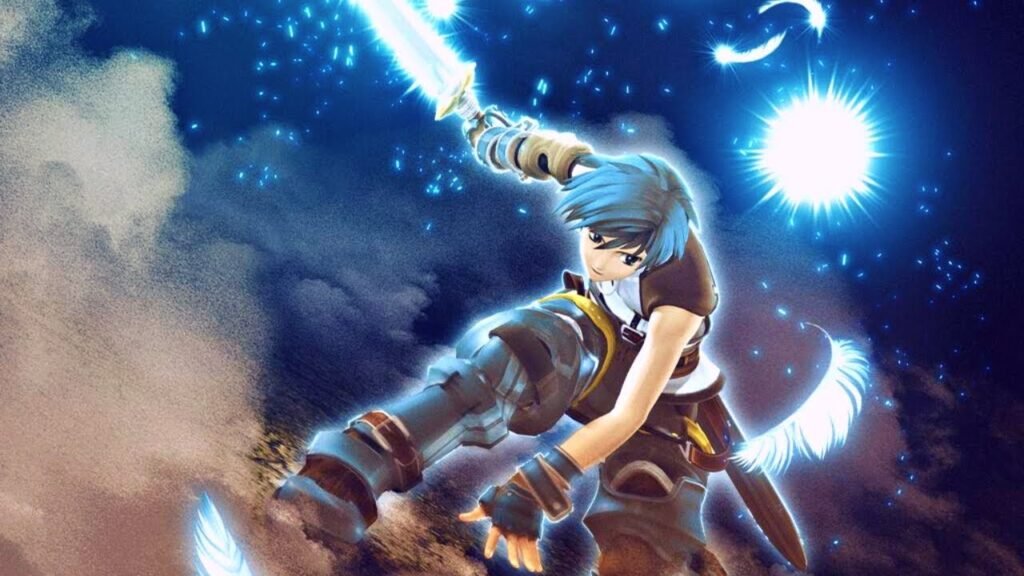
Star Ocean: Till the End of Time is one of those games that has a special place in my heart because it’s been part of my childhood. It was my first and only entry into the Star Ocean franchise, and replaying it as an adult hit completely different. Back then, I was just along for the ride – absorbing the cool sci-fi setting, mashing through combat, and vibing with the characters without thinking too hard about what the story was actually doing. Now, with more years and more games under my belt, I finally sat down and really engaged with this story. And honestly? It’s a wild ride that I both love and have serious questions about.
The Setup That Hooked Me All Over Again
The early hours of Till the End of Time do a fantastic job of easing you into its world. You’re Fayt Leingod, a college kid on vacation with his family and childhood friend Sophia, and things go sideways fast when an alien force called the Vendeeni attacks the resort planet. What follows is a journey that takes you across planets, through political conflicts, and eventually into territory that no one – and I mean no one – sees coming. The game takes its time building up its sci-fi universe, and I was genuinely invested in the world-building. The war between Aquaria and Airyglyph, the politics of the Pangalactic Federation, the mystery behind Fayt’s latent powers – all of it kept me moving forward.
Then the Twist Happens
And here’s where things get divisive. The big reveal is that the entire Star Ocean universe – everything you’ve been experiencing, every planet, every war, every character – is a simulation. The “Eternal Sphere,” as it’s called, is essentially an elaborate program created by 4D beings who treat it like an MMO. Your characters, your story, your entire reality? It’s entertainment for a higher-dimensional species.
Now, here’s the thing. I don’t actually hate this twist. Simulation theory is legitimate science fiction territory. Real scientists and philosophers have seriously debated whether our own reality could be a simulation, so having a JRPG explore that idea isn’t inherently bad. And let’s be real – JRPGs have been doing “the universe was created by a god you eventually have to fight” for decades. Swapping out a deity for a highly advanced species running a program? That’s honestly not as big a leap as people make it out to be. It’s a bold, ambitious swing, and I respect the audacity of it.
The Franchise Problem
Where the twist gets complicated is when you zoom out beyond this single game. I only played Till the End of Time, so for me, the revelation didn’t carry the same sting that longtime fans felt. But I completely understand why people who invested in Star Ocean 1 and 2 felt betrayed. If the entire universe is a simulation, then every event from the previous games – every struggle, every victory, every emotional moment – was, at best, manipulated entertainment for 4D beings. That’s a tough pill to swallow when you’ve spent hundreds of hours in that world.
What makes this worse is what happened after. Every Star Ocean game released since Till the End of Time has been a prequel. Star Ocean 4, 5, 6 – all set before the events of this game. The developers have never moved the timeline forward, and it’s hard not to read that as them being unable or unwilling to deal with the consequences of their own twist. They wrote themselves into a corner, and instead of finding a way forward, they just… kept looking backward. That’s honestly disappointing. And because every newer entry is a prequel to a story I already know the “endpoint” of, I’m just not motivated to go back and play them. What would be the point? I’d love to see a proper sequel that actually grapples with what happened at the end of Till the End of Time. That’s the game I want.
This Would’ve Been Better as a Standalone
Here’s the thing – since Till the End of Time was my only Star Ocean game, I always assumed the franchise worked like Final Fantasy, where every numbered entry is a fresh universe with its own characters, its own rules, its own beginning and end. On those terms, the simulation twist worked just fine for me. It was a wild, self-contained revelation that only affected this game’s universe.
Then I found out that the Star Ocean games are actually connected. They share a timeline and a universe. And suddenly, the twist carries a completely different weight. It’s no longer just “this world is a simulation” – it’s “every world you’ve ever explored in this franchise is a simulation.” That’s the part that crosses the line for a lot of people, and I get it.
If Till the End of Time had followed the Final Fantasy model – a standalone story with no ties to the rest of the series – the simulation twist would have been so much easier to swallow. You could appreciate the boldness of it without worrying about what it does to the broader franchise. It would just be one game’s wild narrative experiment, not a retcon that reaches backward and forward across the entire series. The twist itself isn’t the problem. The connectivity is.
The Ending: Bold Idea, Shaky Execution
So let’s talk about how the game wraps up, because this is where my feelings get the most complicated. The villain, Luther, is basically the creator-god of the Eternal Sphere, and he decides to delete the entire simulation. By the end, roughly three-quarters of the universe has been wiped out. The remaining characters, led by Fayt, manage to resist deletion through sheer force of will – essentially willing themselves and their universe into becoming real through the power of human spirit and belief.
And look, I get what the writers were going for. There’s a thematic beauty to the idea that these characters, told they aren’t real, refuse to accept it and become real through their own determination. It’s a statement about consciousness, about what it means to exist. On paper, that’s powerful stuff.
But in practice? It didn’t land for me. How does “human spirit” defeat deletion? We’re talking about a simulation being erased by the people who built it. That’s not a villain you can punch your way through – it’s a fundamental reality-level threat. And the game’s answer is basically “we believe hard enough and now we’re real.” Playing this as an adult, that resolution just doesn’t hold up. It feels like the writers backed themselves into an impossible corner with the scale of the threat and then reached for the cheesiest possible escape hatch. The villain essentially won – most of the universe was destroyed – and the “victory” feels more like a consolation prize than a triumph.
On Pacing: Your Mileage May Vary
I’ve seen a lot of people online criticize the game’s pacing, especially the long war arc between Aquaria and Airyglyph and how the sci-fi plot takes a backseat for huge stretches. Honestly? That didn’t bother me at all. Maybe it’s because this game is so deeply tied to my childhood that I have a natural tolerance for its rhythms, or maybe it’s because I’d forgotten almost everything about the story and was experiencing it fresh. Either way, I was invested throughout. The war arc had its own stakes and characters that I cared about, and the slow burn made the eventual sci-fi escalation hit harder. Pacing is subjective, and for me, it worked.
Final Thoughts
Star Ocean: Till the End of Time tells a story that swings for the fences in a way that most JRPGs wouldn’t dare. The simulation twist is genuinely bold, and I respect the game for having the guts to go there. But bold doesn’t always mean well-executed. The ending crumbles under the weight of its own ambition, using the power of belief to solve what is essentially an existential, structural problem. And the fact that the franchise has spent every game since running away from this story’s consequences tells you everything you need to know about how even the developers feel about where it left things.
As a standalone experience, the story of Till the End of Time is messy, ambitious, and unforgettable. It gave me one of the most memorable twists I’ve encountered in a JRPG, even if the landing was rough. It’s the kind of game that sticks with you – not because it did everything right, but because it dared to do something different. And honestly, I think that counts for a lot.
Bonus: The Expedition 33 Connection
I couldn’t write this review without bringing up Clair Obscur: Expedition 33, because playing that game is actually what got me thinking about Till the End of Time’s story again. The two games share a surprisingly similar core concept: characters who discover that their entire world is a constructed reality made by a higher being. In Expedition 33, the world of Lumière and everyone in it exists inside a painted Canvas, created by a grieving mother named Aline who couldn’t let go of her family. In Till the End of Time, the entire universe is a simulation – the Eternal Sphere – built by 4D beings for entertainment.
The parallels are striking, but here’s where they diverge in a way I find really interesting. In Expedition 33, the characters never truly escape the Canvas. The ending forces you to choose between preserving or destroying that painted world, but either way, the characters remain bound to it. They never break through to the “real” world on the other side. In Till the End of Time, Fayt and the others actually do something that should be impossible – they physically step into the 4D beings’ world. These are characters from inside a simulation who cross over into the reality of their creators. They leave the Eternal Sphere and set foot in the dimension of the very beings who built them. That’s insane when you think about it.
When you put these two games side by side, there’s something undeniably satisfying about the fact that Fayt’s crew actually got out of the “painting,” so to speak. The characters in Expedition 33 are trapped within their created world no matter what choice you make at the end. Fayt and his party? They walked right out of theirs and confronted their creators face to face. Expedition 33’s ending is more grounded and emotionally resonant, but Till the End of Time’s is more defiant. One game asks you to accept the boundaries of a created world. The other has its characters smash through those boundaries entirely. Neither approach is perfect, but it’s fascinating to see two JRPGs tackle the same existential question and arrive at such different answers.
Leave a Reply