

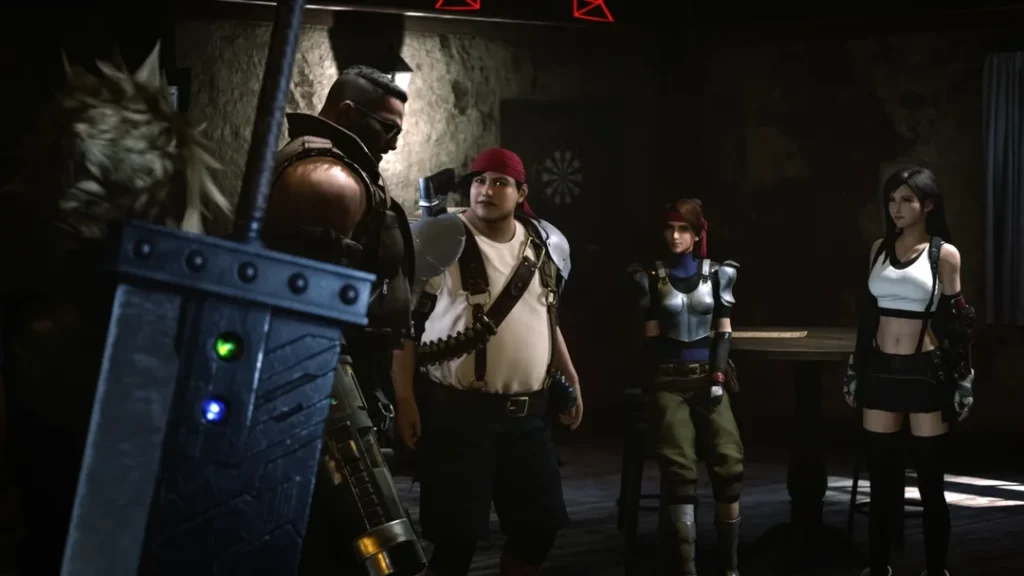
I recently posted something controversial on the r/FFVIIRemake subreddit: Barret Wallace’s approach to the mako reactor problem is fundamentally flawed. My argument was that despite Shinra being unquestionably evil, Barret’s tactics of destroying critical infrastructure without offering alternatives constitutes ideological extremism that ignores practical reality.
The response from the community was intense and divided, with many defenders presenting sophisticated counterarguments that challenged my position.
Rather than simply doubling down on my original critique, I want to engage seriously with the strongest arguments raised against it. This is Part 1 of what will likely be a multi-part series examining different aspects of this debate. In this article, I’m focusing on three of the most compelling defenses of Barret’s tactics:
- The Existential Crisis Argument – The Planet is dying and extreme measures are justified
- The Moral Responsibility Argument – Shinra, not Barret, is responsible for the deaths
- The “No System to Work Within” Argument – Totalitarian systems require extreme resistance
I’m not approaching this as a debate to “win.” I’m genuinely trying to understand whether my critique holds up under scrutiny or whether the defenders have identified flaws in my reasoning that I need to acknowledge. Future parts of this series will tackle additional counterarguments, including questions about alternative energy sources, competing moral frameworks, and the game’s intentional character design.
Counterargument 1: The Existential Crisis Argument
What Defenders Said
The most forceful pushback I received centered on urgency. As one commenter put it: “If it’s people losing their jobs vs. the entire planet potentially ending, it’s a no brainer.”
Another drew direct parallels to real-world climate debates: “You’re basically saying ‘we can’t fix climate change because people need their jobs’ which is exactly how we got into this mess irl. The reactors are literally killing the planet – there’s no ‘gradual transition’ when you’re facing extinction. Sometimes you gotta rip the bandaid off even if it hurts.”
The utilitarian calculus appears straightforward: short-term disruption and hardship for Midgar’s citizens versus extinction for all life on the Planet. When framed this way, Barret’s position becomes not just defensible but morally imperative.
My Response: The Timeline Question Changes Everything
I’ll admit: this argument made me reconsider my position significantly. If planetary extinction is genuinely imminent, then the moral math does favor extreme action. The problem is that “imminent” is doing a lot of work in that sentence.
Here’s the critical question the game never clearly answers: How much time does the Planet actually have?
Is it 10 years until total collapse? 50 years? 100? 500? This timeline completely changes whether Barret’s urgency is justified:
If the Planet has 5-10 years: Then yes, “rip the bandaid off” makes sense. There’s no time for gradual transitions, building alternatives, or winning hearts and minds. Extreme disruption is the only option.
If the Planet has 50-100+ years: Then demanding immediate infrastructure destruction without alternatives looks much less justified. You DO have time to build sustainable replacements, transition populations gradually, and pursue tactics that don’t cause immediate civilian suffering.
The defenders assume we’re in scenario one. My critique assumed something closer to scenario two. But honestly? The game doesn’t give us enough information to know which scenario we’re actually in.
We know:
- The Planet is being harmed (this is observable and proven)
- It’s serious enough to eventually cause extinction
- But the actual timeline to catastrophic collapse? Unclear.
This ambiguity matters enormously because it determines whether Barret’s tactics are desperately necessary or unnecessarily extreme.
The “Buying Time” Realization
That said, after thinking through this argument more carefully, I realized I was too dismissive of Barret’s approach. Even if destroying one reactor doesn’t stop mako extraction globally, it buys time.
If it takes Shinra months or years to rebuild a destroyed reactor, that’s months or years of reduced planetary harm. If Barret’s cell can destroy reactors faster than Shinra can rebuild them, that creates sustained disruption that genuinely slows the crisis.
My original critique focused on the lack of alternatives and the immediate harm to civilians. But I hadn’t fully considered that slowing planetary death – even temporarily – is material harm reduction at a planetary scale, not just destruction without purpose.
This shifts my thinking: If Barret’s tactics genuinely buy time before extinction, the civilian cost becomes more defensible.
But – and this is crucial – buying time only matters if you use that time strategically.
Which brings me to my remaining concern: At the time of the Reactor 1 bombing, does Barret actually have a plan for what to do with the time he’s buying? Or is his strategy just “destroy reactors and hope something changes”?
Barret’s Evolution: From Destruction to Alternatives
According to the community discussion, Advent Children shows Barret actively working to secure alternative energy sources. He’s pursuing oil reserves and building the infrastructure to replace what he destroyed. Future-Barret isn’t just breaking things – he’s building alternatives.
This is important character development, but it raises a question: When did Barret develop this plan?
I think the evidence suggests he developed it AFTER the events of the original game, not before. During the Reactor 1 bombing, Barret seems driven more by trauma and rage than by a coherent strategy that includes replacement infrastructure. He knows reactors must stop, but he hasn’t fully thought through what comes next.
If that’s accurate, then the debate becomes more nuanced:
- My critique identifies a real problem: At the time of Reactor 1, Barret’s approach was incomplete. He didn’t have alternatives ready, and his tactics were driven as much by trauma as by strategy.
- The defenders identify important context: The planetary crisis is real and observable, and Shinra has proven themselves irredeemable through genocide and authoritarianism.
- But we’re missing critical information: We don’t know how much time the Planet has left. Is it 10 years? 100 years? This timeline completely determines whether Barret’s extreme urgency is justified or premature.
Without knowing the timeline, we can’t definitively judge whether Barret’s tactics were desperately necessary or unnecessarily extreme. His approach may have been the only option in a true emergency, or it may have been trauma-driven extremism when more measured approaches had time to work.
What we can say is that Barret grows over time, eventually developing a more complete strategy that includes building alternatives, not just destruction.
Where I Land
The Existential Crisis Argument is the strongest defense of Barret’s tactics, and it genuinely made me reconsider my position. But it rests on assumptions about timeline and urgency that the game doesn’t fully establish.
My revised position: If the Planet has less than 20 years, Barret’s tactics are justified by necessity. If it has 50+ years, they’re unnecessarily extreme. Without knowing the timeline, I can’t definitively say whether the urgency argument succeeds or fails.
What I can say is that the “buying time” aspect is more important than I initially recognized. Slowing planetary death is material harm reduction at a planetary scale. The question is whether Barret has a plan to use that time effectively – and the evidence suggests he develops one eventually, but may not have had one initially.
Counterargument 2: The Moral Responsibility Argument
What Defenders Said
Multiple community members forcefully rejected my claim that Barret’s ideology “got Biggs, Wedge, and Jessie killed.” The pushback was immediate: “Mm, no, Shinra made that call.”
One commenter was particularly direct: “Apart from you blaming Barrett for what SHINRA did to Biggs, Wedge, and Jessie (not to mention an entire Slum of people) like let’s be so serious, that is definitely Shinra’s cross to bear.”
Another framed it this way: “Yeah wtf! They died defending their home from an insane act of violence by Shinra.”
The argument is that shifting any responsibility to Barret constitutes victim-blaming. Biggs, Wedge, and Jessie died as victims of Shinra’s evil, period. The plate drop was Shinra’s decision, Shinra’s finger on the trigger, Shinra’s mass murder. Suggesting their deaths resulted from Barret’s tactical choices inappropriately absolves the actual perpetrators and implies that resistance to fascism is somehow responsible for fascist violence.
Furthermore, defenders note that in Remake’s version of events, Shinra was already planning to sabotage Reactor 1 themselves – they used Avalanche’s attack as cover for their own false flag operation. Barret’s cell was manipulated from the start.
My Response: Responsibility vs. Predictable Consequences
I need to be clear about something: Shinra bears 100% of the moral and legal responsibility for the plate drop. That was their decision, their action, their crime. There is no question about who pulled the trigger or who deserves condemnation for mass murder. It’s Shinra. Entirely and completely.
The community says it’s victim-blaming by raising questions about Barret’s role. But I don’t think that’s what I was doing. There’s a crucial distinction between two separate questions:
- Who is morally responsible for the deaths? Shinra. Absolutely, completely, without qualification.
- Did Barret make tactically sound decisions? That’s a separate question about strategic judgment.
Biggs, Wedge, and Jessie weren’t helpless victims – they were active participants in resistance who made choices. Questioning whether their leader made wise tactical decisions isn’t blaming them for Shinra’s crime.
But here’s where my critique becomes more complicated: Could Barret have reasonably anticipated the plate drop? Probably not. Dropping an entire plate and killing thousands of Shinra’s own citizens is an unprecedented level of evil – even for a corporation that burned Corel to the ground.
So the question isn’t “Why didn’t Barret predict this specific atrocity?” The question is more general: When resisting a regime known for extreme violence, what level of retaliation planning is reasonable?
The Remake revelation that Shinra planned the bombing as a false flag operation actually shifts the tactical critique: Barret’s approach was predictable enough that Shinra could exploit it for their own purposes. That’s a different kind of strategic failure – not “should have known they’d drop the plate” but “tactics were too straightforward and easily manipulated.”
The Remake Complication
The revelation that Shinra planned the plate drop all along and used Avalanche’s attack as cover actually makes my concern WORSE, not better.
If Shinra could predict Barret’s tactics so accurately that they built an entire false flag operation around them, that suggests Barret’s approach was strategically naive. His tactics were so straightforward and exploitable that Shinra didn’t just respond to them – they actively counted on them.
That’s not effective resistance. That’s playing into your enemy’s hands.
The Limits of This Argument
That said, I recognize there’s something uncomfortable about demanding perfect tactical foresight from resistance movements. Oppressed people fighting for survival shouldn’t have to meet some impossible standard of strategic perfection while their oppressors face no such scrutiny.
There’s also a real danger in the logic of “if you fight back and they retaliate, it’s your fault for fighting.” That’s exactly the kind of reasoning authoritarian regimes use to justify repression: “We wouldn’t have to hurt you if you just stopped resisting.”
So I’m genuinely torn on this one. Shinra is absolutely responsible for the plate drop. But I still think there’s a legitimate question about whether Barret should have better anticipated the consequences of his actions – not as a matter of blame, but as a matter of strategic wisdom.
Where I Land
Shinra killed Biggs, Wedge, and Jessie. That’s not debatable.
But I maintain there’s a legitimate question about tactical judgment that isn’t victim-blaming: When resisting genocidal regimes, how much responsibility do resistance leaders have to anticipate and plan for retaliation?
The answer matters because if your tactics are so predictable that your enemy can exploit them (as Shinra did), then you’re not conducting effective resistance – you’re playing into their hands. That’s not about blame; it’s about whether the tactics actually serve the cause or undermine it.
Counterargument 3: The “No System to Work Within” Argument
What Defenders Said
Perhaps the most sophisticated defense of Barret came from commenters who addressed the structural context:
“This is sort of the point as to why Barrett’s Avalanche does what it does. They believe extreme measures are required precisely because the average, middle class citizen of Midgar won’t make the choice to give up a life of comfort… (1) the average Midgar citizen (those on the plates) have no desire to listen, because they comfy and (2) Shinra owns the government and flow of information. They can’t just lobby the government or hand out fliers or protest.”
The argument emphasizes that Midgar isn’t a democracy. The mayor is a figurehead. There’s no legislative process, no free press, no democratic avenue for reform. Shinra controls the government, the information flow, and maintains power through military force and economic monopoly.
From this perspective, asking Barret to pursue “gradual change” or “work within the system” is asking for the impossible. There is no system to work within. Shinra has no incentive to change voluntarily – they profit from mako extraction and maintain total control through their energy monopoly. They’ve demonstrated willingness to commit genocide against anyone who opposes them.
As one commenter put it: “As long as the system is in place to keep the wealthy as wealthy as they are, there’s no incentive to find alternatives.”
The conclusion: Barret’s extremism isn’t a character flaw or tactical mistake – it’s the only rational response to a totalitarian system that cannot be reformed from within.
My Response: The False Binary Problem
I think this argument is partially right but commits a logical fallacy: “There’s no system to work within” doesn’t automatically mean “therefore blow up infrastructure.”
Let me be very clear: I agree with the structural analysis. Midgar IS totalitarian. There ARE no democratic institutions. Shinra DOES control everything. Institutional reform through normal channels IS impossible.
But the argument creates a false binary: either institutional reform OR violent infrastructure destruction.
There’s actually a whole spectrum of resistance tactics between “file a petition” and “blow up the power plant.” Why not:
Building Alternative Power:
- Why not demonstrate that these models can work in urban settings?
- Build dual power structures that make people less dependent on Shinra
Organizing Labor:
- General strikes can shut down operations without destroying infrastructure
- Shinra depends on workers – organized labor has enormous potential power
- This builds popular support rather than alienating it
Targeted Sabotage:
- Sabotage Shinra’s operations without destroying infrastructure civilians depend on
- Target their military capacity, their executive leadership, their weapons facilities
- Weaken the oppressor without hurting the oppressed
Winning Defectors:
- Shinra employees might be persuaded to defect if offered alternatives
- Building coalitions is harder than bombing, but potentially more effective
- Even authoritarian systems have internal fissures to exploit
My point isn’t that any of these would definitely work. My point is that Barret seems to have jumped straight to the most extreme option without apparently trying anything else.
The “People Are Too Comfortable” Problem
Defenders argue that people won’t voluntarily give up comfort for planetary survival, which is probably true. But this actually undermines Barret’s approach rather than supporting it.
If people won’t willingly sacrifice comfort, forcibly destroying their comfort won’t make them your allies – it’ll make them hate you.
They’ll blame you for their suffering, not Shinra. They’ll side with whoever promises to restore what they lost, which is… Shinra. This is exactly what we see in Remake: public opinion splits, with many blaming Avalanche rather than supporting them.
When your tactics alienate the people you’re trying to save and drive them toward your enemy, that’s not effective resistance. That’s counterproductive.
What About Successful Revolutions?
Historically, successful resistance to totalitarian systems has typically combined multiple tactics:
- Armed resistance AND building alternative institutions
- Direct action AND consciousness-raising
- Confrontation AND coalition-building
The most effective movements don’t just break the old system – they build the new one simultaneously. They create something people can believe in, not just something to fear.
Barret’s approach (at least initially) seems to be pure destruction without the building component. And that’s strategically incomplete, even if the structural analysis of Shinra’s totalitarianism is correct.
Where I Land
The “No System to Work Within” argument correctly identifies that Shinra cannot be reformed through institutional channels. But it doesn’t prove that Barret’s specific tactics are therefore the right response.
Just because peaceful reform is impossible doesn’t mean all forms of violent resistance are equally valid or effective. Tactics still need to be evaluated on whether they actually advance your goals.
My concern is that Barret’s approach:
- Alienates potential allies among the civilian population
- Strengthens Shinra’s propaganda narrative about “terrorists”
- Provides justification for authoritarian crackdowns
- Is predictable enough that Shinra can exploit it (as they did in Remake)
Even accepting that extreme measures are necessary in a totalitarian system, I think Barret could have chosen better extreme measures – ones that weaken Shinra without strengthening their position or turning the population against the resistance.
My overall position has evolved
I no longer think Barret is simply “wrong.” I think he’s fighting the right fight with incomplete tactics that improve over time. The crisis is real, the enemy is irredeemable, and extreme measures are maybe justified. But the specific form those extreme measures take matters, and I’m still not convinced that early-Barret chose the most effective approach.
The debate isn’t “Is Barret right or wrong?” It’s “Could Barret have been more strategically effective while still pursuing necessary resistance?”
Leave a Reply