

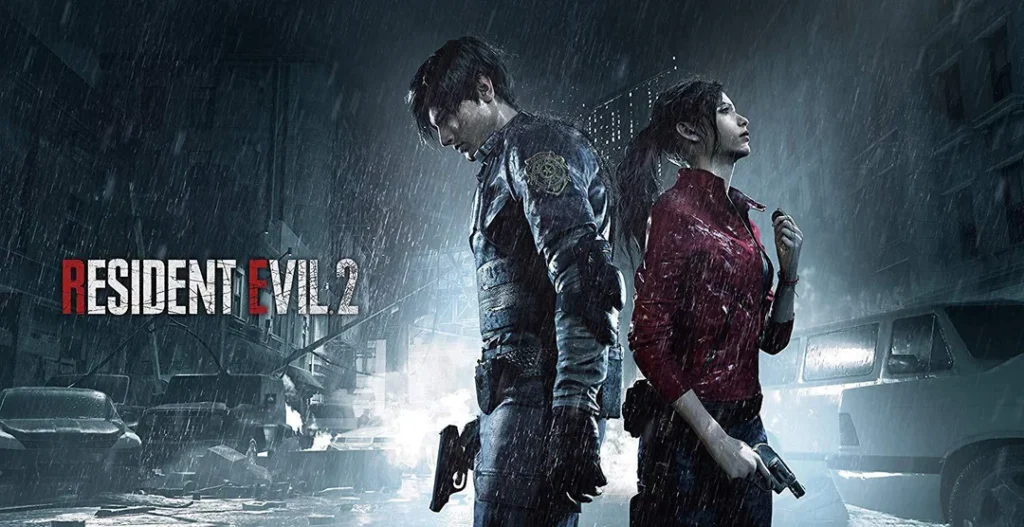
Resident Evil Requiem drops on February 27th. That’s about a week away. And instead of sitting here refreshing review embargoes or rewatching trailers for the hundredth time, I decided to do what felt right: go back to where it all clicked for me with the modern RE era. I booted up RE2 Remake, ran through Leon A on Hardcore, and now I’m halfway through Claire B. This is my pre-Requiem ritual, whether I planned it that way or not.
What I didn’t expect was how quickly this game would sink its teeth back into me. I’ve played through RE2R many times. I’ve earned S+ ranks in 7 out of 8 scenarios – all without touching a guide. I know this game intimately. Except, as it turns out, I kind of don’t anymore. And that tension between deep familiarity and creeping forgetfulness is exactly what’s making this playthrough feel so alive.
I Remember Just Enough to Feel the Pressure
Here’s the thing – I haven’t forgotten everything. The safe codes are burned into my brain at this point. I know the general layout of the RPD well enough to navigate without panicking. I remember that Mr. X is coming and roughly when. The broad strokes are all still there.
But the finer details? Gone. What’s the most efficient way to handle this particular room? Do I burn ammo on this zombie or route around it? Which herbs do I have left and are they going to be enough for what’s coming? Those moment-to-moment tactical decisions that come from true mastery of a game – I’ve lost most of them. And on Hardcore, that gap between what I vaguely remember and what I actually need to execute is where all the tension lives.
It’s not the panic of a first-timer who doesn’t know what’s around the corner. It’s something more unsettling – the creeping feeling that I should know better, that I’ve been here before, but I can’t pull up the answer fast enough. Hardcore doesn’t give you time to second-guess yourself. You’re either decisive or you’re dead.
Going Back to Hardcore Reminded Me Why I Love This Game
Everything about how this game is designed – the atmosphere, the enemy behavior, the resource scarcity – clicks into place differently when the stakes are real. Every bullet matters. Every healing item is a small crisis of judgment. You’re not just playing through levels, you’re genuinely managing survival.
What makes it work so well is that it never feels unfair. It’s punishing, yes, but it’s punishing in a way that respects you. The difficulty comes from the game’s systems being tight and unforgiving, not from cheap tricks or arbitrary damage spikes. If you die on Hardcore, you almost always know exactly why. That accountability is what makes clearing a hard section feel so earned.
By the end of a Hardcore run you’ve earned every single step toward that exit. The RPD stops being a game level and starts feeling like something you actually escaped from. That’s the kind of experience that sticks with you – and that keeps pulling you back.
The More I Play, The More I Want to Keep Playing
Something I’ve noticed with RE2R is that finishing a run doesn’t give you closure. It gives you appetite. I finished Leon A and immediately wanted to jump into Claire B. Now that I’m halfway through Claire B, I’m already thinking about the other scenarios. Leon B. Claire A. The itch doesn’t go away, it just shifts to the next thing.
There’s a reason people end up doing four, five, six playthroughs back to back and still feel the pull for more. The Leon A and Claire B structure is quietly brilliant – they’re not just the same game with a palette swap. The routes, the weapons, the encounters all feel distinct enough that switching characters genuinely refreshes the experience. And then B scenarios flip everything again. Same building, a completely different game. Capcom built a loop that’s almost impossible to voluntarily step out of.
What I find most interesting is how the game feeds that compulsion without ever feeling hollow. Each run teaches you something. You get a little sharper, a little more optimized. You start noticing things you missed before. A zombie you wasted three bullets on last time – this time you sidestep it entirely. That accumulation of small improvements is quietly addictive in a way that’s hard to articulate until you’re five runs deep and still finding new things.
Speedrunning and the Drive to Optimize
That drive to improve naturally leads somewhere – and for me, it leads to speedrunning. Not in the sense of chasing world records or routing frame-perfect tricks, but in the sense of wanting to build an optimized playthrough. Knowing the game well enough that every decision is deliberate. No wasted movement, no wasted ammo, no hesitation.
I’ve been there before. During my platinum trophy run I earned S+ ranks in 7 out of 8 scenarios without consulting a single guide. That meant figuring out routing, resource management, and pacing entirely on my own – testing, failing, adjusting, and eventually nailing it. That process of self-optimization was honestly one of the most satisfying things I’ve done in gaming. Not because it was easy, but because every solution was mine.
RE2R genuinely rewards speedrunning in a way that makes the challenge feel worthwhile rather than punitive. The replayability built into the scenario structure means that going fast never stops being interesting. Each character plays differently at speed, each scenario has its own rhythm to master. I’m already thinking about putting together another optimized Hardcore run. Whether that happens before or after Requiem, I’m not sure yet – but the thought is absolutely there.
Playing through RE2R again also has me thinking about what the series is adding with Requiem. There are no stealth kills in RE2R – encounters are direct, resource-driven, and often about survival through positioning and movement rather than any kind of silent takedown. Requiem is introducing stealth kills through the hemolytic injector, and coming back to RE2R now makes that addition feel significant. It’s not just a new mechanic – it’s a shift in how you relate to enemies. RE2R is about enduring. Requiem seems to be about something more calculated. Playing one right before the other makes that evolution impossible to miss.
The Perfect Way to Walk Into Requiem
Resident Evil Requiem brings Leon back alongside new protagonist Grace Ashcroft, and the dual-character structure – Grace focused on survival horror, Leon on action – feels like a direct evolution of what RE2R was doing with its A and B campaigns. Playing RE2R right now isn’t just nostalgia. It feels like context.
By the time Requiem launches, I’ll have just finished reminding myself why Leon works so well as a character to play – his routes, his rhythm, his loadout philosophy. Going straight from Claire B into a brand new game with Leon front and center feels like exactly the right preparation. Not overpreparing with lore videos and wiki dives. Just playing. Getting my hands back in the right shape.
RE2 Remake is one of those rare games that genuinely rewards you for coming back – not because it holds your hand through a checklist of unlockables, but because the game itself is just that good. The RPD is a masterclass in environmental design. The pacing is relentless in the best way. And on Hardcore, with just enough of my old knowledge faded to keep me honest, it feels as close to a fresh experience as a game I’ve completed many times can possibly feel.
Leave a Reply