
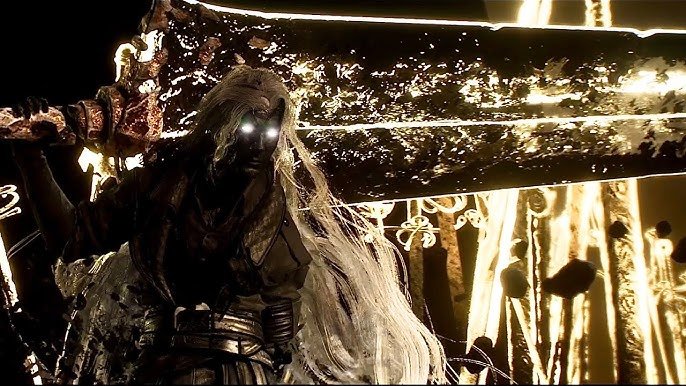
I can now consistently clear Simon’s first phase without taking damage. I know his combos, I’ve learned the rhythm, and I can get through that health bar with all my party members intact. This should feel like progress. This should feel like I’m getting closer to victory.
Instead, it feels completely pointless.
I’ve only managed to survive his opening attacks in phase 2 a handful of times, each time limping through with a single character barely standing. Then I learned about phase 3, where your entire main party gets wiped regardless of performance, forcing you to continue with reserves. That’s when I thought: this is ridiculous. That’s when I started looking for answers, for solutions. That’s when cheese builds entered the picture.
The Expedition 33 community is deeply split on Simon. One camp insists he’s poorly designed, a brick wall of frustration masquerading as difficulty. The other argues he’s the true final boss, a perfectly fair skill check that only feels impossible until you master it. After dozens of attempts and reading community arguments on both sides, I’m genuinely trying to figure out which perspective holds up better.
The Case Against Simon: Punishment Over Learning
The criticism of Simon starts with a simple observation: his mechanics actively prevent the trial-and-error learning that makes difficult bosses satisfying to overcome.
Phase 1 is actually well-designed. Every attack can one-shot you or reduce you to 1 HP, the combos are short enough to memorize, and the health pool is manageable. It’s punishing but fair. Then phase 2 extends every combo with additional attacks, introduces two new moves that are faster and stronger, and presents a 45 million HP health bar while keeping all the lethal mechanics from phase 1.
The permanent canvas removal is the breaking point for many players. When a single mistake in a ten-hit combo means losing a character for the entire fight, you never get enough practice to internalize the patterns. And that’s compounded by the fact that most of Simon’s attacks can one-shot you. One player put it perfectly: “I don’t even get a chance to learn his moves because I’m too frustrated when I slip up just one time resulting in me losing a party member permanently.”
Learning Simon feels like trying to fill a cup by collecting drips from a faucet. Each attempt gives you a tiny piece of information – maybe you see one new attack, maybe you survive two hits instead of one – but the progress is agonizingly slow. The one-shot potential means you can’t afford to make mistakes while learning, which is a contradiction in terms. You’re not building mastery in satisfying chunks. You’re accumulating knowledge drop by painful drop, and any mistake during an attempt can immediately end that character’s participation, forcing you to continue weakened or restart entirely.
The canvas removal mechanic means that within each attempt, mistakes compound. Lose one character to a mistake and suddenly you’re trying to learn the rest of the fight with a weakened party. You either have to restart and try again, or push forward undermanned, knowing you’re likely heading toward a wipe anyway.
The phase 3 party wipe compounds this problem. Your main team gets erased regardless of performance, forcing you to rely on reserves. At that point, the fight isn’t testing your mastery of Simon’s patterns – it’s testing whether you farmed enough levels and built a strong enough backup team. That’s not a skill check. That’s a gear check with extra steps.
One argument for the “poorly designed” camp: the existence of players who resort to cheese builds or give up entirely. When players look at an optional challenge and decide the only winning move is not to play (or to exploit it), that raises questions about whether the fight is creating the experience it’s supposed to create. A well-designed super boss should be brutally difficult but still encourage engagement with its mechanics. The complaint is that Simon encourages avoiding his mechanics entirely.
The Defense: Difficult Doesn’t Mean Unfair
But the defenders have compelling counterarguments.
First, Simon is absolutely learnable without cheese. Players have posted videos of flawless victories using non-exploitative builds. His attack patterns are consistent and readable – they’re just long, especially in later phases. One defender argued that Simon has “some of the most readable and fair attack patterns in the game,” and the videos support this. Once you learn the timing, you can parry everything.
The canvas removal mechanic isn’t arbitrary punishment – it’s pushing you to build speed so Simon doesn’t get multiple turns in a row. The move that reduces everyone to 1 HP has counterplay like Breaking Death to keep him stunlocked. Even the massive health pool serves a purpose: it ensures you can’t just get lucky. You have to prove sustained mastery, not just survive long enough for a few good hits.
The defenders also point out that complaining about needing to rebuild for this fight misses the entire point of a super boss. You’re supposed to study the game’s systems, experiment with luminas you ignored, develop strategies specific to this challenge. That’s not bad design – that’s the fight forcing you to engage with depth you’ve been overlooking. One player described being “too broken” from grinding earlier content and welcomed a fight that actually required preparation and mastery.
The comparison to Souls bosses works both ways. Yes, you can retry infinitely, but you also need to learn movesets that can kill you in seconds. The skill is in not getting hit. Simon is the same principle in a turn-based framework – the skill is in perfect execution of parries and blocks. The punishment is harsher, but the warning is clearer. You know exactly what will happen if you fail.
And maybe most importantly: Simon is optional. He’s meant to be the game’s ultimate challenge, the final test for players who want to prove complete mastery. Not every player needs to beat him. Not every fight needs to be accessible to every build or playstyle. Sometimes a super boss can just be brutally, unapologetically hard.
Where Both Sides Have a Point
Here’s what I keep coming back to: both arguments are correct, but they’re describing different experiences of the same fight.
Simon is technically fair and learnable. The patterns are consistent, counterplay exists for his mechanics, and skilled players can beat him without exploits. This is objectively true. But it’s also true that the learning curve is so punishing that most players will never experience that mastery. They’ll hit the wall in phase 2, lose party members to attacks they’re still trying to learn, and either quit or find a cheese build.
The question isn’t whether Simon can be beaten fairly – clearly he can. The question is whether a fight is well-designed when the path to mastery is so frustrating that the majority of players, including experienced ones, choose not to walk it.
The defenders say the problem is player mentality. Modern gamers expect to brute force content without adapting their builds or learning patterns. Simon punishes that approach and forces genuine mastery. If you’re not willing to put in the work, that’s on you, not the design.
The critics say the problem is the punishment-to-learning ratio. You DO learn from failures – I’ve proven that by mastering phase 1. But the complaint is about how slowly that learning happens. When the canvas removal mechanic can end your attempt before you’ve seen all of phase 2’s patterns, you’re learning in frustratingly small increments. It’s not that the feedback loop is broken – it’s that it feels inefficient compared to other difficult bosses where you can practice longer sequences more consistently. Simon’s permanent character removal and party wipe mechanics break that loop, replacing learning with frustration. Being “technically beatable” doesn’t make it good design.
The Build Requirement Problem
The most interesting debate is whether requiring a specific build approach constitutes poor design.
Defenders argue that being forced to rebuild is the point. Simon tests whether you truly understand Expedition 33’s systems or just stumbled through with a generic setup. Needing 10k health to survive long enough to learn combos isn’t a flaw – it’s the fight teaching you that glass cannon builds aren’t universal solutions.
But critics have a valid counterpoint: the game spent 40+ hours encouraging speed and crit builds. Enemy encounters, danger zones, even other super bosses reward high damage output. Then Simon appears and punishes everything the game taught you to prioritize. That’s not testing mastery of the systems – that’s testing whether you’re willing to throw away your build and start over for one fight.
The middle ground might be that Simon is well-designed for what he’s trying to be (an extreme skill check), but poorly placed within the game’s overall design philosophy. He would work better in a game that consistently emphasized defensive builds and perfect execution. In Expedition 33, he feels like an outlier, a Souls boss imported into a game with different values.
My Conclusion
I haven’t beaten Simon yet. I’m at the point where I can handle phase 1 perfectly and barely survive phase 2’s opening. I know about the phase 3 party wipe waiting for me.
Here’s where I’ve landed: my goal right now is to get that platinum trophy. Trying to beat this boss fairly is going to take a long time – that drip-by-drip learning process could eat up dozens of hours. And for what? To prove I can do what the game has already demonstrated I’m capable of learning, just at a pace that respects my time poorly?
I can’t dismiss either side’s arguments. The defenders aren’t wrong – Simon IS learnable, the patterns ARE consistent, and players who invest the time DO achieve that mastery. That’s a real experience, and for players who find satisfaction in that specific grind, Simon delivers exactly what they want.
But the critics aren’t wrong either. The canvas removal mechanic, the massive health pool, the phase 3 party wipe – these aren’t just “hard,” they’re specifically designed in a way that makes learning slow and frustrating. The fight is technically fair, but fairness and good design aren’t the same thing.
Simon isn’t poorly designed. He’s specifically designed for a very particular type of player who values that brutal, time-intensive challenge. The problem is that he exists in a game that spent 40+ hours teaching different values – speed, offense, efficient encounters. He’s a Souls boss imported into a game with a different philosophy.
For me? I’m going to cheese him. Not because I can’t learn the fight – I’ve proven with phase 1 that I can. But because the time investment required for phase 2 and 3 doesn’t align with my actual goal: completing this game and moving on to the next one on my list.
Maybe that makes me part of the problem the defenders complain about. Maybe it proves their point that modern gamers won’t put in the work. Or maybe it just means I’ve learned to recognize when a game is asking for more of my time than the experience is worth.
Either way, that platinum trophy is getting checked off my list. Simon can keep his perfectly learnable patterns. I’ll keep my evenings.
Leave a Reply