Category: Star Ocean

  • Star Ocean: Till the End of Time – A Story Review

    ⚠️ FULL SPOILER WARNING: This review discusses the entire story of Star Ocean: Till the End of Time in detail, including the ending. It also contains spoilers for Clair Obscur: Expedition 33. If you haven’t finished either game and want to go in blind, turn back now.

    Star Ocean: Till the End of Time is one of those games that has a special place in my heart because it’s been part of my childhood. It was my first and only entry into the Star Ocean franchise, and replaying it as an adult hit completely different. Back then, I was just along for the ride – absorbing the cool sci-fi setting, mashing through combat, and vibing with the characters without thinking too hard about what the story was actually doing. Now, with more years and more games under my belt, I finally sat down and really engaged with this story. And honestly? It’s a wild ride that I both love and have serious questions about.

    The Setup That Hooked Me All Over Again

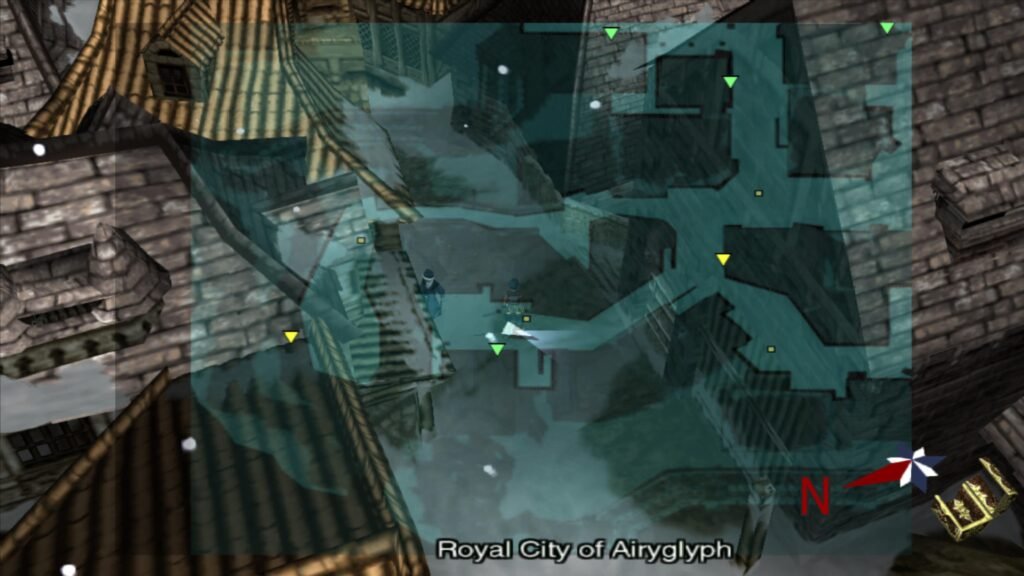
    The early hours of Till the End of Time do a fantastic job of easing you into its world. You’re Fayt Leingod, a college kid on vacation with his family and childhood friend Sophia, and things go sideways fast when an alien force called the Vendeeni attacks the resort planet. What follows is a journey that takes you across planets, through political conflicts, and eventually into territory that no one – and I mean no one – sees coming. The game takes its time building up its sci-fi universe, and I was genuinely invested in the world-building. The war between Aquaria and Airyglyph, the politics of the Pangalactic Federation, the mystery behind Fayt’s latent powers – all of it kept me moving forward.

    Then the Twist Happens

    And here’s where things get divisive. The big reveal is that the entire Star Ocean universe – everything you’ve been experiencing, every planet, every war, every character – is a simulation. The “Eternal Sphere,” as it’s called, is essentially an elaborate program created by 4D beings who treat it like an MMO. Your characters, your story, your entire reality? It’s entertainment for a higher-dimensional species.

    Now, here’s the thing. I don’t actually hate this twist. Simulation theory is legitimate science fiction territory. Real scientists and philosophers have seriously debated whether our own reality could be a simulation, so having a JRPG explore that idea isn’t inherently bad. And let’s be real – JRPGs have been doing “the universe was created by a god you eventually have to fight” for decades. Swapping out a deity for a highly advanced species running a program? That’s honestly not as big a leap as people make it out to be. It’s a bold, ambitious swing, and I respect the audacity of it.

    The Franchise Problem

    Where the twist gets complicated is when you zoom out beyond this single game. I only played Till the End of Time, so for me, the revelation didn’t carry the same sting that longtime fans felt. But I completely understand why people who invested in Star Ocean 1 and 2 felt betrayed. If the entire universe is a simulation, then every event from the previous games – every struggle, every victory, every emotional moment – was, at best, manipulated entertainment for 4D beings. That’s a tough pill to swallow when you’ve spent hundreds of hours in that world.

    What makes this worse is what happened after. Every Star Ocean game released since Till the End of Time has been a prequel. Star Ocean 4, 5, 6 – all set before the events of this game. The developers have never moved the timeline forward, and it’s hard not to read that as them being unable or unwilling to deal with the consequences of their own twist. They wrote themselves into a corner, and instead of finding a way forward, they just… kept looking backward. That’s honestly disappointing. And because every newer entry is a prequel to a story I already know the “endpoint” of, I’m just not motivated to go back and play them. What would be the point? I’d love to see a proper sequel that actually grapples with what happened at the end of Till the End of Time. That’s the game I want.

    This Would’ve Been Better as a Standalone

    Here’s the thing – since Till the End of Time was my only Star Ocean game, I always assumed the franchise worked like Final Fantasy, where every numbered entry is a fresh universe with its own characters, its own rules, its own beginning and end. On those terms, the simulation twist worked just fine for me. It was a wild, self-contained revelation that only affected this game’s universe.

    Then I found out that the Star Ocean games are actually connected. They share a timeline and a universe. And suddenly, the twist carries a completely different weight. It’s no longer just “this world is a simulation” – it’s “every world you’ve ever explored in this franchise is a simulation.” That’s the part that crosses the line for a lot of people, and I get it.

    If Till the End of Time had followed the Final Fantasy model – a standalone story with no ties to the rest of the series – the simulation twist would have been so much easier to swallow. You could appreciate the boldness of it without worrying about what it does to the broader franchise. It would just be one game’s wild narrative experiment, not a retcon that reaches backward and forward across the entire series. The twist itself isn’t the problem. The connectivity is.

    The Ending: Bold Idea, Shaky Execution

    So let’s talk about how the game wraps up, because this is where my feelings get the most complicated. The villain, Luther, is basically the creator-god of the Eternal Sphere, and he decides to delete the entire simulation. By the end, roughly three-quarters of the universe has been wiped out. The remaining characters, led by Fayt, manage to resist deletion through sheer force of will – essentially willing themselves and their universe into becoming real through the power of human spirit and belief.

    And look, I get what the writers were going for. There’s a thematic beauty to the idea that these characters, told they aren’t real, refuse to accept it and become real through their own determination. It’s a statement about consciousness, about what it means to exist. On paper, that’s powerful stuff.

    But in practice? It didn’t land for me. How does “human spirit” defeat deletion? We’re talking about a simulation being erased by the people who built it. That’s not a villain you can punch your way through – it’s a fundamental reality-level threat. And the game’s answer is basically “we believe hard enough and now we’re real.” Playing this as an adult, that resolution just doesn’t hold up. It feels like the writers backed themselves into an impossible corner with the scale of the threat and then reached for the cheesiest possible escape hatch. The villain essentially won – most of the universe was destroyed – and the “victory” feels more like a consolation prize than a triumph.

    On Pacing: Your Mileage May Vary

    I’ve seen a lot of people online criticize the game’s pacing, especially the long war arc between Aquaria and Airyglyph and how the sci-fi plot takes a backseat for huge stretches. Honestly? That didn’t bother me at all. Maybe it’s because this game is so deeply tied to my childhood that I have a natural tolerance for its rhythms, or maybe it’s because I’d forgotten almost everything about the story and was experiencing it fresh. Either way, I was invested throughout. The war arc had its own stakes and characters that I cared about, and the slow burn made the eventual sci-fi escalation hit harder. Pacing is subjective, and for me, it worked.

    Final Thoughts

    Star Ocean: Till the End of Time tells a story that swings for the fences in a way that most JRPGs wouldn’t dare. The simulation twist is genuinely bold, and I respect the game for having the guts to go there. But bold doesn’t always mean well-executed. The ending crumbles under the weight of its own ambition, using the power of belief to solve what is essentially an existential, structural problem. And the fact that the franchise has spent every game since running away from this story’s consequences tells you everything you need to know about how even the developers feel about where it left things.

    As a standalone experience, the story of Till the End of Time is messy, ambitious, and unforgettable. It gave me one of the most memorable twists I’ve encountered in a JRPG, even if the landing was rough. It’s the kind of game that sticks with you – not because it did everything right, but because it dared to do something different. And honestly, I think that counts for a lot.

    Bonus: The Expedition 33 Connection

    I couldn’t write this review without bringing up Clair Obscur: Expedition 33, because playing that game is actually what got me thinking about Till the End of Time’s story again. The two games share a surprisingly similar core concept: characters who discover that their entire world is a constructed reality made by a higher being. In Expedition 33, the world of Lumière and everyone in it exists inside a painted Canvas, created by a grieving mother named Aline who couldn’t let go of her family. In Till the End of Time, the entire universe is a simulation – the Eternal Sphere – built by 4D beings for entertainment.

    The parallels are striking, but here’s where they diverge in a way I find really interesting. In Expedition 33, the characters never truly escape the Canvas. The ending forces you to choose between preserving or destroying that painted world, but either way, the characters remain bound to it. They never break through to the “real” world on the other side. In Till the End of Time, Fayt and the others actually do something that should be impossible – they physically step into the 4D beings’ world. These are characters from inside a simulation who cross over into the reality of their creators. They leave the Eternal Sphere and set foot in the dimension of the very beings who built them. That’s insane when you think about it.

    When you put these two games side by side, there’s something undeniably satisfying about the fact that Fayt’s crew actually got out of the “painting,” so to speak. The characters in Expedition 33 are trapped within their created world no matter what choice you make at the end. Fayt and his party? They walked right out of theirs and confronted their creators face to face. Expedition 33’s ending is more grounded and emotionally resonant, but Till the End of Time’s is more defiant. One game asks you to accept the boundaries of a created world. The other has its characters smash through those boundaries entirely. Neither approach is perfect, but it’s fascinating to see two JRPGs tackle the same existential question and arrive at such different answers.
  • A Farewell to Childhood Through Star Ocean: Till The End of Time

    As I sit here, controller in hand, playing through Star Ocean: Till The End of Time as an adult, I’m struck by an unexpected realization: this might be my final farewell to childhood gaming. There’s something profoundly bittersweet about returning to the games that shaped your youth, only to realize you’re experiencing one of them for what feels like the very first time.

    Disclaimer: This post contains affiliate links. I may earn a small commission if you purchase through these links at no extra cost to you. This helps support my gaming content.

    The Perfect Storm of Forgotten Memories

    Star Ocean: Till The End of Time occupies a unique position in my gaming library. Unlike the other JRPGs that defined my childhood, this one exists in a complete memory void. I remember owning it, I remember playing it, but the story? The characters? The plot twists? Gone. Completely erased, as if someone took a cosmic eraser to that entire gaming experience.

    And you know what? I couldn’t be more grateful for this amnesia.

    🎮 What’s Hot in Video Games Right Now
    See which games, consoles, and accessories are climbing fast in popularity. Updated hourly, this list spotlights the biggest jumps in sales rank across the entire Video Games category – from the latest releases to must-have gear. It’s the easiest way to discover what gamers everywhere are buying today.

    👉 Check out the trending picks here

    When Forgetting Becomes a Gift

    Playing Star Ocean now feels like discovering a lost treasure. Every story beat surprises me. Every character development catches me off guard. I find myself genuinely invested in Fayt’s journey, hanging on every dialogue exchange. It’s that special kind of engagement where you’re completely absorbed in the world and characters, experiencing genuine surprise and investment in ways that make gaming feel magical again.

    But it’s not just the forgotten story that makes this playthrough special – it’s how I’m approaching the game itself. My adult self has the patience and curiosity that my childhood self lacked. I’m reading every dialogue option, diving deep into the in-game dictionary to understand the lore and world-building that flew over my younger head. I’m experimenting with different party members instead of just sticking with Fayt, discovering combat strategies and character dynamics I never bothered with before. I’m even managing my money properly, using economic systems that my impatient childhood self ignored completely.

    This isn’t just a story I’m rediscovering – it’s an entire game I’m playing for the first time, with adult comprehension and patience.

    Don’t get me wrong – Star Ocean: Till The End of Time isn’t perfect. My adult perspective also means I notice the frustrations more keenly: the awkward camera system, the clunky enemy targeting, the lack of clear direction on where to go next. The absence of proper tutorials or a comprehensive reference guide for game mechanics can be genuinely annoying. These are real flaws that my rose-colored childhood memories might have glossed over.

    But somehow, these imperfections don’t diminish the magic of this experience. If anything, they make it feel more authentic, more human. I’m not playing a perfect game – I’m reconnecting with a flawed but ambitious piece of my past, warts and all.

    This stands in stark contrast to my relationship with the other JRPGs from that era. They fall into neat categories of “been there, done that”:

    The Spoiled Experiences: Valkyrie Profile 2: Silmeria, Xenosaga Episode III, Breath of Fire: Dragon Quarter, Crisis Core, Final Fantasy VIII – games where I already know how the story ends. The mystery is gone, the tension deflated. Why revisit a magic trick when you know how it’s performed?

    The Untouchable Legends: Final Fantasy VII and Final Fantasy X sit on pedestals so high that revisiting them feels almost sacrilegious. FF7 remains the crown jewel of my childhood gaming, perfect and untouchable in memory. FFX? Its greatness is so universally acknowledged that replaying it would feel redundant.

    The Ongoing Adventures: Kingdom Hearts continues to evolve, with Kingdom Hearts 4 on the horizon. Similarly, the FF7 Remake trilogy keeps that legendary story alive and growing, with Part 3 promising to complete this reimagined journey. These aren’t relics of the past – they’re living, breathing franchises that grow with me.

    The Unmotivated Returns: Final Fantasy XII and IX fall into this limbo where either my childhood self didn’t connect with them strongly enough, or the motivation to revisit just isn’t there, despite forgetting portions of their stories.

    The Last Dance

    This leaves Star Ocean: Till The End of Time as something special – perhaps even sacred. It’s my last genuine surprise from that golden era of JRPGs. Every hour I spend with it now is borrowed time, a conversation with my younger self that I never expected to have.

    There’s a weight to this playthrough that goes beyond simple nostalgia. With each plot revelation, each character moment that catches me completely off guard, I’m not just playing a game – I’m closing a chapter. When the credits roll on Star Ocean, it won’t just be the end of Fayt’s journey; it’ll be the end of my ability to experience these childhood games with fresh eyes.

    The Beauty of Blank Slates

    Perhaps this is what makes Star Ocean so precious right now. In a gaming landscape where everything is analyzed, spoiled, and dissected before it even releases, having a genuine blank slate is rare. My adult brain gets to experience the wonder, surprise, and investment that defined my love for JRPGs in the first place.

    I’m savoring every moment, every plot thread, every character interaction, because I know this feeling is finite. Soon, Star Ocean will join the ranks of “games I’ve completed,” and with it, my last connection to that pure, unspoiled gaming experience of childhood will be severed.

    A Farewell Worth Taking

    The thought occasionally crosses my mind: what if I explored those classic Final Fantasy games I never played, or dived into other acclaimed JRPGs from the PS1 and PS2 era that I missed? There’s a whole library of legendary games from that golden age waiting to be discovered with my adult perspective and patience.

    But honestly, I don’t feel compelled to do that right now. Maybe it’s because Star Ocean feels like the perfect capstone to that chapter of my gaming life, or maybe I’m just not in the mood to dive into that era’s unexplored territory. For now, at least, this feels like it might be my final connection to that particular period of gaming history.

    So here I am, taking my time, refusing to rush through what might be my final first-time JRPG experience from that magical era. Star Ocean: Till The End of Time isn’t just a game I’m replaying – it’s a bridge between who I was and who I’ve become, a final gift from my younger self to my older one.

    When I finally reach those end credits, it won’t just mark the completion of another JRPG. It’ll be the closing of a door that’s been quietly shutting for years – the end of childhood gaming wonder, preserved in amber until this very moment.

    And honestly? I can’t think of a more fitting farewell.

  • My  Return to Star Ocean Till the End of Time

    Sometimes the best discoveries happen when you’re least expecting them. During a recent PlayStation Store sale coinciding with Gamescom, I found myself halfheartedly scrolling through the usual suspects – titles that looked interesting but never quite hit the mark. Just as I was about to give up, something caught my eye that made my heart skip a beat: Star Ocean: Till the End of Time, one of the JRPGs that defined my childhood gaming experience.

    Disclaimer: This post contains affiliate links. I may earn a small commission if you purchase through these links at no extra cost to you. This helps support my gaming content.

    The Weight of Nostalgia

    Purchasing this game felt like opening a time capsule. Star Ocean was one of those formative experiences that shaped my love for JRPGs, even though I’ll admit – as a kid, I barely scratched the surface of what it had to offer. The dense storytelling, complex mechanics, and intricate world-building that make it a masterpiece today were completely lost on my younger self, who lacked the patience for extensive reading and the strategic thinking required to truly appreciate its depth.

    I remember being immediately overwhelmed by the sheer amount of lore packed into the game’s dictionary system. Every new concept, location, and character seemed to come with paragraphs of backstory that my childhood attention span simply couldn’t handle. The result? I played through the entire game using only Fayt, completely ignoring the rich party system and character development that make Star Ocean special. I also have virtually no memory of the actual plot – a testament to how much reading I skipped along the way.

    🎮 What’s Hot in Video Games Right Now
    See which games, consoles, and accessories are climbing fast in popularity. Updated hourly, this list spotlights the biggest jumps in sales rank across the entire Video Games category — from the latest releases to must-have gear. It’s the easiest way to discover what gamers everywhere are buying today.

    👉 Check out the trending picks here

    A Fresh Perspective on Familiar Ground

    Now, returning as an adult with a more mature gaming palate, I’m approaching Star Ocean with the thoroughness it deserves. This time, I’m committed to talking to every NPC, exhausting all dialogue options, and actually reading those dictionary entries I so carelessly skipped. The difference in experience is night and day.

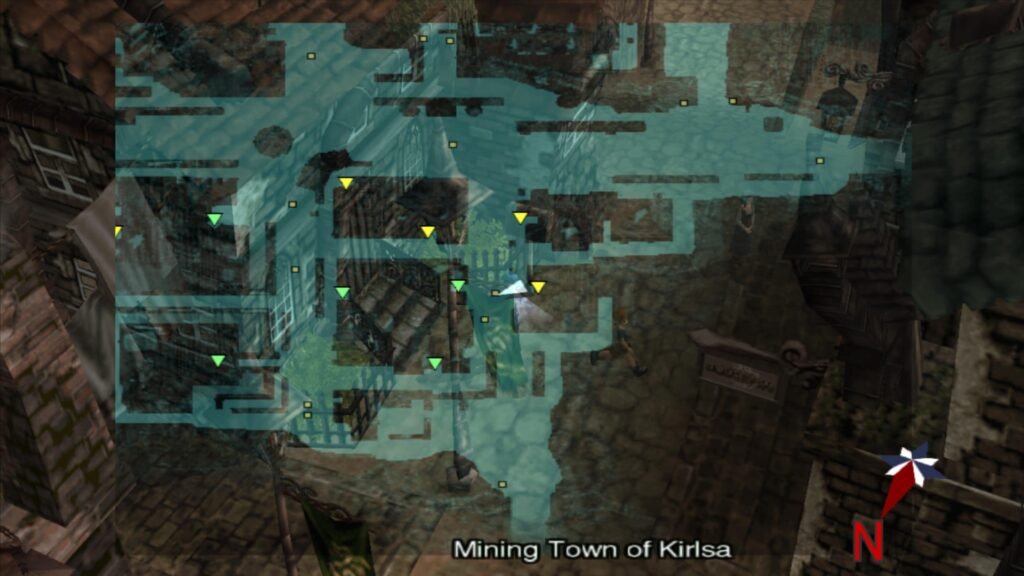
    The towns, which I remember rushing through as quickly as possible, are actually sprawling hubs of activity and detail. Every corner seems to hide a new conversation, a piece of lore, or a gameplay mechanic I never discovered. It’s like playing an entirely different game – one that’s far richer and more rewarding than my childhood memories suggested.

    🌌 Star Ocean: The Second Story R (PS5 – Physical Disc)
    The legendary second entry in the Star Ocean series returns in a beautifully modernized remake. Featuring a unique 2.5D art style that blends 3D environments with nostalgic 2D pixel characters, this definitive edition enhances the classic JRPG with new battle mechanics, re-arranged music, voiceovers in both Japanese and English, and fast-travel options.

    👉 Get Star Ocean: The Second Story R (PS5 Physical Disc) on Amazon

    Learning from Past Mistakes: The Economics of Adventure

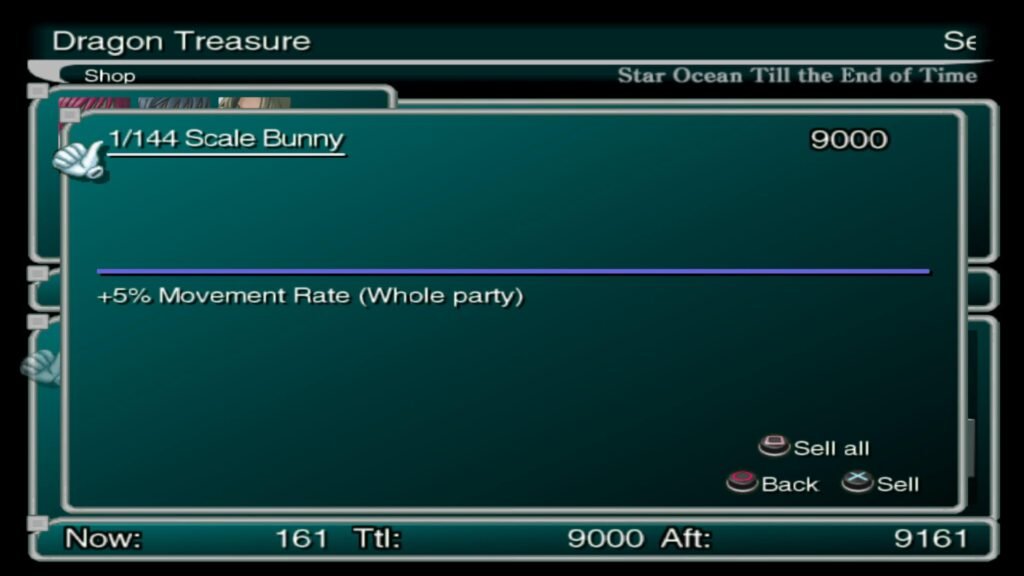
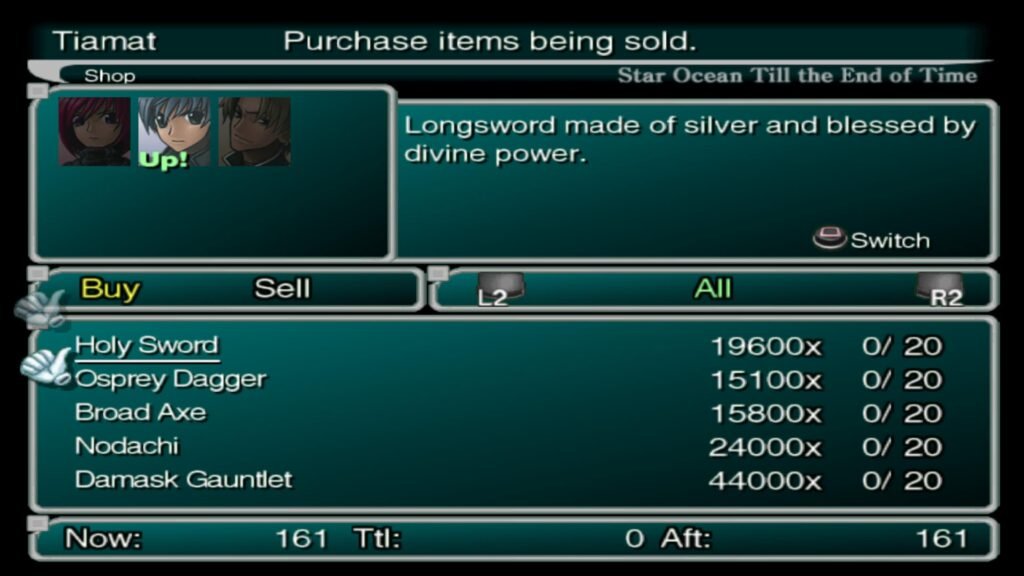
    One of my biggest regrets from my original playthrough was my complete lack of financial strategy. I remember staring longingly at expensive weapons and items in shops, knowing I’d never be able to afford them because I’d already blown my money on random purchases earlier in the game. I was also terrible about inventory management – I’d hoard items like those 1/144 Scale Bunny collectibles without ever selling anything, leaving my pockets perpetually empty when I actually needed to make important purchases. Those early towns are filled with tantalizingly expensive gear that seems impossibly out of reach when you’re not managing your resources properly.

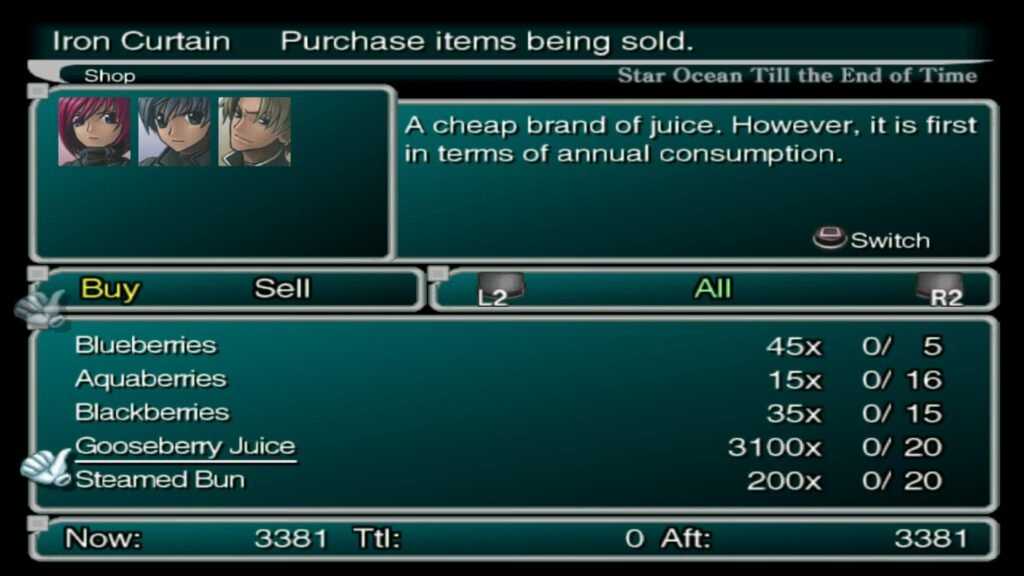
    This time around, I’m implementing a money management strategy I learned from playing Metaphor: ReFantazio. The rule is simple: I’ll only purchase expensive equipment if it costs no more than 10-20% of my total cash reserves. So when I see something like that expensive Gooseberry Juice in the shop, I won’t blow my entire bankroll on it just because it looks appealing. This approach prevents me from making impulse buys that leave me broke and ensures I always have enough money for essential items like healing supplies and support items, which I stock in reasonable quantities.

    It’s a small change that makes a huge difference in how the game feels to play. Instead of constantly feeling financially strapped, I can make strategic purchasing decisions that enhance my party’s capabilities without crippling my long-term prospects.

    🌠 Star Ocean: The Divine Force (PS5 – Physical Disc)

    Embark on a galactic adventure with the newest chapter in the Star Ocean series. With fast-paced combat, high-speed movement abilities, and the freedom to fly and explore vast environments in 360 degrees, The Divine Force delivers the most dynamic action the series has ever seen. Experience a branching story told from different perspectives, customizable skills, and epic battles that push JRPG action to new heights.

    👉 Get Star Ocean: The Divine Force (PS5 Physical Disc) on Amazon

    Discovering Hidden Depths

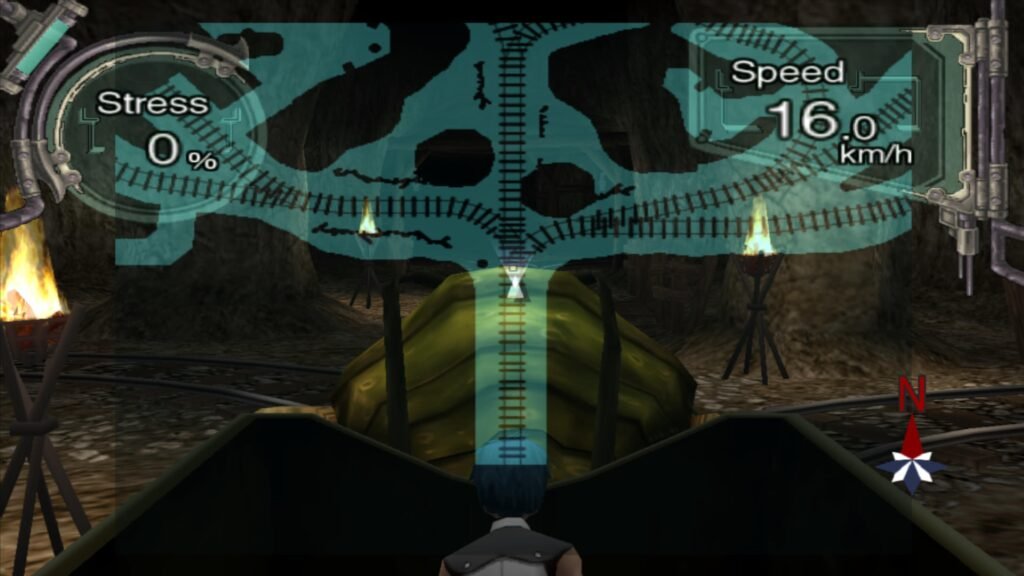
    Perhaps the most surprising aspect of this replay has been discovering content I completely ignored as a child. Take the cave exploration minigame, for example – something I dismissed as tedious busy work during my original playthrough. Now I find myself genuinely enjoying these sections, appreciating them as well-designed diversions that break up the main quest while providing valuable rewards and character development opportunities.

    Every system in Star Ocean seems designed with multiple layers of depth that only become apparent when you take the time to engage with them properly – all of which were essentially invisible to my younger self, but now they represent some of the game’s most compelling features.

    The Joy of Rediscovery

    What strikes me most about this experience is how much I missed the first time around, not through any fault of the game, but simply due to my own impatience and lack of understanding. Star Ocean: Till the End of Time wasn’t a lesser game during my childhood – I was just a less equipped player.

    This replay has taught me something valuable about revisiting childhood favorites: sometimes the games we barely understood have far more to offer than we could have imagined. I’m essentially playing Star Ocean for the first time as an adult, since I remember almost nothing of the story and know I missed huge portions of the gameplay systems and exploration opportunities.

    For anyone who has a beloved JRPG sitting in their backlog or a childhood favorite they’ve been meaning to revisit, I can’t recommend this exercise highly enough. You might be surprised by how much your past self missed – and how much your present self has to gain. As I continue this journey through Star Ocean, I’m not just playing a game – I’m having a conversation with my younger self, showing them what they missed and appreciating how far I’ve come as both a player and a person. Sometimes the best way forward is to take a step back and see familiar territory through new eyes.