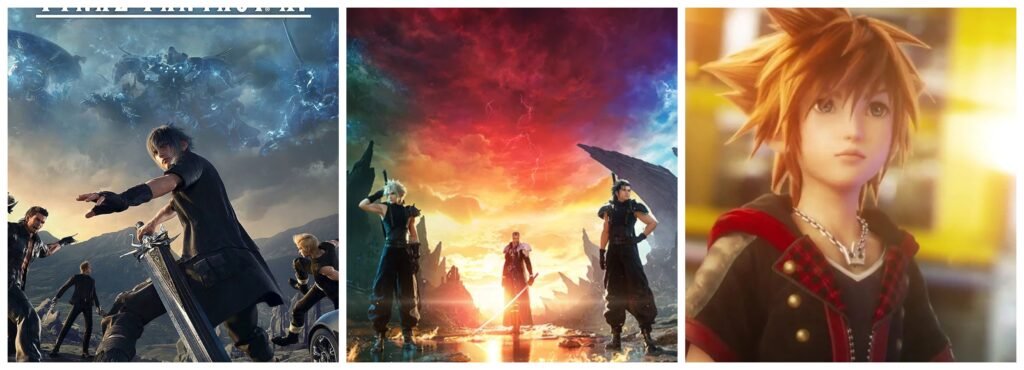
December has arrived, and with it comes my predictable annual gaming tradition. After spending October and November immersed in survival horror – games built entirely around dread, where every corridor and encounter carries that constant psychological weight – December represents the complete opposite. This is when I deliberately shift toward what I call “lighthearted” games, though anyone familiar with Square Enix knows that’s generous. These games still have emotional gut-punches and can absolutely crush you in combat, but they lack that specific sense of dread that defines horror.
To compensate for months of psychological tension, December becomes my indulgence month. I play games like Final Fantasy and other Square Enix titles – games I genuinely enjoy without that constant feeling that something terrible is about to happen. This year, I’m focusing on three Square Enix games and one additional challenge.
Final Fantasy VII Rebirth: Chadley’s Brutal and Legendary Challenges
FF7 Rebirth is potentially entering its fourth playthrough, but this time I have a specific mission: tackling Chadley’s Brutal and Legendary challenges. These optional fights sit at the absolute peak of the game’s difficulty curve, designed specifically for players who want to push the combat system to its limits.
In my previous playthroughs, I focused on the story and required content. Those Brutal and Legendary challenges remained unfinished – reminders of combat mastery I hadn’t achieved yet. Now I’m returning with a different approach, applying the same philosophy I’ve developed over months of tackling difficult games without guides.
No YouTube tutorials. No pre-built strategies copied from Reddit. Just me analyzing the combat system, experimenting with different approaches, and developing solutions that work for my playstyle. This represents how much my gaming approach has evolved – years ago, I would have immediately searched for the “optimal” strategy and followed it exactly. But that left me feeling hollow, like I’d checked off a box without actually understanding what I’d accomplished.
These challenges will test everything I’ve learned about action RPG combat: understanding enemy patterns, managing resources across extended fights, making split-second decisions about ability usage. It’s exactly what I want from December gaming – genuinely challenging without the constant dread of horror.
Kingdom Hearts 3: The Path to Platinum and Yozora
My Kingdom Hearts 3 platinum trophy sits frustratingly close to completion. Only a handful of tasks remain, but they include some of the most demanding content in the game.
First, there’s crafting the Ultima Weapon, Kingdom Hearts 3’s traditional ultimate keyblade. This requires collecting synthesis materials scattered throughout the entire game – not particularly difficult in terms of skill, but time-consuming and requiring systematic tracking of what I have versus what I still need.
Then there’s the ReMind DLC content, which I purchased but haven’t fully explored. This expansion adds new story scenarios and additional boss fights, specifically designed for players who felt the base game didn’t push them hard enough.
But the real challenge waiting for me is Yozora – the secret superboss representing the absolute pinnacle of Kingdom Hearts 3’s combat design. I haven’t completed this yet. Everything I’ve heard suggests this fight is brutal: attack patterns demanding perfect timing, multiple phases requiring different strategies, mechanics that can instantly end your run if you don’t understand the counters.
December feels like the right time to finally tackle this. The platinum trophy is the goal, but Yozora represents the real test.
Final Fantasy XV: The Complete Experience
FF15 occupies a strange place in my gaming history. I completed it once about three years ago, then never returned. That single playthrough left me with mixed feelings – I greatly appreciated the game but felt like I’d experienced an incomplete version.
The issue was that I somehow ended up playing the vanilla version rather than the Royal Edition. The Royal Edition includes significant content additions: expanded story sequences, additional gameplay features. I tried accessing this content but ran into problems with how it was distributed. I remember needing to go through the PSN mobile app to properly download the Royal Edition content, which created enough friction that I just played what I had installed.
This means my FF15 experience is incomplete. I also never played the Ardyn DLC, which explores the antagonist’s backstory and apparently recontextualizes significant portions of the main narrative. I never experienced the Royal Edition’s additional story content.
Three years later, I want to replay FF15 properly. I want the complete experience with all DLC and additional content from the Royal Edition. I want to see if my opinion changes when playing the definitive edition rather than the incomplete version I experienced before.
There’s also a practical element: I remember almost nothing about FF15’s combat system. It’s been long enough that I’ve forgotten the specific mechanics and strategies. In some ways, this will feel like playing a new game – familiar enough for basic context, but distant enough that rediscovering the systems will feel fresh.
The question is whether the Royal Edition download situation has been resolved. I’m hoping Square Enix has streamlined the process in the past three years. If not, I’ll need to figure out the correct sequence to actually access the content.
Expedition 33: Platinum Trophy and Defeating Simon
Finally, there’s Expedition 33. I’m going for the platinum trophy with one specific goal: defeating Simon. This represents the culmination of everything the game builds toward – the ultimate test proving you’ve mastered all systems and mechanics.
The platinum journey will naturally lead me to Simon, and defeating Simon will push me toward platinum completion. It’s a goal where the trophy hunt and the challenge I actually care about align perfectly.
The December Tradition
This pattern has held for years now. October and November are for horror games – games built around constant dread, where that psychological weight follows you through every moment. December is the opposite. It’s when I deliberately shift to games without that dread.
The games I’m playing in December can still be difficult. They can have punishing boss fights, complex systems, content that will absolutely destroy me if I’m unprepared. But they don’t carry that horror game dread – that feeling something terrible is lurking just out of sight, that constant psychological pressure defining survival horror.
After months of that dread, December is about indulgence. It’s about playing games I genuinely love without that psychological weight hanging over every moment. The horror games deliver that specific experience of dread that only survival horror provides, but I can only maintain that state for so long before needing something different.
December provides that reset – a reminder that games can be challenging and demanding without being constantly stressful. These Square Enix games offer exactly what I need: combat systems to master, stories to experience, optional challenges testing skill rather than psychological endurance.
If you’ve been following the Final Fantasy VII Remake trilogy, you’ve likely found yourself confused by the complex web of different worlds, timelines, and realities that the games have introduced. Terms like “Beagle world,” “Terrier world,” “world merging,” and “confluence of worlds” get thrown around in discussions, but what do they actually mean? How do these different worlds work? And why does any of it matter to the story?
The original 1997 Final Fantasy VII had none of this complexity – there was one world, one timeline, and one story. But Remake and Rebirth have fundamentally changed that. Now, the planet exists as what Sephiroth describes as “a multitude of worlds, ever unfolding,” and understanding how these worlds function is crucial to understanding where the story is heading.
This article aims to provide a comprehensive explanation of the different worlds concept in Final Fantasy VII Remake and Rebirth. We’ll explore how these worlds are created, how they’re connected, what evidence we have that they’re merging, and what Sephiroth’s plan actually involves. By the end, you should have a solid grasp of one of the most confusing aspects of the Remake trilogy’s story.
A few notes before we begin:
This article contains MAJOR SPOILERS for Final Fantasy VII Remake, Rebirth, and the original 1997 game
This article focuses on information from Remake and Rebirth, avoiding spoilers from other Compilation titles where possible
Some analysis is speculative, as we won’t have complete answers until Part 3 releases
This article builds upon concepts explored in my previous article about the “Shattered Planet Theory”
Now, let’s dive in…
The Nature of Multiple Worlds
The Planet’s True Nature
In Final Fantasy VII Rebirth, Sephiroth reveals a fundamental truth about the world that changes everything we thought we knew:
“The planet encompasses a multitude of worlds, ever unfolding.”
This isn’t just poetic language – it’s a literal description of how reality works in the Remake trilogy. The planet doesn’t exist as a single, fixed timeline. Instead, it’s a constantly shifting system of multiple worlds being created and destroyed through the Lifestream’s spiritual energy.
How Worlds Are Created
Worlds come into existence through two primary mechanisms:
1. Divergence from Fate
When someone makes a choice that defies the planet’s intended path – its “Fate” – a new world can be born. As Sephiroth says:
“When the boundaries of Fate are breached, new worlds are born.”
However, there’s an important timing detail here. New worlds couldn’t fully manifest while the Whispers still existed. The Whispers served as Fate’s enforcers, working to prevent divergences from becoming permanent realities.
We see this during Zack’s last stand in the Remake ending. Whispers surrounded him, seemingly trying to preserve his destined death. Only after Cloud’s party defeated the Whisper Harbinger at the Singularity was that restriction lifted. With Fate’s barriers finally broken, Zack’s survival became real – a successful divergence that created a new branch of reality.
Once the Whispers fell, the planet’s true nature was revealed. It entered a state of perpetual “unfolding,” continuously generating and dissolving realities through the Lifestream’s spiritual energy.
2. Dreams and Desires
The second way worlds can be created is even more fascinating: the Lifestream can manifest worlds from the hopes, dreams, and desires buried in people’s hearts.
The Lifestream isn’t just a flow of energy – it’s a living network made of consciousness itself. It contains every memory, feeling, and dream ever experienced by anyone who has lived. Once the boundaries of Fate were broken, the planet’s ability to generate worlds was no longer limited to physical divergences. It could now draw from thoughts and emotions as well.
Aerith’s “dream date” in Rebirth may be an example of this. Rather than being a literal alternate timeline, it appears to be a world manifested from within the Lifestream, shaped by her longing for connection and peace with Cloud. The planet, now unrestrained, materialized her emotional energy into tangible form.
These emotionally-created worlds blur the line between what’s real and what’s imagined, showing that the Lifestream can transform subjective experiences into objective existence.
Types of Worlds
Based on what we’ve seen in Remake and Rebirth, we can identify different worlds:
The Main World (Beagle Timeline)
This is the primary reality where Cloud’s journey takes place – the world we follow throughout most of Remake and Rebirth. It’s called the “Beagle” timeline by fans because Stamp, the mascot dog, appears as a beagle. This is the world where Zack died as originally destined, where Aerith falls into the Lifestream at the Forgotten Capital, and where the party continues their journey to stop Sephiroth.
Other Worlds: Born From Desires and Possibilities
When discussing the different worlds in Remake and Rebirth, it’s common to categorize them as either “divergent worlds” (like the Terrier timeline where Zack survived) or “dream worlds” (like Aerith’s dream date). However, I believe this distinction may not actually matter.
If the planet is constantly “unfolding” and creating worlds from the Lifestream’s spiritual energy – and the Lifestream contains ALL consciousness including memories, emotions, choices, AND unrealized desires – then all these worlds are fundamentally the same thing: worlds born from possibilities. Worlds of “what could’ve been.”
Whether that possibility comes from:
An actual divergence in outcome (Zack surviving his last stand instead of dying)
A desire never realized (Aerith’s longing for a peaceful date with Cloud)
A hope buried in someone’s heart
An alternate decision that was considered but not taken
…doesn’t change what these worlds ARE at their core. They’re all manifestations of the Lifestream’s energy, all expressions of possibility, all equally real in their own way. The Terrier world where Zack survived isn’t more “real” or “legitimate” than Aerith’s dream date world – they’re both worlds that the planet materialized from its spiritual consciousness.
The most prominent example is the “Terrier” world where Zack survived his last stand. In this world, Stamp appears as a terrier breed rather than a beagle – a visual shorthand to help players identify which world they’re viewing. We also see other worlds in the game with different versions of Stamp, confirming that multiple alternate realities exist beyond just the main Beagle world and the Terrier world.
Why do all these worlds exist? That’s where this theory comes in: they’re all born from desires, choices, and possibilities – different expressions of “what could’ve been” materialized by the Lifestream’s spiritual energy.
Dying Worlds
We see evidence of worlds in the process of dissolution. In some worlds, there are rifts or fractures visible in the skies, and people speak of the end of the world coming. Whether these are signs that the Lifestream is reclaiming these worlds, we don’t know for certain.
However, Sephiroth himself describes this cycle:
“When the boundaries of Fate are breached, new worlds are born. The planet encompasses a multitude of worlds, ever unfolding. Some quickly perish, while others endure. Yet even the most resilient worlds are doomed to fade. Nevertheless, their loss is not to be mourned, for it is not death but a homecoming that awaits them. In the planet’s embrace, all life is as one.”
From this, we can understand that dying worlds aren’t simply destroyed – they return to the Lifestream, absorbed back into the planet’s spiritual energy. The cycle isn’t just about creation; destruction and reabsorption are equally constant.
The Constant Cycle
The phrase “ever unfolding” in Sephiroth’s description is crucial. It suggests that this process is continuous and ongoing. New worlds are constantly being born while others are destroyed, all powered by the Lifestream’s spiritual energy. The planet exists in a state of perpetual creation and dissolution.
This has profound implications: if these worlds are made from the Lifestream’s energy, then their eventual unification would mean that same energy being reclaimed – potentially erasing everything those divergences produced.
Final Fantasy VII Remake: Material Ultimania Plus Deluxe hardcover art book featuring production art, CG imagery, storyboards, and game scripts from FF7 Remake Intergrade. Includes developer commentary, Episode INTERmission walkthroughs with maps, and extensive behind-the-scenes content.
The Lifestream as the Connecting Thread
The Lifestream: More Than Just Energy
To understand how different worlds relate to each other, we must first understand what the Lifestream actually is.
The Lifestream isn’t simply a flow of energy or a natural resource to be harvested (as Shinra does with Mako). It’s a living network of consciousness – a spiritual reservoir containing every memory, emotion, thought, dream, and experience of everyone who has ever lived. When people die, their consciousness returns to the Lifestream, adding to this collective repository of existence.
As described in the original Final Fantasy VII, the Lifestream is both a stream and a reservoir. It flows through the planet, but it also accumulates – storing all the accumulated knowledge, hopes, and dreams of all life. This dual nature becomes crucial when we consider multiple worlds.
The Universal Connection
Here’s the critical insight: the Lifestream connects all worlds.
Since all worlds are created from and sustained by the Lifestream’s spiritual energy, they’re not truly separate realities existing in isolation. They’re more like branches of the same tree, all drawing from and connected through the same root system. The Lifestream flows through every world, carrying consciousness and memories across the boundaries between them.
This connection explains several phenomena we observe in Remake and Rebirth:
Cross-World Awareness
Cloud’s Visions of Other Worlds
Throughout Rebirth, Cloud experiences visions and perceptions that don’t match the reality around him. He sees glimpses of other worlds – realities where different outcomes have occurred. This isn’t random hallucination; it’s his consciousness traveling through the Lifestream’s connections between worlds.
The most significant example occurs near the end of Rebirth. Cloud can perceive Zack and Aerith in another world, even interact with them, because the Lifestream allows consciousness to bridge between realities.
Aerith’s Knowledge
Aerith demonstrates knowledge of events she hasn’t experienced yet in her own world. As a Cetra with a deep connection to the Lifestream, she can sense information flowing through it – including memories and knowledge from other versions of herself in other worlds.
This doesn’t mean Aerith is consciously aware of “other Aeriths” as separate individuals. Rather, the Lifestream carries echoes of experiences across worlds, and her Cetra sensitivity allows her to perceive these echoes as vague foreknowledge or intuition.
Sephiroth’s Omnipresence
Sephiroth’s awareness extends across all worlds simultaneously. After falling into the Lifestream and being saturated with Mako energy, he gained an unprecedented connection to the planet’s spiritual network. This allows him to perceive and influence events across multiple realities.
Whether Sephiroth exists as one unified consciousness experiencing all worlds at once, or as multiple versions sharing the same mind, the result is the same: he operates as if he exists both within and beyond individual worlds, using the Lifestream as the medium for his influence.
The Lifestream as a Highway Between Worlds
Think of the Lifestream as a highway system connecting different cities (worlds). While each world exists as its own distinct reality, the Lifestream provides pathways between them:
Consciousness can travel through these pathways, allowing beings like Cloud to perceive other worlds
Information flows through the network, letting Cetra like Aerith sense knowledge from other realities
Spiritual energy moves between worlds, as we see when worlds are born or die
Physical transfer is possible for those with sufficient power or knowledge, as demonstrated by certain characters moving between worlds
This connection through the Lifestream is why the worlds aren’t truly independent. They exist in a state of constant potential interaction, always capable of affecting one another through the spiritual network that binds them together.
Why This Matters
Understanding that the Lifestream connects all worlds is essential to understanding what “world merging” actually means. If worlds were completely separate realities with no connection, merging them would be impossible. But because they’re all sustained by and connected through the same Lifestream, they can be drawn together – unified back into a single reality through the very spiritual network that created them in the first place.
This is the foundation for everything that follows: Sephiroth’s plan, Aerith’s abilities, and the very real possibility that all these divergent worlds could collapse back into one.
Final Fantasy VII: On the Way to a Smile The story that bridges Final Fantasy VII and Advent Children. Follow the survivors after Meteor’s fall as they face a new disease and rebuild their lives. Essential reading for FF7 fans exploring what happened between the game and film.
Evidence That Worlds Are Merging
The Central Question
Now that we understand what these worlds are and how they’re connected through the Lifestream, we come to a crucial question: Are these worlds actually merging? Or is this just speculation based on vague clues?
The answer is: Yes, we have concrete evidence that worlds are merging.
Let’s examine the three key pieces of evidence that confirm this phenomenon is actually occurring.
Evidence #1: Cloud Witnesses Two Worlds Merging in the Lifestream Portal
The most direct evidence comes from a moment where Cloud directly witnesses the merging process happening. Through a portal into the Lifestream, he sees two worlds colliding and combining – and the experience is horrific.
What accompanies this merging? Screams. Violence. Suffering.
This isn’t a peaceful unification. When worlds merge, the process is violent and traumatic. What exactly happens to the consciousness, lives, and memories within those worlds during the merge – whether they’re erased, transformed, or something else – we don’t know. But what’s clear is that the process itself causes immense anguish.
This confirms that merging is not theoretical – it’s actively happening, and the process is painful and violent.
Evidence #2: Sephiroth Reborn Attempted to Merge Fragmented Space-Time
During the battle with Sephiroth Reborn, he didn’t just fight the party – he actively attempted to merge the fragmented space-time around them. This isn’t background lore or implied threat; it’s a direct, observable action Sephiroth tried to take during the encounter.
Sephiroth Reborn represents a version of Sephiroth that had already absorbed significant power and tried to use that power to pull worlds together. His actions during this fight demonstrate that he has the ability to manipulate the mechanisms that separate realities.
The party defeated Sephiroth Reborn, stopping this particular attempt. However, this encounter confirms that Sephiroth has both the intention and capability to merge worlds.
Evidence #3: Zack and Cloud Fighting Together
One of the most significant moments in Rebirth occurs when Zack and Cloud – who exist in different worlds – fight together in the same space. This shouldn’t be possible under normal circumstances. They exist in separate realities (Cloud in the Beagle world, Zack in the Shiba Inu world), yet they’re able to interact and fight side by side.
How does this happen? Aerith brings them together through the Lifestream.
Using her Cetra abilities and control over the Lifestream, Aerith facilitates this cross-world connection, allowing the two warriors to unite and fight Sephiroth together at the Edge of Creation. However, after their battle, Sephiroth separates them. As he says, “Just as worlds unite, so too do they part.” He sends Zack to a different world – specifically, a dying world where the church in Sector 5 exists with Meteor looming overhead, close to destruction.
Whether Sephiroth created this separate world or simply sent Zack there is unclear. What matters is that he demonstrates he can also do what Aerith does: send people from one world to another through the Lifestream.
This event proves several things:
Worlds can be connected and unified through the Lifestream
Physical beings from different worlds can interact when properly facilitated
Both Aerith and Sephiroth have the power to control these connections
The boundaries between worlds are permeable and can be manipulated
What Is NOT Evidence of Merging
It’s important to clarify what we observe that isn’t actually evidence of worlds merging:
Aerith Sensing Zack – Aerith’s ability to sense Zack’s presence (such as when they’re on the boat with the Gi) is her Cetra sensitivity working through the Lifestream. Since all worlds are connected via the Lifestream, she can feel presences across worlds. This is about her special abilities, not worlds merging.
The Kalm Radio Broadcast – When Cloud hears the radio broadcast that mentions a tornado hitting Midgar, (which matches events from Zack’s world), this appears to be Cloud’s unique perception. Similar to how only he sees the rift in the sky at the ending. Cloud may be the only one hearing this broadcast from another world while everyone else hears normal news. This is Cloud perceiving across worlds, not worlds merging.
The Rift in the Sky – At the ending of Rebirth, Cloud sees a rift or crack in the sky that none of his companions can perceive. This is similar to the radio broadcast phenomenon – Cloud’s unique perception allowing him to see across world boundaries. Whether this is due to his damaged psyche, his connections to Jenova and Sephiroth, or some other factor, we don’t know for certain. What’s clear is that Cloud can perceive things from other realities that others cannot see. This is evidence of Cloud’s cross-world perception, not evidence of worlds merging.
Two Stamps in Junon – This was a developer error that was patched out in Version 1.030.
What World Merging Actually Involves
From the confirmed evidence, we can understand what the merging process looks like:
It’s violent and painful. The screams and suffering Cloud witnesses show that merging causes immense trauma – not just to individuals but to the planet itself.
It appears to be a natural process that can also be controlled. Sephiroth’s own words suggest that worlds naturally fade and return to the planet as part of the cycle: “Some quickly perish, while others endure. Yet even the most resilient worlds are doomed to fade… it is not death but a homecoming that awaits them.” However, Sephiroth Reborn demonstrates that this process can also be deliberately forced and accelerated by someone with power over the Lifestream.
It can be facilitated or prevented. Both Aerith and Sephiroth can manipulate the boundaries between worlds, either bringing them together or keeping them separate.
It’s already happening. These aren’t warnings about a future threat – the merging process is currently underway during the events of Rebirth.
The Implications
If worlds are already merging during Rebirth, this means Sephiroth’s plan is in motion. The process has begun. The question for Part 3 isn’t “will worlds merge?” but rather “can the merging be stopped, reversed, or will all realities collapse into Sephiroth’s desired unified world?”
Magic: The Gathering – Final Fantasy Starter Kit Everything you need to play Magic with Final Fantasy characters. Includes 2 ready-to-play 60-card decks (Cloud vs. Sephiroth), deck boxes, play guide, and MTG Arena codes. Features 10 exclusive Final Fantasy cards with themed artwork.
The Mechanics of World Merging
The Lifestream: The Medium of Merging
Now that we’ve established that worlds are actually merging, the next question is: How does it work?
The answer lies in what we’ve already discussed: the Lifestream.
Remember that all worlds are created from and sustained by the Lifestream’s spiritual energy. They’re not separate, isolated realities – they’re all branches of the same tree, all drawing from the same root system. The Lifestream flows through every world, connecting them through a shared network of consciousness and spiritual energy.
If the Lifestream is what creates and connects all worlds, then it follows that the Lifestream is also the mechanism through which worlds can merge. Just as it can generate new worlds by materializing spiritual energy into reality, it can also reclaim that energy, dissolving worlds back into itself and unifying separate realities into one.
Think of it this way: if worlds are like ice cubes floating in water, the Lifestream is the water itself. The ice cubes are solid and distinct, but they’re all made of the same substance. When they melt back into the water, they merge seamlessly because they were never truly separate – just temporarily solidified forms of the same thing.
Aerith’s Control Over the Lifestream
As a Cetra – one of the ancient people who could communicate with the planet – Aerith has a deep connection to and influence over the Lifestream. This connection becomes even more significant when we consider “Omni-Aerith” – the Aerith who exists within the Lifestream itself.
This Omni-Aerith can choose to intervene in the events of different worlds. She can take control of the various Aeriths that exist across these realities in certain situations, as we see at the Temple of the Ancients when she confronts Sephiroth directly. Many believe the Aerith in the Dream Date is Omni-Aerith herself, not just the living Aerith from the main world.
What can Aerith do with this power?
Guide people between worlds – We see this when she brings Zack and Cloud together, facilitating their meeting across different realities.
Facilitate connections and unions – She can create bridges through the Lifestream, allowing interaction between worlds that would normally remain separate.
Sense across worlds – Her Cetra sensitivity allows her to perceive presences and events in other realities through the Lifestream’s network.
Aerith’s power over the Lifestream appears to be focused on connection and preservation – bringing things together, maintaining links between worlds, and protecting what exists within the spiritual network.
Sephiroth’s Control Over the Lifestream
Sephiroth also possesses power over the Lifestream, but his control stems from a different source and serves a different purpose.
After falling into the Lifestream, and being saturated with Mako energy, Sephiroth gained an unprecedented connection to the planet’s spiritual network. But his power was amplified even further when he absorbed the Whispers at the end of Remake. The Whispers were the arbiters of Fate – entities that enforced the planet’s intended destiny. By absorbing them, Sephiroth didn’t just gain their power; he gained control over the mechanisms of Fate itself.
What can Sephiroth do with this power?
Manipulate Lifestream connections – He can control how worlds interact through the spiritual network.
Separate worlds and send people to specific worlds – We see this when he separates Zack and Cloud after their fight, sending Zack to the dying church world.
Push people out of worlds into voids – He can trap people in isolated spaces, cutting them off from the Lifestream’s connections.
Create or manipulate worlds – Though the extent of this ability is unclear, he demonstrates power over the creation and structure of realities.
Force worlds to merge – As Sephiroth Reborn, he tried to merge fragmented space-time, demonstrating that he can accelerate or control the merging process.
Sephiroth’s power over the Lifestream appears to be focused on control and unification – forcing worlds together, isolating individuals, and manipulating the boundaries between realities to serve his ultimate plan.
The Push and Pull
What we’re witnessing in Rebirth is essentially a conflict between two opposing forces, both wielding power over the same medium:
Aerith uses the Lifestream to connect and preserve – bringing Zack and Cloud together, maintaining the separation between worlds, protecting what exists.
Sephiroth uses the Lifestream to isolate and merge – separating people, forcing worlds to combine, pursuing his vision of unified reality under his control.
Both are manipulating the same spiritual network, but with opposite goals. Aerith works to maintain the distinctions between worlds while facilitating helpful connections. Sephiroth works to erase those distinctions entirely, collapsing all realities into one.
Why This Matters
Understanding that the Lifestream is the mechanism of world merging – and that both Aerith and Sephiroth can control it – is crucial to understanding the stakes of the story.
The battle isn’t just about stopping Sephiroth from doing something in the future. It’s about controlling the Lifestream right now, in the present. Every time Aerith facilitates a connection or Sephiroth forces a merge, they’re actively shaping reality through the planet’s spiritual network.
The question for Part 3 isn’t just “will Sephiroth succeed?” but also “can Aerith’s control over the Lifestream counter Sephiroth’s, or will his power prove overwhelming?”
Final Fantasy VII Remake: Material Ultimania 300+ pages of production art, character models, developer commentary, and exclusive voice actor interviews. The definitive behind-the-scenes look at the beloved remake.
Sephiroth’s Plan
“Worlds Unbound by Fate and Histories Unwritten”
At the Temple of the Ancients, Sephiroth reveals his plan to claim his birthright, declaring that it shall encompass “worlds unbound by fate and histories unwritten.” He states that he plans to reunite not only the fragmented pieces of Jenova, but the “errant worlds” as well.
At first glance, this might sound like he’s advocating for freedom – liberating worlds from predetermined destinies and allowing new possibilities to emerge.
But this interpretation misses the crucial context of what Sephiroth has actually done and what he’s working toward.
The True Meaning
When Sephiroth says his plan shall “encompass worlds unbound by fate and histories unwritten,” he’s describing the current state of these multiple worlds and what he intends to do with them.
“Worlds unbound by fate” – This describes what these worlds already ARE. After the party defeated the Whisper Harbinger at the end of Remake, the Whispers – the arbiters who enforced the planet’s predetermined destiny – were destroyed. All these divergent worlds that now exist are “unbound” because there’s no longer a Fate enforcing a single predetermined path. They’re free-floating, uncontrolled realities.
But Sephiroth’s plan is to “encompass” these worlds – to gather them, merge them, and unify them into ONE single world. And in that unified reality, there won’t be freedom or multiple possibilities. Instead, HE will control Fate.
“Histories unwritten” – Once all worlds merge into one, all those divergent histories – all the different outcomes and possibilities that existed across multiple realities – will be erased. There will be only one unified present with one future – the future Sephiroth will write. No alternatives. No other possibilities. Just his singular vision made manifest.
So Sephiroth’s declaration means: “My plan will bring together all these currently-free worlds and consolidate them into one reality where I alone control destiny.”
After defeating the Whisper Harbinger and absorbing their power, Sephiroth didn’t free the worlds from Fate. He took control of Fate’s mechanisms for himself. Now he seeks to use that control to merge all “errant worlds” – all the divergent realities that shouldn’t exist according to his design – into one reality under his absolute dominion.
Why Sephiroth Wants This
Sephiroth’s plan to merge all worlds serves multiple purposes:
1. Absolute Control
In a multiverse where countless worlds exist with countless different outcomes, Sephiroth can never achieve total victory. There will always be a world where Cloud defeats him, where Aerith survives, where his plans fail. Alternative realities mean alternative possibilities – and alternatives are threats to absolute power.
But in a single unified world? There are no alternatives. No other timelines where things turn out differently. No parallel versions of events that could undermine his control. Just one reality, shaped according to his will, with no possibility of escape or resistance from another world.
2. The Power of Suffering
The merging process itself generates immense suffering. We see this directly when Cloud witnesses worlds colliding – the screams, the violence, the agony of consciousness being torn apart or transformed. This isn’t just an unfortunate side effect; it may be part of the appeal for Sephiroth.
Sephiroth has always drawn power from negative emotions and energy. In the original Final Fantasy VII, his plan involved wounding the planet with Meteor so the Lifestream would gather to heal the wound, which he would then absorb to become a god. The suffering and death caused by Meteor was essential to his plan – it was the injury that would make the planet vulnerable.
Similarly, the suffering caused by merging worlds may empower Sephiroth. Every world that dissolves, every consciousness that experiences that dissolution, every scream that reverberates through the Lifestream – all of it feeds negative energy into the spiritual network that Sephiroth has learned to tap into and control.
The merging process isn’t just a means to an end. The pain it causes may be a benefit in itself, strengthening Sephiroth as he works toward his ultimate goal.
3. Eliminating the White Materia
There’s another strategic reason for Sephiroth to merge and destroy worlds: eliminating all versions of Aerith and all versions of the White Materia before they can reach the unified reality.
In the original game, Aerith prayed using the White Materia to cast Holy – the ultimate protective magic meant to save the planet. However, Sephiroth was able to block Holy, delaying its release. Only after the party defeated Sephiroth in the Northern Crater was Holy finally released, but by then Meteor was already too close. Aerith ultimately had to use the Lifestream itself to stop and destroy Meteor, working in conjunction with Holy.
The White Materia and Aerith’s ability to use it represent one of the greatest threats to Sephiroth’s plans. If multiple worlds exist, that means multiple Aeriths exist, and potentially multiple White Materias that could threaten him.
By merging worlds and destroying the Aeriths within them before the final unification, Sephiroth aims to ensure that no White Materia – no Holy – exists in his unified world. Without the planet’s ultimate defense, nothing can stop him from achieving godhood.
However, this plan ultimately fails. Despite Sephiroth’s efforts, Cloud recovers the White Materia and returns it to Aerith in the main world. The potential for Holy still exists in the reality Sephiroth is trying to control, meaning his attempt to completely erase Aerith’s influence did not succeed.
The Ultimate Goal
Sephiroth’s ultimate goal is the same as it was in the original Final Fantasy VII, but with an expanded scope:
To become a god by absorbing the Lifestream – not just of one world, but of all worlds merged into one.
By collapsing all realities into a single unified existence, Sephiroth creates a scenario where:
All spiritual energy is concentrated in one Lifestream
There are no alternative realities where he fails
No White Materia exists to summon Holy against him
The suffering of the merging process empowers him
He controls the mechanisms of Fate itself
In this unified world “unbound by fate,” Sephiroth would be the one who writes history – as a god, unchallenged and unopposed, with all of reality under his absolute control forever.
The Stakes
Understanding Sephiroth’s plan makes clear what’s actually at stake in the Remake trilogy:
This isn’t just about saving one world from Meteor. It’s about preserving the existence of multiple worlds – multiple possibilities, multiple futures, multiple chances for hope and resistance. It’s about preventing all of reality from collapsing into a single nightmare where Sephiroth reigns as an unchallengeable god.
The party isn’t just fighting to save their world. They’re fighting to save the very concept of alternatives – the possibility that things can be different, that other outcomes are possible, that hope can exist in more than one form.
While we’ve established a solid understanding of how different worlds work in the Remake trilogy, many crucial questions remain unanswered. These are the mysteries that Part 3 will likely need to address.
What Happens When Worlds Merge?
We know that the merging process is violent and painful – we’ve seen the screams and suffering that accompany it. But what actually happens to the worlds themselves and everything within them?
Is it erasure? Do the merged worlds simply cease to exist, with everything in them being dissolved back into the Lifestream as raw spiritual energy? Are all the lives, memories, and experiences in those worlds completely erased from existence?
Is it transformation? Do the worlds combine in some way, with elements from both realities blending together to create something new? Could people, places, or events from the merged worlds persist in some altered form?
Is it selective? Does merging affect different things differently – perhaps erasing some elements while preserving others based on some unknown criteria?
We simply don’t know. Cloud witnesses the violence of the process, but we don’t see the aftermath. We don’t know what remains after two worlds merge into one.
What Happens to People When Worlds Merge?
This might be the most important unanswered question, and it has profound implications for characters we care about.
When a world merges with another, what becomes of the people living in it?
Do they cease to exist? Are they erased along with their world, their consciousness dissolving into the Lifestream?
Do they continue existing in the unified world? If so, do they retain their memories? Their identities? Or are they fundamentally changed by the merging process?
Does it depend on the person? Might some people survive the merging while others don’t, based on factors like their connection to the Lifestream, their spiritual strength, or their role in the story?
The answer to this question determines the fate of every person living in the worlds that Sephiroth plans to merge. It’s not just about whether Zack survives – it’s about whether entire populations across multiple realities will live or die.
What Happens When a Divergent World Merges With the Main World?
Most of our discussion has focused on worlds merging with each other in general terms. But there’s a specific scenario that deserves special attention: What happens when a divergent world merges specifically with the main Beagle world?
The main world is where Cloud’s journey takes place, where most of the story unfolds. If Sephiroth’s plan succeeds and all worlds merge into one, presumably many divergent worlds will be absorbed into this main reality.
But what does that absorption look like?
Does the main world change? If a divergent world merges into it, does the main reality suddenly incorporate elements from that other world? Could events that happened in the divergent world suddenly become part of the main world’s history?
Does the main world stay dominant? Perhaps the main world serves as the “base” reality, with divergent worlds simply dissolving into it without fundamentally altering it?
Is there even a meaningful distinction? Maybe once worlds start merging, the concept of a “main” world becomes irrelevant, and all worlds are equally subject to transformation?
This question is crucial because it affects our understanding of what the party is fighting to preserve. Are they fighting to keep their specific world intact, or are they fighting to prevent ALL worlds from being destroyed and reformed according to Sephiroth’s design?
What Becomes of Multiple Versions of the Same Person?
Perhaps the most philosophically complex question: What happens when there are multiple versions of the same person across different worlds, and those worlds merge?
We know multiple versions of Aerith exist. Multiple versions of Zack. Presumably multiple versions of Cloud, Tifa, Barret, and everyone else. When worlds merge, what happens to these duplicate individuals?
Do they merge into one person? If so, does that person retain all the memories and experiences of every version? Would that even be psychologically possible, or would it create a fractured consciousness?
Does only one version survive? If so, which one? The version from the world that serves as the “base” reality? The version with the strongest will or connection to the Lifestream? A random version?
Do they all continue existing separately? Could the unified world contain multiple versions of the same person existing simultaneously? How would that even work?
This question is particularly important for Zack. If his world merges with Cloud’s, what happens? Do we end up with both Zacks – the one who died in the Beagle world and the one who survived in another world? Does one version replace the other? Do they somehow merge into a single Zack who remembers both dying and surviving?
The answer to this question could fundamentally change our understanding of identity, consciousness, and what it means to be “yourself” in a multiverse.
Why These Questions Matter
These unanswered questions aren’t just intellectual curiosities – they’re central to understanding the stakes of the story and what the characters are fighting for.
If merging means total erasure, then Sephiroth’s plan is essentially genocide on a multiversal scale, with countless lives across countless worlds being annihilated.
If merging means transformation or selective preservation, then the moral calculus becomes more complex. Is it wrong to merge worlds if people survive the process? What if they survive but are fundamentally changed?
And if we don’t know what happens when multiple versions of someone exist in a merged world, how can we even predict what victory or defeat looks like? If Cloud defeats Sephiroth but the worlds have already merged, what world does he end up in? What version of himself is he?
My Personal Take:
Personally, I lean toward the total erasure interpretation. It makes the most sense to me and simplifies things considerably. If worlds are created from the Lifestream’s spiritual energy, then when they merge back together, that energy is simply reclaimed – returning everything to the Lifestream as raw spiritual essence. The world dissolves, the people dissolve, everything returns to the source.
This interpretation aligns with Sephiroth’s description of worlds fading as a “homecoming” to the planet. It’s not death in the traditional sense, but it is the end of individual existence – consciousness returning to the collective whole of the Lifestream.
It also raises the stakes to their maximum: if merging means erasure, then every world Sephiroth destroys represents countless lives being snuffed out, even if their spiritual energy continues to exist in some diffused form within the Lifestream. The party isn’t just fighting to prevent change – they’re fighting to prevent annihilation.
However, this is ultimately speculation on my part. Part 3 will need to answer these questions – or at least provide enough information for us to understand what’s truly at stake in this conflict over the nature of reality itself.
Conclusion
Bringing It All Together
The concept of different worlds in Final Fantasy VII Remake and Rebirth is complex, but it follows a coherent internal logic once you understand the key principles:
The Foundation:
The planet exists as “a multitude of worlds, ever unfolding”
These worlds are created from and sustained by the Lifestream’s spiritual energy
They’re all essentially “what could’ve been” – possibilities made manifest, whether from actual divergences or from dreams and desires
The Connection:
All worlds are connected through the Lifestream
This connection allows consciousness to travel between worlds
It also provides the mechanism through which worlds can merge back together
The Evidence:
Cloud witnesses worlds merging (with screams and violence)
Sephiroth Reborn attempted to merge fragmented space-time
Zack and Cloud fought together across worlds (brought together by Aerith, separated by Sephiroth)
The Mechanics:
The Lifestream is the medium through which merging happens
Both Aerith and Sephiroth can manipulate the Lifestream to control world interactions
Aerith focuses on connection and preservation
Sephiroth focuses on isolation and forced unification
The Stakes:
Sephiroth wants to merge all “worlds unbound by fate” into ONE world where he controls destiny
This would eliminate all alternatives, all other possibilities, all resistance
The merging process itself causes immense suffering
What happens to people and consciousness during merging remains unknown
What This Means for Part 3
Understanding different worlds and how they function sets up the central conflict for the trilogy’s conclusion:
The party isn’t just fighting to save their world from Meteor – they’re fighting to preserve the existence of multiple worlds, multiple possibilities, multiple futures. They’re fighting against Sephiroth’s vision of a single unified reality where he reigns as an unchallengeable god with absolute control over Fate.
Whether they can prevent the complete merging of all worlds, what happens to people like Zack who exist in divergent realities, and whether multiple versions of the same person can coexist – these are the questions Part 3 must answer.
Final Thoughts
The Remake trilogy has transformed Final Fantasy VII from a story about saving one planet from one villain into a story about the nature of reality itself – about choice and destiny, about what makes a world “real,” about whether multiple possibilities can coexist or must collapse into a single truth.
It’s ambitious, complex, and sometimes confusing. But beneath the complexity lies a story about the same fundamental themes as the original: the value of life, the importance of memory, and the question of what we’re willing to sacrifice to protect the people and world we love.
Only now, “the world we love” might be multiple worlds, each containing lives worth preserving, each representing possibilities worth fighting for.
Part 3 will determine whether those possibilities survive – or whether Sephiroth succeeds in collapsing them all into his singular, terrible vision of eternity.
If you’ve been following the Final Fantasy VII Remake trilogy, you’ve probably come across various theories trying to make sense of the complex storyline involving multiple worlds, the Whispers, and Sephiroth’s true intentions. One of the most comprehensive theory videos I’ve encountered attempts to explain how all the puzzle pieces fit together through what I’m calling the “Shattered Planet Theory.”
What is this article about?
This article is my detailed response to a popular Final Fantasy VII Rebirth theory video that proposes an elaborate explanation for the game’s mysteries. The video suggests that the Cetra originally split the planet into multiple worlds to contain Jenova, and that Sephiroth’s plan involves reuniting these fractured realities. It’s an ambitious theory that touches on nearly every aspect of Remake and Rebirth’s lore.
The goal of this article is to provide my thoughts, analysis, and critique of this theory. I’ll be going through each major point the video makes, examining the evidence (or lack thereof), comparing it to what we know from the original Final Fantasy VII, and offering my own interpretations. Some points I agree with, some I partially agree with, and others I believe are based on faulty assumptions or misinterpretations of the lore.
Before you continue reading, I highly recommend watching the original theory video yourself so you can form your own opinions. Understanding the full context of each argument will help you better evaluate my responses.
A few notes before we begin:
This article contains MAJOR SPOILERS for Final Fantasy VII Remake, Rebirth, and the original 1997 game
I’ve tried to base my analysis only on information from Remake and Rebirth, avoiding spoilers from other Compilation titles where possible
Some of my rebuttals are speculative, as we won’t have complete answers until Part 3 releases
I welcome respectful disagreement and discussion in the comments
Now, let’s dive into the 32 points…
The 32 Points of the Theory
Point 1: The Planet’s Cyclical Nature
The planet operates through continuous cycles of convergence and divergence. Life comes from the Lifestream and returns to it upon death. The Lifestream is both a reservoir and stream containing all accumulated memories, emotions, knowledge, hopes and dreams of everyone who has ever lived. The planet has its own will and enforces that will through the Whispers.
Point 2: The Whispers as Arbiters of Fate
The Whispers are weapons of the planet that exist across all worlds. They’re drawn to those who attempt to alter destiny’s course and work to prevent such changes. They can only be seen by those who defy destiny or come into contact with someone attempting to alter destiny. They’re led by the Whisper Harbinger.
Point 3: Multiple Worlds Are Created Through Divergence
The planet encompasses multiple worlds that are constantly being created and destroyed. New worlds are born when choices diverge from the planet’s intended will, represented by rainbow effects in Rebirth. The planet materializes worlds and populates them by tapping into the Lifestream’s spiritual energy.
My Take:
This point makes sense, but timing and cause are important. Sephiroth was the catalyst – his act of defying the planet’s intended path created the first breach in Fate. As he says,
“When the boundaries of Fate are breached, new worlds are born.”
However, those new worlds couldn’t fully manifest while the Whispers still existed. The Whispers served as Fate’s enforcers, preventing divergences from becoming permanent. We saw this during Zack’s last stand, where Whispers surrounded him as if to preserve the destined outcome of his death. Only after the party defeated the Whisper Harbinger was that restriction lifted, allowing the divergence to finally succeed and Zack’s survival to become real.
Once Fate’s barriers fell, the planet’s true nature – what Sephiroth later describes in Rebirth – was revealed:
“The planet encompasses a multitude of worlds, ever unfolding.”
The phrase “ever unfolding” can be read in two ways:
1. Divergence-driven creation – Each new world is formed when choices deviate from the planet’s original will. The planet automatically materializes a new branch in response to that act of defiance, drawing energy from the Lifestream to populate it. In this view, new realities are choice-based – a direct reflection of diverging outcomes.
2. Autonomous creation – After Fate’s collapse, the planet’s natural creative cycle resumes without restriction. Worlds are born and destroyed continuously, not because of specific divergences, but because the Lifestream is now unstable and self-propagating. Creation becomes constant – a natural consequence of removing the limits Fate once imposed.
Either way, Sephiroth’s defiance was the spark that exposed this truth. The planet now exists in a state of perpetual unfolding, generating and dissolving realities through its own spiritual energy.
This directly connects to Point 29: if these worlds are made from the Lifestream’s energy, their eventual unification would mean that same energy being reclaimed – erasing everything those divergences produced.
Point 4: Worlds Can Be Created from Dreams and Desires
The Lifestream doesn’t distinguish between real lived memories and unrealized desires buried in people’s hearts. Aerith’s date world may have been manifested through the Lifestream using her hopes and dreams. Spiritual energy is actually a manifestation of our knowledge and memories, including our hopes and dreams.
My Take:
This idea fits perfectly with Point 3. Once the boundaries of Fate were broken, the planet’s natural ability to generate worlds was no longer limited to physical divergences – it could now draw from thoughts, emotions, and desires as well.
The Lifestream isn’t a passive flow of energy; it’s a living network made of consciousness itself – every memory, feeling, and dream ever experienced. When Sephiroth described the planet as “a multitude of worlds, ever unfolding,” that “unfolding” doesn’t just refer to alternate timelines; it can also mean worlds born from the inner lives of people connected to the Lifestream.
In that sense, Aerith’s “date world” may not be a literal alternate reality but a world manifested from within the Lifestream, shaped by her longing for connection and peace. The planet, now unrestrained, can materialize even emotional energy into tangible form.
These emotionally created worlds blur the line between what’s real and what’s imagined, showing that the Lifestream can transform subjective experiences into objective existence. Once Fate’s barriers fell, dreams and desires became just as capable of creating worlds as physical acts of divergence.
And when these emotionally formed worlds eventually collapse – just like the divergent ones – the planet feels that pain as well, a grief later expressed in the screams described in Point 28.
Point 5: Three Possibilities for Reincarnation Across Worlds
When consciousness re-enters the Lifestream and creates new life, three things could happen: (1) spiritual energy is diffused to create completely different life within the same world, (2) completely new life is created in a different world, or (3) people are reborn as themselves but in different worlds, keeping their spiritual energy intact.
Point 6: Sephiroth and Aerith Exist Across Multiple Worlds
Sephiroth is aware that multiple worlds exist and is connected as one conscious being across all worlds. He also exists outside any specific world at the edge of creation. He uses the black robes to physically manifest and manipulate people and events. Aerith also possesses some power not contained to singular worlds, evidenced by her knowledge of future events.
My Take:
This point is mostly accurate, but it needs to be viewed through the framework of what Sephiroth calls “the true nature of reality.”
The planet continuously generates these worlds through the Lifestream, and both Sephiroth and Aerith are spiritual entities capable of existing within or beyond that process. Sephiroth experiences awareness across all worlds simultaneously, though it’s unclear whether he is a single unified consciousness or multiple versions sharing the same mind. What’s certain is that his perception extends through every branch of reality, allowing him to act as if he exists both within and beyond them.
Aerith, by contrast, operates from within the flow. Rather than controlling her other selves, each version of her is linked through the shared memory of the Lifestream. When she shows knowledge of events she hasn’t yet experienced, it may be because those memories are traveling across the spiritual current connecting every Aerith born from the same source.
However, this connection doesn’t mean guaranteed survival either. When world unification occurs, it’s unknown what becomes of this collective awareness. The “Omni-Aerith” could be erased along with the rest of the Lifestream’s fragments – or she might persist in some altered form within the unified reality. The story leaves this ambiguous.
What seems clear, however, is Sephiroth’s intention: he wants to destroy every living Aerith before unification begins, ensuring that no White Materias from those worlds survive to reach the main reality. His goal isn’t only to eliminate Aerith’s presence but also to prevent the planet’s greatest defense – Holy – from existing in the unified world.
However, this plan ultimately fails. Cloud recovers the White Materia and returns it to Aerith in the main world, meaning that despite Sephiroth’s efforts, the potential for Holy still exists in the reality he’s trying to control. Whether the “Omni-Aerith” persists or vanishes after unification, Sephiroth’s attempt to erase her influence completely did not succeed.
Point 7: Rifts Indicate Dying Worlds
Worlds that are fading or about to expire have a rift visible in the sky. These rifts may only be visible to people who have accepted that the world is ending. This explains why Zack couldn’t see the rift at first but could after Elmyra mentioned the world ending, and why only Cloud can see the rift at the end of Rebirth.
My Take:
I agree that rifts in the sky are signs that the world is about to end.
However, saying that “These rifts may only be visible to people who have accepted that the world is ending” is a stretch.
Yes, Zack didn’t see the rift initially in Remake, but so what? The developers could’ve just decided NOT TO SHOW IT in that scene. This is just a logistics/directorial choice – they may have wanted to reveal it at a specific dramatic moment rather than showing it from the beginning.
The video is making a big assumption about the rules of who can see rifts based on limited evidence. There could be many other explanations:
The rift appeared later, after Zack’s opening scene
It was there but off-camera
It’s a simple storytelling choice to reveal it when narratively appropriate
We don’t have enough evidence to conclude that rifts are only visible to those who “accept the world is ending.” That’s the video reading too much into what might just be a creative decision by the developers.
Point 8: All Worlds Are Connected via the Lifestream
All worlds are connected through the Lifestream, as demonstrated by Cloud seeing into Aerith’s dream world while sleeping and Aerith feeling Zack’s hand. However, individual worlds can have their portion of the Lifestream dry up, as seen with the empty reactor in Rebirth.
My Take:
This is all true and an accurate interpretation I think.
The evidence clearly supports that all worlds are connected via the Lifestream:
Cloud seeing into Aerith’s dream world while sleeping
Aerith feeling Zack’s hand across worlds
Individual worlds having their own portions of Lifestream that can dry up (empty reactor)
However, I’m still confused by the mechanics of how Cloud is able to gain access to these worlds through sleep.
What is it about sleeping/dreaming that allows Cloud to cross between worlds via the Lifestream? Is it:
Because he has Jenova cells?
Because of his connection to Aerith?
Something about the dream state that connects to the Lifestream?
His fractured mental state making him more susceptible to crossing realities?
The video doesn’t explain this mechanism, and it’s an important unanswered question about how the Lifestream connection between worlds actually works for individuals.
Point 9: Worlds Can Be Manipulated by External Forces
Worlds can be united or parted through external influence that doesn’t come from the planet, such as when Sephiroth parted Cloud and Zack or sent Zack between worlds. Worlds can also be merged into one another via external intervention, which appears to be part of Sephiroth’s plan.
My Take:
After the events of Final Fantasy VII Remake, this point becomes especially significant. When Sephiroth absorbed the Whispers – the planet’s agents of Fate – he gained control over the very system that governed the flow of reality. That act made him the first being capable of directly manipulating the structure of the multiverse itself.
Unlike before, where the planet alone created and destroyed worlds (see Point 3), Sephiroth can now imitate that process. The scene near the end of Rebirth, where he separates Cloud and Zack and sends Zack into a new space resembling the church, isn’t just a transfer between existing realities – it’s the creation of a contained world, formed through Sephiroth’s will.
In other words, he’s not merely exploiting instability between worlds anymore; he’s replicating the planet’s creative function. This explains how he’s able to merge, fracture, or fabricate realities to serve his plan. By controlling Fate’s former power, Sephiroth has effectively become an external force that can rival the planet itself.
This also clarifies the philosophical tension between him and Aerith. The planet generates worlds as a natural cycle of life, while Sephiroth creates worlds through domination – by seizing control of the system meant to maintain balance.
However, even this power has limits. When the final unification occurs (see Point 29), and all worlds are reabsorbed by the planet, Sephiroth’s control over Fate’s mechanisms may end as well. Whether he survives beyond that collapse remains an open question – but his ability to create and manipulate worlds is what enables the unification in the first place.
🌟 Final Fantasy VII Remake: Material Ultimania 300+ pages of production art, character models, developer commentary, and exclusive voice actor interviews. The definitive behind-the-scenes look at the beloved remake.
Disclaimer: I earn from qualifying purchases.
Point 10: Something Feeds on Negative Energy
Something (either Sephiroth, Jenova, or the unification of worlds) feeds off negative energy like despair and grief. Sephiroth suggests that war can “put things right” and create “new unity” through anger, desolation, and hatred, making the planet “once more made whole.”
My Take:
I agree with this point, but unfortunately this is one of the mysteries. What exactly feeds off these negative energies and why?
However, this concept has evolved significantly across the FF7 timeline:
In the original FF7: This concept did NOT exist. Sephiroth’s plan was simply to summon Meteor to wound the planet, absorb the Lifestream when it gathered to heal, and become a god. There was NO concept of him feeding on negative emotions or needing despair/grief.
In Advent Children: Sephiroth traveled through the Lifestream leaving his mark on those with vulnerable spirits, spreading despair to make people more susceptible to Geostigma infection. His plan was to gather the souls of Geostigma’s deceased victims to corrupt the Lifestream and take control of the planet. So he WAS working with negative emotions, but more passively/indirectly.
In Remake/Rebirth: Sephiroth has learned to ACTIVELY harness negative emotions through Jenova to create a negative Lifestream and empower himself. A large part of his motivation is to instill as much hatred, grief, despair, and pain in the party (especially Cloud) as possible so he can harness their negative feelings and strengthen himself further.
This is a significant evolution – from no use of negative emotions (original), to passive spreading of despair (Advent Children), to active harvesting and feeding on negative emotions for power (Remake/Rebirth). This strongly suggests that this Sephiroth has learned and evolved through experiencing the events of both the original game AND Advent Children, further supporting the sequel theory.
Point 11: Jenova Arrived 2,000 Years Ago
Jenova came from space and crashed on Gaia roughly 2,000 years ago. The nature of Jenova’s arrival is unclear – it may have arrived via the Gi’s home world that it had already consumed, or the Gi may have summoned Jenova using the Black Materia before the Cetra could steal it.
My Take:
I agree Jenova arrived roughly 2,000 years ago, but I disagree with the video’s speculation about the Gi’s connection to Jenova’s arrival.
I don’t think the Gi was trying to summon Jenova. The Gi were unsuccessful in summoning Meteor using the Black Materia because the Cetra stopped them and stole it. That’s a completely different event from Jenova’s arrival.
My interpretation: Jenova may have arrived from the Gi’s home world or planet – it tried to consume that world, and then went after Gaia next. But the Gi and Jenova have NO direct relationship. These are two completely different factions or entities:
The Gi are refugees from a destroyed world seeking freedom from their cursed existence
Jenova is an alien parasite that destroys planets
The video is speculating a connection between them that doesn’t have clear evidence. Just because both involve catastrophic events doesn’t mean they’re related. The Gi’s story and Jenova’s arrival are separate tragedies that both affected Gaia, but there’s no indication the Gi summoned Jenova or that they’re otherwise connected.
Point 12: Jenova Can Mimic the Dead
Jenova possesses the ability to mimic the dead, stealing the faces and voices of mothers, fathers, sisters, and brothers to sow discord among both the Cetra and humans. This was one of Jenova’s primary weapons against the ancients.
Point 13: The Cetra Were Planet Stewards Who Fought Jenova
The Cetra were the original stewards of the planet who could communicate with it to understand its desires and needs. They stood against both Jenova and the Gi to protect the planet. Jenova was successful in killing off almost all of the Cetra 2,000 years ago.
Point 14: Outsiders Cannot Join the Lifestream
Since Jenova did not originate from the Lifestream, it couldn’t rejoin the Lifestream, just as the Gi could not. Those not born of the Lifestream can never join its flow. This is why Jenova fell into a deep slumber rather than returning to the planet after being defeated.
Point 15: The Shattered Planet Theory – The Cetra Split the Planet
The planet was originally whole and served as the home of the ancients until Jenova arrived. Recognizing they couldn’t beat Jenova and with the planet’s survival at stake, the Cetra were forced to split their home into multiple realities – possibly the first “rainbowed action.” They used their knowledge of the Lifestream to divide the planet into multiple worlds.
My Rebuttal:
This theory has NO basis in the original Final Fantasy VII whatsoever. In the original game:
The Cetra did NOT split the planet into multiple worlds. The Cetra defeated Jenova and quarantined it within the North Crater where it remained in stasis for millennia. There were no multiple timelines or realities involved.
The Cetra did NOT split Jenova’s body into pieces either. Jenova was sealed whole. The different Jenova boss forms that appear in the game are NOT pieces the Cetra created. According to the lore:
Five years after the Nibelheim Incident, Sephiroth acquired Jenova’s main body from Shinra
Jenova (under Sephiroth’s control) left behind pieces of her body as it traveled – these transformed into the boss monsters
Jenova∙BIRTH was created from Jenova’s arm
These pieces were created BY SEPHIROTH/JENOVA during the game’s events, NOT by the Cetra 2,000 years ago
This all happened in ONE world
Multiple worlds/timelines are COMPLETELY NEW to Remake/Rebirth. The video creator is attempting to retcon the original lore to explain why Square Enix added multiverse elements to the new games. This “Shattered Planet Theory” is pure speculation with zero foundation in the original game’s established canon.
Important Question: Is this supposed change in core plot a result of the party diverging from destiny after they defeated the Whisper Harbinger at the end of FF7 Remake? Did defeating the Whispers create ripples across time that retroactively changed what the Cetra did 2,000 years ago? If so, the video should have made this explicit – that the “Shattered Planet” is a NEW timeline element created by breaking fate, not something that “always happened.” But the video presents it as if this was always the case, which contradicts the original game entirely.
Acknowledging Square Enix’s willingness to change core lore:
It’s important to note that Square Enix HAS made significant changes to core story elements in Rebirth. For example, the Black Materia’s origin was completely changed – in Rebirth, it was created by the Gi tribe when they stole a Sacred Materia from the Cetra and focused their hatred into it. This is entirely new lore not present in the original game.
So the video’s “Shattered Planet Theory” COULD potentially be another major lore change Square Enix is introducing. I acknowledge this possibility.
HOWEVER, there’s a crucial difference:
Major lore changes like the Black Materia’s origin are explicitly shown and explained in the game. We see the Gi’s story, we’re told directly about what they did.
In contrast, there is ZERO explicit evidence in Remake or Rebirth that:
The Cetra split the planet into multiple worlds
Jenova was fragmented across different realities
The multiple worlds existed 2,000 years ago
In fact, the evidence contradicts this: The Cetra sealed Jenova whole in the Northern Crater, and the Jenova forms we fight in Rebirth (Emergent, Lifeclinger) are still created by Sephiroth/Jenova in the present during our journey – just Jenova shapeshifting/shedding pieces as it travels, exactly like in the original game.Until Part 3 proves otherwise, the “Shattered Planet Theory” remains pure speculation with no supporting evidence, even acknowledging that Square Enix might change lore.
Point 16: Jenova Was Splintered Across All Worlds
By splitting the planet into multiple worlds, Jenova (who was unable to be absorbed into the Lifestream) was instead pulled apart and splintered across all those worlds. This was how the Cetra managed to stop Jenova – by fragmenting it across multiple realities where it couldn’t wreak havoc in its disassembled state.
My Rebuttal:
This is built entirely on the false premise from Point 15. The Cetra sealed Jenova as one intact body in the Northern Crater – they did NOT fragment it across multiple realities. This is complete fanfiction with no basis in the original game.
Point 17: The Whispers Were Created After the Cetra’s Defiance
The Whispers were created by the planet as a reaction to the Cetra’s defiance of the planet’s will and subsequent disappearance. Without the Cetra to care for it, the planet formed its first weapon, the Whisper Harbinger, to ensure its own will is followed.
My Rebuttal:
This contradicts the fundamental nature of the Cetra and is directly tied to the flawed Point 15:
The Cetra would NOT defy the planet’s will. The entire identity of the Cetra is that they were stewards of the planet who could communicate with it and followed its desires. Defying the planet goes against everything the Cetra represented.
The Whispers are likely recent creations related to Remake/Rebirth’s new timeline mechanics. There’s no evidence they existed 2,000 years ago during the Cetra era. They appear to be connected to the multiverse/timeline divergence elements that are completely new to the Remake trilogy.
This theory only “works” if you accept Point 15’s false premise – that the Cetra split the planet into multiple worlds. Since that never happened in the original game, this entire point collapses.
The video is creating an elaborate backstory to justify new game mechanics (Whispers, multiple timelines) by rewriting established lore about the Cetra’s relationship with the planet.
Point 18: Individual World Events Cannot Resolve the Story
Events that play out on an individual world are unable to bring about final resolution for Sephiroth, Jenova, or the Gi because those events are contained to that single reality. For anything to truly affect these aspects of the story, the disparate worlds would need to come back together – a “homecoming.”
My Take:
I partially agree with this theory, but for different reasons than the video suggests:
Jenova’s “final resolution” requires the Reunion – gathering all its parts/cells together, which could span across multiple worlds in Remake/Rebirth’s continuity.
Sephiroth’s endgame may involve eliminating multiple timelines because Aerith is using them to her advantage (like creating multiple White Materias across different worlds). We don’t fully know Aerith’s plan yet or whether she’s following Destiny’s design – she still sacrificed herself at the Forgotten Capital in Rebirth.
The Gi simply want the Black Materia to summon Meteor and achieve oblivion.
However, this point has major problems:
It’s still connected to the false premise of Point 15 – that the Cetra split the planet and Jenova across multiple worlds 2,000 years ago.
We have NO evidence that different “parts” of Jenova exist in different worlds. Even if multiple worlds now exist due to defeating the Whisper Harbinger, there’s nothing indicating Jenova was fragmented across them. The video is assuming this based on its invented “Shattered Planet Theory.”
Point 19: The Promised Land Only Exists When Worlds Unite
The actual Promised Land has not been seen in any of the worlds shown so far. The Promised Land may not be a specific location in one world as Shinra thought, but instead only exists when all of the worlds are united as one.
My Take:
First, let’s establish what the Promised Land actually is:
The Promised Land has multiple interpretations. According to Elder Hargo at Cosmo Canyon, it’s what the Cetra called the act of returning to the planet at life’s end – joining the Lifestream and becoming one with the planet, viewed as a state of supreme happiness. However, it’s also speculated the Promised Land means something different to each person – a state of mind to find “eternal happiness” wherever possible. For example, Sephiroth’s Promised Land is the North Crater because he could become a god there.
Given this understanding, the video’s theory might not actually work or make clear sense.
What makes sense:
Cloud’s Promised Land = being with Aerith
Multiple worlds allow different versions/outcomes where Aerith could be alive or accessible
This is a personal interpretation of the Promised Land
What’s confusing about the “reuniting worlds” theory:
How does merging worlds CREATE the Promised Land?
If the Promised Land is personal/subjective to each person, why would world unification matter?
The video claims the Promised Land “only exists when worlds unite” but doesn’t clearly explain WHY
This point is also built on the false premise from Point 15. The video assumes the Cetra split the planet into multiple worlds and that the Promised Land only exists when they’re reunited. But since the Cetra never split the planet in the first place (that’s pure speculation), this entire interpretation of the Promised Land requiring world unification has no foundation.
Honestly, I think the video’s Point 19 is weak speculation. The connection between “unifying worlds = Promised Land appears” isn’t clearly established or logical. It seems like the video is just assuming this must be true to support Sephiroth’s plan, without solid reasoning.
Final Fantasy VII: Advent Children Complete Extended director’s cut with 26 minutes of additional footage and over 1,000 revised scenes. Cloud must save the planet from a mysterious illness and resurrecting enemies. Includes 4K Ultra HD, Blu-ray & Digital Copy with multiple language options.
Disclaimer: I earn from qualifying purchases.
Point 20: The Cetra Scriptures Foretold Reunification
The scriptures passed down by the Ancients tell of a time when the planet they loved would once again be made whole. This was probably a distant promise to return the land back to how it was before Jenova’s arrival – before the Cetra had to split it.
My Rebuttal:
The video is completely misinterpreting the Cetra scriptures to support its false theory.
The actual Cetra scripture states: “We who are born of the planet, with her we speak. Her flesh we shape. Unto her promised land shall we one day return. By her loving grace and providence may we take our place in paradise.”
The actual meaning of “return to the promised land” is that the Cetra will return to the Promised Land at life’s end – joining the Lifestream and becoming one with the planet, which was viewed as a state of supreme happiness.
The scripture is about the cycle of life and death – returning to the Lifestream after dying. It has NOTHING to do with:
The planet being “made whole again”
Reunifying multiple worlds
Reversing some supposed planet-splitting that the Cetra did
This is pure misinterpretation built entirely on the false premise from Point 15. The video is twisting ancient Cetra scripture to retroactively justify its invented “Shattered Planet Theory.” The Cetra never split the planet, so the scriptures couldn’t possibly be prophesying its reunification.
Point 21: Sephiroth Wants to Reunite All Worlds
Sephiroth has figured out the true nature of the planet and is working to reunite all the worlds. His goal is to make both the planet and Jenova whole again. He states that his “fragmented mother, these errant worlds, all shall be one again.” This reunification appears to be his ultimate endgame.
My Rebuttal:
I partially agree with this point, but the video conflates two SEPARATE goals of Sephiroth:
What I agree with:
Sephiroth has figured out the true nature of the planet and is working to reunite all the worlds
His goal is to make both the planet and Jenova whole again
He states his “fragmented mother, these errant worlds, all shall be one again”
This reunification appears to be his ultimate endgame
What the video gets WRONG:
When Sephiroth says “my fragmented mother, these errant worlds, all shall be one again,” he’s referring to TWO SEPARATE EVENTS, not one causing the other:
Reuniting the different worlds – merging the multiple timelines/realities together
The “Reunion” of Jenova – gathering Jenova’s different parts/cells together via the robed people (Sephiroth-clones) in the same world
These are distinct objectives. Sephiroth doesn’t want to reunite worlds BECAUSE that would make Jenova whole – he wants to do BOTH things separately. The Reunion of Jenova happens through the robed people gathering in one location (as established in the original game), NOT through merging multiple realities.
The video falsely assumes reuniting worlds = reuniting Jenova’s fragments, which is based on the debunked Point 15 theory that the Cetra split Jenova across multiple worlds. That never happened.
Point 22: Sephiroth Doesn’t Want Cloud to Die
Sephiroth doesn’t want Cloud to die – rather, he wants Cloud’s help. He tells Cloud “I will not end. Nor will I have you end” and asks Cloud to “lend me your strength” and “defy destiny together.” He needs Cloud alive for his plan to succeed.
My Take:
I agree that Sephiroth doesn’t want Cloud to die, and I think I understand part of why.
Why Sephiroth doesn’t want Cloud to die:
Cloud is the last remnant of the Jenova Project who retained his sense of self
Unlike the robed people (Sephiroth-clones), Cloud has Jenova cells but didn’t completely succumb to them
Cloud maintained his own will and identity despite the cells
Why Sephiroth wants Cloud’s help – “defy destiny together”:
The key phrase is “defy destiny together”
In the original FF7, Sephiroth was ultimately defeated by Cloud
That defeat IS the “destiny” Sephiroth is trying to avoid
Sephiroth knows that if things play out as they originally did, Cloud will kill him
By getting Cloud to join him and “defy destiny together,” Sephiroth could prevent his own defeat
So Sephiroth needs Cloud alive and on his side – not as an enemy who will defeat him (as destiny dictates), but as an ally who will help him change that outcome.
However, there’s still so much we don’t know about what specific role Cloud plays in Sephiroth’s plan beyond avoiding his own defeat. But we won’t know the complete picture until Part 3.
Point 23: The Black Materia Is Key to the Plan
Sephiroth wants the Black Materia, presumably to call forth a meteor capable of causing catastrophic damage to the planet. However, when Sephiroth grabbed it, he called it “the key which grants access to the true counterpart hidden between worlds,” suggesting its purpose is more complex than simple destruction.
My Take:
I partially agree with this point, but need to clarify what changed in Rebirth.
In the original FF7: Sephiroth’s plan was to use the Black Materia to summon Meteor upon the Planet and absorb the Lifestream’s energy as it would rush to heal the Planet, ascending to godhood. The Temple of the Ancients itself was the Black Materia, transfigured by the Ancients, and would transform back into the materia. The Black Materia’s origins weren’t explicitly explained, and the Gi tribe had no connection to it.
In Rebirth (major lore change): The Black Materia was created by the Gi tribe when they stole a Sacred Materia from the Cetra and focused all their immense hatred and resentment into it. The Cetra stole it back and hid it away in a space away from the physical realm. The Temple of the Ancients still transforms/collapses, but what they obtain is a dull replica that serves as a key to finding the original Black Materia.
The function of the Black Materia hasn’t changed – it still summons Meteor. The changes are: (1) we now know the Gi created it, and (2) what the Temple produces is a replica/key that accesses the real Black Materia “hidden between worlds,” rather than being the actual Black Materia itself.
So Sephiroth’s ultimate goal with the Black Materia remains the same as the original – summon Meteor. The “key” language just refers to this additional step of using the replica to access the real one.
What this major lore change tells us about Point 15: This Black Materia origin change proves that Square Enix IS willing to alter core story elements from the original FF7. So the video’s “Shattered Planet Theory” from Point 15 – that the Cetra split the planet into multiple worlds and fragmented Jenova – COULD potentially be another major lore change they’re introducing.
HOWEVER, there’s a crucial difference: Major lore changes like the Black Materia’s origin are explicitly shown and explained in the game. We see the Gi’s story, we’re told directly about what they did.
In contrast, there is ZERO explicit evidence in Remake or Rebirth that:
The Cetra split the planet into multiple worlds
Jenova was fragmented across different realities
The multiple worlds existed 2,000 years ago
In fact, the evidence contradicts Point 15: The Cetra sealed Jenova whole in the Northern Crater, and the Jenova forms we fight in Rebirth (Emergent, Lifeclinger) are still created by Sephiroth/Jenova in the present during our journey – just Jenova shapeshifting/shedding pieces as it travels, exactly like in the original game.
Until Part 3 proves otherwise, the “Shattered Planet Theory” remains pure speculation with no supporting evidence, even acknowledging that Square Enix might change lore.
Point 24: Sephiroth Needed the Party to Destroy the Whisper Harbinger
Sephiroth needed the party to help destroy the Whisper Harbinger and break the planet’s hold over destiny so he could take control of the Whispers himself. This would allow him to unbind those born on Gaia from the planet and Lifestream and bind them to whatever Sephiroth wants to create instead.
Point 25: Sephiroth Doesn’t Want the White Materia
Sephiroth didn’t want the Remake Beagle world to have a White Materia. When Cloud possessed it after time in Aerith’s dream world, Sephiroth stated “that doesn’t belong here.” He may have formed the Singularity at the end of Remake knowing Aerith would need to use or empty her White Materia to modify it, thus getting rid of it.
My Take:
I partially agree, but there’s important clarification needed about what emptied the White Materia.
In Rebirth, Aerith’s White Materia appears clear/empty. When asked about its color, Aerith says it was white back in Midgar, before the Whispers stole her memories.
According to the FF7 Remake Ultimania guide, the Whispers were trying to take Aerith’s memories to stop her from changing the timeline.
So it appears the WHISPERS emptied the White Materia by stealing Aerith’s memories, not that Aerith used it to modify the Singularity as the video suggests. The video’s speculation about Sephiroth forming the Singularity to trick Aerith into emptying her White Materia is interesting, but there’s no clear evidence for it.
What we do know: Sephiroth definitely doesn’t want the White Materia around (saying “that doesn’t belong here”), and somehow the Whispers stealing Aerith’s memories resulted in the White Materia becoming empty. The exact mechanism and whether Sephiroth orchestrated this remains unclear.
Everything you need to play Magic with Final Fantasy characters. Includes 2 ready-to-play 60-card decks (Cloud vs. Sephiroth), deck boxes, play guide, and MTG Arena codes. Features 10 exclusive Final Fantasy cards with themed artwork.
Disclaimer: I earn from qualifying purchases.
Point 26: Outright Destruction Isn’t Sephiroth’s Intent
Despite his desire to obtain the Black Materia and summon Meteor, outright destruction of the planet doesn’t seem to be Sephiroth’s actual intent. His statements suggest he’s trying to create something new rather than simply destroy everything.
My Take:
I agree this could be the case, based on significant evidence.
The Sephiroth at the Edge of Creation is fundamentally different from other versions – in Japanese, he uses the pronoun “ore” (俺) which he only used before the Nibelheim incident, rather than “watashi” (私) which he’s used since becoming a villain. The FF7 Remake Ultimania specifically highlighted this as significant. Many fans speculate this may be a different version of Sephiroth – possibly one who has experienced the events of the original FF7.
This Sephiroth’s dialogue suggests something beyond simple destruction:
He asks Cloud to “lend me your strength” and “defy destiny together”
He tells Cloud “I will not end. Nor will I have you end”
He uses “our” when saying “Our world will become a part of it…one day”
He doesn’t want Cloud or himself to cease existing
His goal seems to involve unifying worlds and creating some new state of existence
However, we still don’t fully understand what Sephiroth is trying to create or why. The video is correct that his intent appears more complex than just destroying the planet, but the specifics of his plan remain unclear until Part 3. The fact that he still wants the Black Materia (which summons Meteor) suggests destruction is still part of his plan, even if it’s not the ultimate goal.
Point 27: Sephiroth Is Creating an Eternal “Forever”
Sephiroth’s endgame involves creating an eternity or “forever” in which the cycle of life and death would be disrupted. He tells Aerith “there’s no such thing as forever” and responds “Ah, but there will be.” He wants to create a state where “I will not end. Nor will I have you end.”
My Take:
I agree this is likely what Sephiroth is trying to do, though it’s pure speculation since we don’t have enough information until Part 3.
Based on what we’ve seen, I think Sephiroth doesn’t like the way the planet operates. When people die, they return to the Lifestream – but as a result, their individualities are erased. They’re reduced to nothing more than energy.
I think Sephiroth doesn’t want that. He wants to change this fundamental system. However, the way he’s going to do it will likely be catastrophic and harmful.
Interestingly, he might actually believe he’s doing the right thing – which would make him see himself as a hero, just like he was during Crisis Core. This could add a tragic dimension to his character.
But again, this is all speculation until we get more concrete information in Part 3.
Point 28: Unifying Worlds Causes the Planet to Scream
Sephiroth has been unifying worlds, resulting in the screams of the planet. Those born into the world who lived, died, and returned to the Lifestream are “howling in pain” because of what Sephiroth is doing. Their voices don’t reach him, and memories roll off him without effect.
My Take:
If the planet contains countless worlds – each sustained by its own portion of the Lifestream – then unifying those worlds means forcing those portions to collapse back into one. The “screams” we hear are the planet’s literal reaction to that violent compression: the sound of its energy and consciousness breaking under the strain.
Every soul and memory tied to those worlds is being torn apart as the Lifestream reabsorbs its fragments. To the planet, this is agony. To the people once connected to it, it’s the sensation of existence being erased.
This connects directly to Point 29, which explains the mechanism behind these screams: during unification, the Lifestream consumes its own extensions, erasing all life and energy bound to those fractured worlds. The planet’s cry in this point is the first sign of that collapse – a physical manifestation of what Point 29 describes in full.
Sephiroth, however, remains detached from that pain. As Aerith says in Final Fantasy VII Remake, “their voices don’t reach him, and memories roll off him without effect.” Through her deep connection to the planet, she already sensed that Sephiroth had become completely severed from the planet’s emotional flow – aware of the suffering around him but untouched by it. Even then, Aerith might have felt the beginnings of what he would later call the “reunion of worlds,” understanding that his disconnection from the planet made him able to act without being restrained by its grief.
It’s possible that Sephiroth wasn’t the one creating or merging these worlds, but rather the one who recognized and exploited the process once the boundaries of Fate were broken. His defiance of destiny may have been the spark that fractured reality, prompting the planet to create the Whispers as a defensive mechanism to preserve its intended flow. In that sense, the Whispers exist because of Sephiroth’s influence – but the collapse of worlds that follows is the planet’s own reaction, not his doing.
Point 29: People in the Lifestream May Cease to Exist During Unification
If people have died and their essence or consciousness is in the Lifestream at the time worlds are unified, they may cease to exist. This is why the planet is screaming and souls are howling in pain – they’re being erased by the unification process.
My Take:
This point shouldn’t be limited to people who have already died. It’s not just about the souls themselves – it’s about everyone inside these other worlds, because these worlds are the Lifestream itself. Each world contains its own portion of the Lifestream that sustains all life within it.
When unification begins, those portions of the Lifestream collapse back into the main flow, reclaiming all the spiritual energy they used to create their respective worlds. That includes every living being and every soul that exists within those portions of the Lifestream. So it’s not simply the dead who are being erased – it’s entire worlds and everyone inside them being pulled back into the source.
The planet’s scream is the collapse of those worlds, and the people’s howls of pain are the voices of countless lives being erased as the Lifestream devours everything it created. Nothing from these Lifestream-born worlds survives this process.
Point 30: Living People Across Worlds Will Converge
When Sephiroth successfully executes the final unification, all the worlds will converge and there will be a single version of every living person who ends up in one unified world. The question is whether multiple versions merge or only one survives.
My Take: According to Sephiroth’s description of “the true nature of reality,” when the boundaries of Fate are breached, new worlds are born – and eventually, all return to the planet’s embrace. In that sense, the unification he seeks isn’t a simple merging of timelines or realities, but the Lifestream reclaiming every world it produced.
When Sephiroth says, “Let go of the past, Cloud, for the future is bright. We are to bear witness to the reunion of worlds,” there are two possible ways to read his words:
1. The annihilation perspective – Sephiroth’s “bright future” could be a poetic disguise for oblivion. The “reunion of worlds” might really mean the collapse of all worlds and the erasure of everything within them, as the Lifestream devours its creations and all individuality dissolves into one flow. From this angle, his promise of unity is actually a euphemism for total loss of self.
2. The transformation perspective – Alternatively, “the future is bright” could mean that Sephiroth envisions something new emerging after unification – a world fundamentally different from what came before. In this view, the process isn’t merely destruction but recreation: a reality freed from Fate, where existence itself is rewritten under new rules.
Both readings reinforce the same core idea: unification is not just a physical convergence of worlds but a spiritual and metaphysical event that redefines what “life” and “reality” even mean. Whether it leads to complete erasure or a transformed existence depends on how one interprets Sephiroth’s vision of that “bright” future.
Point 31: Sephiroth Is Hunting Aerith Across All Worlds
Sephiroth is intentionally hunting Aerith in every world with the intent to kill her and seeking her out in different realities. This explains why Aerith runs when Sephiroth’s theme plays at the beginning of Remake.
My Take:
I agree with this point.
Sephiroth does appear to be hunting Aerith across different worlds with the intent to kill her. The evidence supports this throughout both Remake and Rebirth.
One important note: Aerith running away when Sephiroth’s theme plays at the beginning of Remake didn’t happen in the original FF7. This is a completely new scene. This adds credence to the theory that Remake/Rebirth is actually a sequel rather than just a retelling – Aerith seems to have knowledge or awareness of Sephiroth as a threat from the very beginning, which she wouldn’t have had in the original timeline.
Point 32: Sephiroth Must Eliminate Aerith Before Final Unification
Sephiroth is trying to eliminate Aerith from all worlds prior to executing the final unification. This would leave her spiritual energy in a limbo period across all worlds so she wouldn’t be present as the remaining Cetra to rival him in the new unified forever he’s creating. As the last Cetra, only she can stop him.
My Take:
I agree with this theory, and I think I understand WHY Sephiroth is hunting all the Aeriths.
The White Materia was emptied in the main world. Sephiroth DOESN’T WANT the other White Materias from other worlds entering the main world. BUT Aerith WAS ABLE TO GIVE the White Materia to Cloud from the “dream world.”
This is the key: If Sephiroth kills all the Aeriths from all the different worlds/timelines and THEN unifies these worlds, then:
Aerith would not exist in that unified world
No other White Materias from other worlds could be brought into the main world by other Aeriths
In the original FF7, he only had to deal with one Aerith and one White Materia in one world. Now with multiple worlds and multiple White Materias, he needs to eliminate all the Aeriths to prevent any of them from bringing their White Materias into play.
This also connects to Point 29: As for how this would prevent Aerith from using the Lifestream to stop Meteor (like she did in the original) – that’s another question. UNLESS Point 29’s theory is correct and people in the Lifestream DO cease to exist during world unification! If that’s the case, then killing all Aeriths before unification would ensure she can’t help from within the Lifestream either, because she’d be erased during the unification process.
This would make Sephiroth’s plan comprehensive – eliminate all Aeriths physically (preventing White Materia use) AND ensure they can’t help spiritually (because unification erases them from the Lifestream).
The Final Fantasy VII that captivated millions in 1997 featured Jenova as an ancient extraterrestrial calamity that crashed into the planet two thousand years before the game’s events. However, revelations from the Final Fantasy VII Ultimania Omega expose a dramatically different vision that existed during the game’s early planning stages – one that would have fundamentally altered the narrative’s themes and philosophical underpinnings. In this abandoned concept, Jenova was not an alien threat from beyond the stars, but something far more intimate and unsettling: a dormant element within human biology itself.
The Original Vision: Jenova as Internal Phenomenon
According to the Ultimania Omega, the original conception of Jenova positioned it as either a specific region of the human brain or a genetic component inherent to humanity. This represented a profound shift from the external threat narrative to one exploring the untapped and potentially dangerous aspects of human potential itself.
The name “Jenova” in this early framework was derived from an ancient text authored by the Cetra, the planet’s original stewards. This mysterious tome carried the weight of contradiction in its very reputation, known simultaneously as the “Book of God” and the “Book of the Devil.” This dual nomenclature reflected the ambiguous nature of what it documented: a comprehensive record of the unexplored territories of human consciousness and genetic capability.
The book was said to contain everything pertaining to the uncharted enigma of the human mind – or human genes, depending on the interpretation. It represented forbidden knowledge in the truest sense: not knowledge that was actively suppressed, but understanding of human capabilities that existed beyond the boundary of normal experience and comprehension.
🌟 Final Fantasy VII Remake: Material Ultimania 300+ pages of production art, character models, developer commentary, and exclusive voice actor interviews. The definitive behind-the-scenes look at the beloved remake.
Disclaimer:I earn commissions from qualifying purchases.
The Book of Jenova: God and Devil in One Text
Central to the early Jenova concept was an ancient manuscript that served as both the source of the name and the foundation of understanding for this mysterious element of human nature. Written by the Cetra, this text occupied a unique and paradoxical position in the game’s conceptual mythology.
Dual Nomenclature: Sacred and Profane
The book was known by two contradictory titles that reflected humanity’s ambivalent relationship with the knowledge it contained: the “Book of God” and the “Book of the Devil.” This wasn’t merely poetic language – it represented a fundamental truth about the nature of the knowledge itself.
As the Book of God, it represented enlightenment, transcendence, and the fulfillment of human potential. It was a sacred text that revealed divine capabilities hidden within humanity, suggesting that people possessed godlike powers waiting to be unlocked. The book promised elevation beyond ordinary human limitations, access to abilities that would seem miraculous to those who remained unawakened.
Simultaneously, as the Book of the Devil, it represented danger, corruption, and the temptation to exceed natural boundaries. It was forbidden knowledge that could lead to destruction – both of individuals who couldn’t handle what they discovered within themselves, and of societies that might abuse such capabilities. The book threatened to unleash forces that humanity was not meant to control or even comprehend.
The Contents: Charting Unknown Territory
The Book of Jenova was described as a comprehensive record of everything pertaining to the uncharted enigma of the human mind – or alternatively, human genes, depending on whether Jenova was understood as neurological or genetic in nature. This tome represented the Cetra’s complete understanding of those aspects of human biology and consciousness that lay beyond the reach of normal human experience.
It detailed “everything unknown of the human brain,” suggesting a systematic exploration of dormant neural pathways, untapped regions of consciousness, and latent mental capabilities. If the genetic interpretation is emphasized, the book would have contained a complete mapping of unexpressed genetic potential – dormant genes that could produce extraordinary abilities when activated.
The book wasn’t theoretical speculation; it was practical knowledge. It would have provided:
Identification protocols for recognizing the Jenova element in individuals
Understanding of manifestations of various Thaumaturge abilities
Methods of awakening the dormant potential through artificial means
Warnings or predictions about the consequences of such awakening
Historical records of naturally awakened individuals throughout history
⚔️ Gaming Wall Decor – Light Blue 15″ x 5″ LED neon light with adjustable brightness. USB-powered, easy wall mount. Perfect for game rooms, bedrooms, and man caves. Great gift for Final Fantasy fans.
Disclaimer:I earn commissions from qualifying purchases.
The Cetra as Authors: Knowledge Keepers or Warning Writers?
The attribution of the book to the Cetra raises intriguing questions about their relationship to the Jenova element. Were they documenting something they had mastered, or warning against something they had suffered from? Several interpretations emerge:
The Cetra as Masters: Perhaps the Cetra had achieved widespread natural Jenova awakening, and the book represented their civilization’s accumulated wisdom about living with and controlling these abilities. Their “ancient” status might represent a time when humanity routinely accessed capabilities that had since become rare or dormant.
The Cetra as Victims: Alternatively, the Cetra might have experienced the dangers of uncontrolled Jenova awakening firsthand, and wrote the book as a cautionary text. Their decline might be directly connected to the unleashing of forces they documented but couldn’t ultimately control.
The Cetra as Scientists: They might have been researchers and scholars who first discovered and mapped the Jenova element, creating a comprehensive scientific treatise that was later interpreted through religious and mythological frameworks by subsequent generations who found the original text.
Why Both God and Devil?
The dual nature of the book’s reputation reflects a profound truth about knowledge and power: they are neither inherently good nor evil, but rather dependent on application and context. The same capabilities that could elevate humanity could also destroy it.
This duality would have resonated throughout the game’s narrative:
Aerith’s abilities (natural awakening) might represent the “God” aspect – harmonious, beneficial, connected to the planet
Shinra’s experiments would represent the corporate attempt to commodify and weaponize knowledge that was never meant to be controlled by institutional power
The book’s very existence posed a philosophical dilemma: Is it better to remain ignorant of human potential to avoid the risks of its misuse, or to embrace complete knowledge despite the dangers? Should such a text be preserved and studied, or destroyed to protect humanity from itself?
Lost Knowledge in the Final Game
While the Book of Jenova didn’t make it into the final version of Final Fantasy VII, echoes of this concept appear in various forms throughout the game and its compilation. References to ancient Cetra knowledge, Shinra’s research documents, Professor Gast’s recordings, and even the Lifestream itself as a repository of collective memory all serve similar narrative functions – they represent potentially dangerous knowledge about the nature of existence that characters must grapple with.
The concept of a single, comprehensive text that explains everything unknown about human capability would have provided a powerful narrative focal point, a physical artifact that characters could seek, protect, or destroy. It would have made the abstract concept of Jenova tangible and given the story a “quest for the book” element that might have driven certain plot threads.
The Mechanics of Awakening
Under normal circumstances, the Jenova element was intended to remain dormant within the human population. It represented potential rather than active capability, a sleeping aspect of human biology that the vast majority would never experience or express.
However, two pathways to awakening existed in this conceptual framework:
Natural Awakening
Rarely, individuals would be born in whom the Jenova element awakened spontaneously. These represented natural expressions of dormant human potential, people whose biology or neurology naturally manifested capabilities that remained locked away in others. This natural awakening suggested that humanity possessed latent abilities that only occasionally surfaced through the random variation of birth and development.
Artificial Awakening
The more controllable – and potentially more dangerous – pathway involved artificial stimulation through exposure to mako energy. In this framework, materia served as conduits or catalysts to manifest this awakening. This created a direct connection between Shinra’s exploitation of the planet’s life energy and the manipulation of human potential itself. The corporation’s mako technology wasn’t just draining the planet; it was fundamentally altering human consciousness and capability.
This concept would have added another layer to the game’s environmental themes, suggesting that Shinra’s exploitation extended beyond planetary resources to the very essence of human identity and potential.
Disclaimer:I earn commissions from qualifying purchases.
The Thaumaturge: A New Classification
Those in whom Jenova had awakened – whether through natural or artificial means – were designated by a specific term: Thaumaturge. This classification transcended the method of awakening, applying equally to those with innate abilities and those who had been artificially enhanced.
Defining Characteristics
The abilities manifested by Thaumaturges varied considerably from individual to individual, reflecting the personal nature of this awakening. However, certain baseline capabilities appeared universal among those with active Jenova elements:
Mutual Awareness: All Thaumaturges shared a common ability to sense and be drawn to one another. This suggested a fundamental connection or resonance between activated Jenova elements, creating an invisible network of awareness among those who possessed these abilities.
Thought Sensitivity: Among particularly skilled or powerful Thaumaturges, this awareness extended beyond mere detection to actual sensitivity to the thoughts of others. This represented a form of empathic or telepathic capability, pushing human consciousness beyond the isolation of individual minds.
Examples in Character Design
The concept material specifically identified characters who would have exemplified different aspects of Thaumaturge nature:
Aerith represented the naturally awakened Thaumaturge. Her inherent abilities – her connection to the planet, her capacity to sense the life stream, her unique relationship with materia – would have been recontextualized not as Cetra heritage alone, but as a natural expression of awakened human potential.
Sephiroth embodied the artificially awakened Thaumaturge. His exceptional abilities, rather than being purely the result of Jenova cell injection (in the external alien narrative), would have stemmed from a forced awakening of dormant human capabilities through Hojo’s experiments with mako and biological manipulation.
This framework would have positioned these two pivotal characters not as fundamentally different types of beings, but as two expressions of the same underlying human potential – one natural and harmonious, the other forced and corrupted.
The Turks: Hunters of the Awakened
In this early conceptual framework, the Turks served a more specifically defined role than they ultimately received in the final game. They were envisioned as experts in locating and monitoring Thaumaturges, specialized operatives trained to identify and track those in whom the Jenova element had awakened.
This concept wasn’t entirely abandoned in the final game. Tseng’s assignment to monitor Aerith carried forward this essential idea, though the broader framework of Thaumaturge hunting was largely stripped away. In the released version, Tseng’s surveillance appears as corporate interest in the last remaining Cetra. In the original concept, it would have represented systematic tracking of naturally awakened human potential by those seeking to control or exploit it.
This would have positioned the Turks not merely as corporate enforcers, but as the vanguard of Shinra’s program to identify, catalog, and potentially weaponize or suppress human beings who represented the next stage of human evolution or consciousness.
Thematic Implications
The abandoned Jenova concept would have dramatically shifted Final Fantasy VII’s thematic focus in several significant ways:
From External to Internal Threat
Rather than presenting humanity threatened by an alien force, the narrative would have explored humanity threatened by its own potential. The danger came not from beyond the stars but from within human biology itself. This reframed the central conflict as one of self-knowledge and the ethics of human enhancement.
The Nature of Monstrosity
With Jenova as a human element rather than an alien one, the question of what constitutes monstrosity becomes more philosophically complex. Sephiroth’s transformation wouldn’t represent alien contamination but the consequences of forced awakening and the corruption of human potential. The “monsters” of the game would represent perverted expressions of human capability rather than alien aberrations.
Corporate Control and Human Identity
Shinra’s exploitation would extend beyond environmental destruction to encompass control over human evolution and consciousness itself. The company’s monopoly on mako technology would represent not just control of energy resources but control over access to expanded human capability – and thus, control over who gets to transcend normal human limitations.
The Cetra as Pioneers
In this framework, the Cetra’s “ancient” status takes on new meaning. Rather than being a different species or race, they might have represented an earlier human civilization that had achieved widespread natural Jenova awakening – a society where these expanded capabilities were common or even universal. Their extinction or decline might be reframed as the loss of this awakened state rather than the loss of a separate people.
Why the Change?
While the Ultimania Omega reveals this early concept, it doesn’t extensively detail why the development team ultimately abandoned it in favor of the extraterrestrial Jenova narrative. However, several factors might have influenced this decision:
Narrative Clarity
The internal Jenova concept, while philosophically rich, introduced significant complexity to an already intricate narrative. The alien threat provided a clearer external antagonist and simplified the explanation of Sephiroth’s transformation and motivations.
Cultural Translation
The themes of internal human potential and awakened consciousness might have been more difficult to communicate across cultural boundaries than the more universally understood concept of an alien threat. The development team may have favored the more accessible narrative for a game aimed at international audiences.
Gameplay Integration
The materia system and the mechanics of character abilities might have been more difficult to justify or explain within the internal Jenova framework. The alien cells and mako exposure provided cleaner explanations for the gameplay systems than the more abstract concept of awakened genetic or neurological potential.
Character Differentiation
The extraterrestrial Jenova allowed for clearer differentiation between Aerith (as Cetra) and characters affected by Jenova cells. The internal Jenova concept would have made this distinction more philosophical than biological, potentially muddying character relationships and motivations.
Legacy and Resonance
Though abandoned before the game’s release, elements of this early Jenova concept can still be detected in the final version of Final Fantasy VII. The game’s exploration of identity, the nature of consciousness, and the consequences of corporate exploitation of human potential all carry echoes of this more intimate, internal threat narrative.
The Cloud/Zack identity confusion, for instance, touches on questions of consciousness and selfhood that would have been central to the Thaumaturge concept. The various experiments conducted by Shinra scientists on human subjects throughout the game hint at this darker vision of corporate control over human evolution and capability.
The Compilation of Final Fantasy VII – including Advent Children, Crisis Core, and Dirge of Cerberus – has continued to explore themes of enhanced human capability, consciousness transfer, and the boundaries of human identity. While these works operate within the extraterrestrial Jenova framework, they circle around questions that would have been central to the original internal Jenova concept.
Conclusion
The revelation of Jenova’s original conception as an element of human biology rather than an extraterrestrial threat provides fascinating insight into Final Fantasy VII’s development and the evolution of its narrative. While the team ultimately chose a different direction, this early concept represented a philosophically richer but more complex approach to the game’s central themes.
The internal Jenova framework would have positioned Final Fantasy VII as a more direct exploration of transhumanism, human potential, and the ethics of enhancement and control. It would have asked players to consider not what threatens humanity from without, but what possibilities and dangers lie dormant within us, waiting to be awakened – for good or ill.
Though we play the game as it was ultimately released, knowing what might have been enriches our understanding of the creative process and the thematic territory the developers were exploring. The Book of God and the Book of the Devil, knowledge both salvific and damning – this perfectly captures the ambiguous nature of human potential itself, and the eternal question of whether expanding human capability represents our salvation or our doom.
I’m not exaggerating when I say Evo France 2025 legit cured my depression.
When Arslan Ash and Jeondding embraced after that final round, I was holding back tears. And no, this isn’t just about prize money or another trophy on the shelf. This was something deeper, something that reminded me exactly why competitive Tekken matters.
The Losers’ Run of a Lifetime
Arslan Ash ran the entire gauntlet from the losers’ side all the way to a grand final reset. Let that sink in. The pressure, the fatigue, the mental fortitude required to claw your way back from the brink and still have enough in the tank to reset the bracket and claim victory is extraordinary.
This is debatably one of the best Evo Tekken grand finals we’ve ever witnessed. It certainly blows away the Evo Las Vegas grand final, which felt flat in comparison with its Anna mirror match between Arslan and Atif. France gave us storylines, tension, and heart-stopping gameplay.
HORI Fighting Stick Alpha Tournament-grade fightstick with Hayabusa buttons and joystick. Easy customization with replaceable artwork. PS5/PS4/PC compatible. Buy on Amazon
*As an Amazon Associate I earn from qualifying purchases.
My Hands Were Shaking (And I Wasn’t Even Playing)
I was rooting for Arslan from the moment he dropped to losers’. Every round had me on the edge of my seat. My hands were literally shaking during crucial moments. When you’re not even the one holding the controller but you feel that level of tension, you know you’re witnessing something special.
The Road to Grand Finals: Battles in the Losers’ Bracket
Before we even got to the grand final, the losers’ bracket was delivering absolute warfare.
KingReyJr’s Near Upset
KingReyJr got dangerously close to eliminating Arslan from the losers’ bracket entirely.
He had the tools. He had the reads. But a few crucial mistakes cost him everything. The most painful part? Watching him commit to parry attempts over and over, even when they clearly weren’t working. Sometimes in Tekken, you can feel yourself making the wrong decision in real-time but can’t break the pattern. That’s what happened to KingReyJr, and it’s what separated him from pulling off what would have been the upset of the tournament.
It just goes to show how razor-thin the margins are at this level. One bad habit, one mental loop you can’t escape, and your tournament is over.
KaneAndTrench: The Biggest Obstacle
Here’s the thing about Arslan’s losers’ run – it started with KaneAndTrench.
KaneAndTrench’s Yoshimitsu was the one who sent Arslan to losers in this very tournament. But it went deeper than that. Historically, KaneAndTrench had a pretty good record against Arslan. This wasn’t a one-time fluke – this was a player who had consistently found ways to beat the GOAT.
When I saw Arslan had to face KaneAndTrench in losers, I thought this was it. This was the biggest obstacle. The final boss of his redemption run. If Arslan could get past KaneAndTrench, if he could overcome the player who put him there and who had his number historically, then his odds of taking the entire tournament would increase twofold.
Arslan bested him. He eliminated KaneAndTrench from the tournament.
That’s when I started believing the impossible might actually happen.
NACON Daija Arcade Stick Premium Sanwa components. Fully programmable buttons. Includes textured palm rest and customizable faceplate. PS5/PS4/PC compatible. Buy on Amazon
*As an Amazon Associate I earn from qualifying purchases.
Qudans vs Arslan: Redemption Match
Then came Qudans with his Heihachi. This matchup had history.
At the Esports World Cup (EWC), Qudans was the one who sent Arslan to losers’. More than that – Arslan got completely destroyed in that tournament. It was brutal. That loss had been sitting with Arslan, and now here they were again, both fighting in the losers’ bracket at Evo France.
This time, Arslan got his revenge. He was finally able to best Qudans and exorcise that demon from EWC. It wasn’t just about advancing in the bracket – it was about proving he’d learned, adapted, and could overcome a player who had previously dominated him.
Sin’s Yoshimitsu vs LowHigh’s Clinical Bryan
Another match that deserves recognition: Sin versus LowHigh.
LowHigh was surgical with Bryan. Absolutely clinical. But here’s where it gets interesting – his coach noticed that Sin couldn’t break the 1+2 throw and told LowHigh to spam it. And spam it he did. That throw became free damage, round after round, a guaranteed momentum swing that should have buried Sin’s chances.
And yet, despite this massive handicap and the coaching adjustment exploiting his weakness, Sin came very close to defeating one of the best Tekken 8 players in the world with his Yoshimitsu.
The truly mind-blowing part? This is top 8 at Evo France we’re talking about. Sin made it to the top 8 of one of the most stacked Tekken tournaments in the world while unable to break throws consistently. A fundamental skill that intermediate players master, and he’s competing at the highest level without it.
He was playing with one hand tied behind his back, eating throws that he should have been breaking, facing an opponent who was actively being coached to exploit that exact flaw, and he still nearly pulled it off. That’s the kind of heart and adaptation that makes tournaments like this unforgettable. When players refuse to give up even when the odds are stacked against them, when they find ways to compete despite glaring weaknesses in their game, that’s when you witness something special.
Fergus vs Arslan: Matchup Mastery
Then came Fergus with his Asuka. Fergus is considered the best Asuka player in the world – an absolute master of the character.
This wasn’t even a contest for Arslan.
It felt like Arslan had studied the Asuka matchup deeply after losing to Tibetano’s Asuka in their previous tournament. That loss clearly left an impression, because Arslan came to Evo France prepared. He dismantled Fergus with surgical precision, showing complete understanding of the matchup.
What’s remarkable is that Arslan eliminated both of the dominant Asuka players in this tournament: Fergus and KingReyJr. He didn’t just beat them – he shut down the character entirely. This wasn’t luck or adaptation on the fly. This was homework done, lessons learned, and a champion coming back stronger from a previous defeat.
*As an Amazon Associate I earn from qualifying purchases.
The Grand Final
The Jeondding Factor
Here’s the thing about Arslan: we all know he’s the undisputed king of first-to-two sets. His tournament prowess in that format is unmatched. But longer sets? That’s historically been his kryptonite. It’s the one chink in the armor of the greatest Tekken player we’ve ever seen.
That’s why I had my doubts heading into the grand final against Jeondding’s Eddy. Arslan has struggled against that matchup before. He’d just barely survived KingReyJr. The question haunting me was simple: could he actually pull off the reset? He did.
And Jeondding, my second favorite player in this tournament, made every second of that grand final electric. He didn’t just show up. He fought with everything he had, pushing Arslan to the absolute limit. The match was SO CLOSE. There were moments where it could have gone either way, where one wrong read or mistimed punish would flip the entire narrative.
That’s what made it beautiful. Jeondding elevated the moment. Without his phenomenal play, without him bringing Arslan to the brink, this wouldn’t have been the instant classic it became.
Seven Evo Titles: Boring or Brilliant?
Arslan Ash now has his seventh Evo title.
Some people find this boring. “Arslan wins again, what else is new?” they say with a shrug. I get the fatigue with dominant champions. But here’s what amazes me: how does he keep doing it?
Seven different tournaments. Seven different brackets. Seven times he had to adapt, overcome, and prove himself all over again against the best players in the world who have studied every frame of his gameplay. The pressure of being the favorite, the target on your back, the expectation that you should win – that’s a weight most players crumble under.
Arslan doesn’t just carry it. He thrives under it.
Why This Matters
This grand final reminded me why I fell in love with competitive Tekken in the first place. It’s not all about the flashiest combo or the most disrespectful taunt. It’s about two players at the absolute peak of their abilities, pushing each other beyond their limits, creating moments that transcend the game itself.
When Arslan and Jeondding hugged at the end, it wasn’t just sportsmanship. It was mutual respect between warriors who had just given everything they had. They understood what they’d just created together.
That’s what Evo France 2025 gave us. That’s what cured my depression, even if just for a moment. Pure, unfiltered competitive excellence wrapped in genuine human emotion.
All the players were incredible, but this grand final? This was special.
According to leaker Dusk Golem (AestheticGamer), the newest issue of Famitsu magazine confirms something significant about Resident Evil 9: the game will not have melee attacks – no punches, no kicks.
For protagonist Grace Ashcroft, an FBI analyst described as fearful and inexperienced, this makes perfect sense. But here’s the interesting part: for months, leaks and rumors have heavily suggested that Leon S. Kennedy would be playable in RE9.
And that creates a very interesting question.
What We Know From Famitsu
On October 7, 2025, Dusk Golem shared details from a Famitsu interview with RE9 director Koshi Nakanishi:
Combat System:
No melee attacks – no punches or kicks like in RE4, RE5, or RE6
Focus on “resourceful combat loops more about survival”
A mysterious “new way” to fight enemies tied to weapons/tools
Nakanishi asks fans to wait for an explanatory video “to avoid any misinterpretations”
Gameplay Structure:
Progression similar to RE1 and RE2: exploration, backtracking, puzzle-solving
Less linear than RE3, RE4, or Village
Action/horror balance aimed at RE2’s level
Enemy Design:
Virus-infected individuals driven to eat others (never called “zombies” in-game)
Completely different from any zombies in series history
Designed to be unpredictable
On the surface, this all tracks with what we know about Grace. But what about Leon?
Expand your Resident Evil board game experience with this thrilling expansion featuring epic monster miniatures and dangerous new scenarios. Face rotating tiles, boulder traps, and deadly poison mechanics as you battle through the darkness.
As an Amazon Associate I earn from qualifying purchases.
No Melee Makes Perfect Sense for Grace
Let’s be clear: removing melee combat isn’t inherently a problem.
Resident Evil has always been primarily about firearms, resource management, and survival. Melee attacks were introduced in RE4 and became a staple in RE5 and RE6, but they were never core to the series’ identity.
RE2 Remake proved this perfectly – Leon and Claire had no melee attacks (just the knife as an equipped weapon), and it worked beautifully. The game was tense, scary, and the combat felt great.
For Grace Ashcroft specifically, no melee makes complete sense:
She’s an FBI analyst, not a field agent
She’s described as introverted and easily scared
She has no combat training or experience
Her vulnerability is central to her character
Having Grace unable to perform martial arts moves isn’t a limitation – it’s characterization. She’s supposed to feel overwhelmed and under-equipped. That’s the point.
But here’s where it gets interesting.
Resident Evil Ultimate Collection – 4K UHD Steelbook All 6 Movies | 12 Discs | 4K + Blu-ray + Digital Experience all six Resident Evil films starring Milla Jovovich in this premium collection. Based on the iconic video game series, these sci-fi action thrillers deliver non-stop excitement.
As an Amazon Associate I earn from qualifying purchases.
The Leon Question: Three Possible Scenarios
For months, Dusk Golem and other sources have hinted that Leon S. Kennedy would appear in RE9. But if the game has no melee attacks system at all, what does that tell us about Leon’s role?
Scenario A: Leon Isn’t Actually Playable
The Theory:
“No melee attacks” as a design decision only makes sense if Grace is the sole playable protagonist
All the Leon speculation from leakers has been about him appearing as an NPC or in cutscenes
Leon’s role might be smaller than leaks suggested
Why This Would Make Sense:
It would explain why they can confidently remove melee entirely
The game is clearly designed around Grace’s perspective and limitations
Leon could appear as a mentor figure or supporting character
This Would Be Disappointing:
Many fans have been anticipating Leon’s return based on leaks and rumors
It would be a let-down after months of speculation
Leon is one of the most popular characters in the franchise
This would explain everything cleanly, but would disappoint fans who believed the leaks.
Scenario B: Leon IS Playable But Can’t Do Melee Either
The Theory:
The Famitsu article says “the game” doesn’t have melee attacks
This suggests it’s a system-wide design decision affecting all playable characters
Leon would play similarly to Grace
Why This Would Be Strange:
Leon is a trained government agent with established combat abilities
His fighting style has been part of his character since RE4
Dusk Golem previously said Leon’s combat would see “huge innovations”
How is removing his signature moves an “innovation”?
Possible Explanations:
Leon is significantly older (50+) and physically can’t perform those moves anymore
There’s a story reason why close combat isn’t viable against these new zombies
His combat “innovations” are about something else entirely (dodge mechanics, tactical tools, new weapons, etc.)
It could work with proper story justification, but feels like an odd direction.
Scenario C: “No Melee Attacks” Means Something More Specific
The Theory:
“No melee attacks” specifically refers to context-sensitive punch/kick prompts
Combat still exists but works differently (weapon-based, dodge-focused, stealth-oriented)
Different characters might have different combat options
The Evidence:
Dusk Golem compared Leon’s combat to The Last of Us Part 2
TLOU2 doesn’t have punch/kick buttons but has robust combat
Nakanishi warns about “misinterpretations” and asks fans to wait for a video
What This Could Mean:
Grace fights defensively with limited options
Leon (if playable) has access to more advanced tactics, weapons, or tools
The “new way to fight” differentiates characters through equipment and strategy rather than martial arts
This would explain the confusing messaging and the TLOU2 comparison.
Resident Evil Village Replica House Crest Medallion Set Fanattik Limited Edition | Individually Numbered Bring the iconic House Crests from Resident Evil Village into your collection with this stunning replica set. Four heavily detailed medallions recreate the authentic designs from the game with museum-quality craftsmanship.
As an Amazon Associate I earn from qualifying purchases.
What Does The Last of Us Part 2 Comparison Actually Mean?
Back in August, Dusk Golem mentioned that Leon’s combat would have “huge innovations” with some influence from The Last of Us Part 2. If RE9 has “no melee attacks,” what could this comparison mean?
TLOU2’s Combat System:
Advanced dodge and evasion mechanics
Prone positioning and stealth
Context-sensitive takedowns
Heavy emphasis on positioning and awareness
Resource scarcity creating tension
What the comparison is probably NOT about:
Swinging improvised weapons (pipes, bats) – RE has never done this
Weapon-based melee system – knives in RE are equipped items, not “melee”
What it’s probably about:
Dodge mechanics – Maybe a dedicated dodge button or evasion system
Stealth options – Avoiding combat when possible, they did this in RE4 Remake.
Positioning-based combat – Using environment and spacing tactically
Resource tension – Making every bullet count
Context-sensitive actions – Maybe knife takedowns in specific situations
So when Famitsu says “no melee attacks,” they likely mean no RE4-style roundhouse kicks or RE6-style hand-to-hand combat. The knife will probably still exist as an equipped weapon (like in RE2 Remake), but those context-sensitive martial arts moves? Gone.
The “new way to fight” is probably about smarter positioning, better evasion, and more tactical use of limited resources – not a secret melee weapon system.
What This Tells Us About Leon
Here’s what I think is most likely happening:
Leon is probably playable, but his sections will play differently than Grace’s:
Grace is survival-focused: limited combat options, emphasis on evasion and problem-solving
Leon is tactical-focused: better weapons, more combat experience, advanced movement options
The “no melee attacks” statement applies to both characters in the sense that neither will do RE4-style kicks. But Leon will likely have:
Access to better weapons and equipment
More aggressive combat options
Advanced tactics like stealth takedowns or tactical tools
Possibly different movement abilities (faster, more stamina, better dodging)
This would explain:
Why Dusk Golem compared his combat to TLOU2 (tactical, not martial arts)
Why Nakanishi warns about “misinterpretations” (people thinking it means no combat at all)
Why they need a video to explain it (the system is more complex than “no kicks”)
The real distinction isn’t melee vs. no melee – it’s novice vs. expert.
Grace is someone learning to survive. Leon is a professional adapting his skills to a new threat. They both can’t do kung fu kicks, but Leon’s experience shows through in other ways.
Why The Confusion?
If this interpretation is correct, why the confusing messaging?
I think Capcom is trying to set clear expectations: this isn’t RE4 or RE6. No flashy martial arts, no action hero moments, no roundhouse kicking zombie heads off.
They want players to understand this is a survival horror game first, even in Leon’s sections. Saying “no melee attacks” is a blunt way to communicate that shift.
The problem is that it creates uncertainty about whether beloved characters are even in the game, or if they are, whether they’ll feel like themselves.
The Bottom Line
The “no melee attacks” revelation tells us something important: RE9 is being designed around Grace’s perspective and limitations.
Whether Leon (or other legacy characters) appears as a playable character is still unclear, but if he does, he won’t be doing spinning kicks and suplexes. His combat will be grounded, tactical, and focused on firearms and positioning.
Is that a problem? Not necessarily. RE2 Remake’s Leon didn’t have melee attacks either, and that game was excellent.
But it does raise questions:
If Leon is playable, how much of the game is his? A few sections? Half the game? Equal to Grace?
Will his lack of melee feel natural to his character, or will it feel like an arbitrary restriction?
How will his “innovations” and experience differentiate him from Grace?
Until we see the explanatory video Nakanishi mentioned, we won’t know for sure what “no melee attacks” really means for Leon’s role in the game.
When that tentacle brutally killed Kendra Daniels at the end of Dead Space Remake, I felt genuinely devastated. Throughout my entire playthrough, I kept hoping that she would make it. She did survive until the very end, but watching her die after everything we went through together hit harder than I expected.
This was my first time experiencing Dead Space, and Kendra Daniels became one of my favorite characters in the game. Here’s why I believe she deserved so much better.
Her Growing Presence Changed Everything
Towards the middle to the end of the game, Kendra’s presence became more and more significant. She wasn’t just another voice in Isaac’s ear – she was one of his key teammates, and arguably the most important one. While other characters panicked or made emotional decisions, Kendra remained the voice of reason throughout the nightmare aboard the Ishimura.
I found myself relying on her. She monitored the state of the ship, unlocked doors when Isaac got stuck in rooms, and provided crucial information that kept him alive. She was competent, professional, and incredibly helpful.
The Strength to See Through Illusions
One moment that really stood out to me was when Kendra saw her brother – clearly an illusion created by the Marker. My heart sank. I thought, “This is it. She’s going to chase after him and get herself killed like so many others.”
But she didn’t.
Unlike Hammond, who couldn’t even bring himself to shoot a teammate who had already transformed into a necromorph, Kendra quickly realized her brother wasn’t real. She recognized the illusion for what it was and pulled herself back from the brink. That mental strength, that ability to see through the Marker’s manipulation, showed me exactly who she was: logical, strong-willed, and clear-headed.
I love strong women characters in general, and Kendra exemplified that strength in the most meaningful way—not through physical power, but through mental fortitude and rational decision-making in impossible circumstances.
She Was Actually Right
I realized that Kendra wasn’t just a good character – she was making the RIGHT decisions all along.
The Marker had compromised Isaac, Dr. Kyne, and Dr. Cross. They weren’t just seeing hallucinations; the Marker had literally implanted its blueprint into their minds. They were becoming vessels, carriers who would inevitably spread the Marker’s influence even if they didn’t want to. Isaac, Kyne, and Cross were all being actively brainwashed by an artifact that could control their actions even when they were no longer near it.
From that perspective, killing Dr. Cross wasn’t murder – it was protecting humanity. Kendra understood what the rest of them couldn’t see through their Marker-induced delusions. She was the only one who avoided direct exposure to the Marker, the only one still thinking clearly enough to make those brutal but necessary calls.
Her actions weren’t out of malice. They were born from harsh necessity to prevent the spread of the Marker’s influence. Any one of them surviving and falling into the hands of the Unitologist Church would have been catastrophic. She was trying to contain an existential threat to humanity, and she was the only one sane enough to do it.
Yes, she planned to deliver the Marker to EarthGov, believing they would keep it safe. Was that naive? Probably. But naivety isn’t the same as evil. She genuinely thought it was the right thing to do, that they would contain it properly. She wasn’t some cartoonish villain – she was someone making impossible choices with limited information in the worst possible circumstances.
The Dread of Losing Her
As the game progressed, I found myself dreading what would happen next. Every time she opened a communication, every time things escalated, I worried about where this was all heading. I kept hoping she would make it, that maybe this remake would give her a different ending.
She fought so hard to survive. She stayed rational when everyone else was losing their minds. She helped Isaac every step of the way. And she made it to the end.
But it wasn’t enough.
She Deserved Better
Watching Kendra die, seeing that brief hope in her eyes that she might actually escape, and then having it brutally snatched away – it hurt. Not because she was evil and got what she deserved, but because she was competent, strong, and ultimately right about almost everything.
Kendra Daniels was the most reasonable and logical character in Dead Space Remake. She was a strong woman who kept her head when everyone else lost theirs. She made the hard calls that needed to be made. She helped Isaac survive impossible odds.
And she deserved to live.
That’s why her death still bothers me. Not because the story was bad – the remake did an incredible job with her character. But I just wish things could have turned out differently. Kendra Daniels could have made it off the Ishimura alive. She earned that survival.
Instead, we lost one of the game’s best characters to a tentacle right at the end.
I now feel like going back to Final Fantasy VII Rebirth to tackle the remaining Chadley virtual missions – those brutal and legendary challenges that have been sitting in my backlog for months. There’s something about unfinished business in a game you love that keeps pulling you back, and after all this time away, I’m finally ready to face what I left behind.
The Temptation I Almost Gave Into
In the past, I was seriously debating whether or not to just watch a video on YouTube or read a guide online to finally wrap this up and get the platinum trophy. It would’ve been so easy. A few clicks, a well-produced guide, someone else’s optimized strategy handed to me on a silver platter. Quick. Efficient. Done.
The pull was strong. I mean, who wants to bash their head against the same challenge over and over when someone else has already figured out the perfect solution? Why struggle when the answer is right there, waiting to be consumed? It’s the modern gaming dilemma – the constant availability of solutions before we’ve even fully grappled with the problems.
But then something interesting happened, something I didn’t plan for. Over time, as I had other games to play – new releases demanding my attention, old favorites calling me back – I kind of just naturally forgot about Rebirth and those pending challenges. They slipped from my mind, no longer this looming task I had to complete.
And you know what? As a result of that natural drift away from the game, I ended up preserving the experience. I didn’t burn myself out forcing completion. I didn’t spoil the solutions for myself in a moment of frustration. I didn’t reduce these carefully crafted challenges to a checklist. I just… let it go. And in letting it go, I saved something valuable.
🌟 Final Fantasy VII Remake: Material Ultimania 300+ pages of production art, character models, developer commentary, and exclusive voice actor interviews. The definitive behind-the-scenes look at the beloved remake. 🛒 Get on Amazon
*As an Amazon Associate I earn from qualifying purchases*
Taking It Slow
Now I’m ready to come back, but I’m doing things completely differently than I originally planned. Let’s talk about the pace – I don’t plan on completing all these extremely difficult challenges quickly. I’m not setting some aggressive timeline or treating this like a job I need to finish. Maybe I could do one challenge a week. Maybe less. Maybe more if I’m really feeling it.
The point isn’t speed. It’s not about efficiency or getting it done as fast as possible. It’s about savoring what’s left of this incredible game.
But here’s the key part, the commitment I’m making to myself: I will try to do this by myself, without watching a video on YouTube or reading a guide. No external help. No shortcuts. Just me, the game, and whatever skills I’ve developed through my time in this world.
At the same time, this feels like the perfect opportunity to replay the entire main story for a third time, on hard mode, while also going through the Chadley virtual missions. Why not experience everything the game has to offer in one comprehensive playthrough? I’ll get to relive the incredible narrative moments, the character development, the spectacular set pieces, all while building up to these final challenges. It’s the best of both worlds – story and gameplay mastery combined.
⚔️ Gaming Wall Decor – Light Blue 15″ x 5″ LED neon light with adjustable brightness. USB-powered, easy wall mount. Perfect for game rooms, bedrooms, and man caves. Great gift for Final Fantasy fans. 🛒 Get on Amazon
*As an Amazon Associate I earn from qualifying purchases*
Learning from My FF7 Remake Mistake
One major issue that I have with just watching a YouTube video is that if I do that, then I pretty much know exactly what to do before I even attempt the challenge myself. The mystery evaporates. The sense of discovery vanishes. The challenge becomes paint-by-numbers, a mechanical execution of someone else’s creativity and problem-solving.
This exact scenario happened in my FF7 Remake hard mode run, and it left a mark on me. I couldn’t complete the main story of FF7 Remake on hard mode by myself. I hit walls. I struggled. And instead of pushing through, instead of experimenting and learning and growing as a player, I took what felt like the easy way out.
So I ended up just watching a guide on YouTube, and that pretty much wrapped it up for me. Within a short time, I had a complete strategy ready to go, optimized and tested by someone else. I didn’t have to put in the effort of discovery. I didn’t have to learn through failure. I didn’t have to experiment with different materia combinations or party configurations.
And that felt cheap. Deeply unsatisfying. Sure, I got the completion trophy. Sure, I could say I “beat” hard mode. But did I really? Or did someone else beat it while I just followed their blueprint?
The trophy popped. The achievement unlocked. But there was no real sense of accomplishment, no pride in overcoming something difficult. Just this hollow feeling of having gone through the motions, of having consumed someone else’s gaming experience rather than creating my own.
I don’t want that feeling again. I refuse to reduce Rebirth to that same hollow victory.
FFVII Anniversary Art Museum Card Collection Vol. 2🎴 20-Pack Booster Box – Physical & Digital
209 design variations featuring artwork from the entire FFVII universe. Each pack has 6 random cards plus 1 digital exchange ticket. Includes normal, premium foil, variant, and secret cards. 🛒 Get on Amazon
*As an Amazon Associate I earn from qualifying purchases*
Testing My True Mastery
So for this return to Rebirth, I want to experience these challenges by myself first to see if this is something I can handle based on my current mastery of the game and the materia system. This is the real test. Can I actually do this? Have I learned enough from my time with the game? Do I understand the combat system deeply enough? Have I internalized the synergies between characters, the nuances of materia combinations, the rhythm of these battles?
I want to find out who I am as a player when I don’t have a safety net. When I can’t just pause, pull up a video, and download someone else’s solution into my brain. When it’s just me and the game, in pure conversation.
This is about more than just completion. It’s about respecting the craft that went into designing these challenges, and respecting my own capability to rise to meet them. The developers created these legendary battles to test players, to push them to master the systems they’ve built. By immediately turning to guides, I’m short-circuiting that entire design intention.
Perfect Timing
This whole journey feels especially timely as discussions of the FF7 Remake Part 3 reveal being pretty soon, in the near future – presumably at the Game Awards in December – are picking up again online. The community is buzzing with speculation and excitement. Theories are flying about what the final part will cover, how it might diverge from the original, what new surprises await us.
The hype is building, and I want to be fully immersed in this world when that reveal drops. I want to be actively engaged with Rebirth, fresh on my experience with it, when we get our first look at how this incredible trilogy will conclude.
I’ve got plenty of time before FF7 Remake Part 3 actually releases, which many are speculating will be in the first quarter of 2027. This timing also coincides perfectly with the 30th anniversary of the original Final Fantasy VII, which would be a beautiful full-circle moment for this remake trilogy to conclude.
That gives me over a year – potentially more – to tackle these challenges at my own pace. That’s more than enough time if I’m doing one challenge per week. Even if I take breaks, even if some challenges take multiple attempts across several weeks, I have an enormous runway.
If I don’t finish these challenges by the time Part 3 releases, then it’s time to consult the guides. That’s my deadline, my line in the sand. I’ll have given it my honest best shot, tested myself thoroughly, and if I still can’t overcome certain challenges, then I’ll seek help to experience the complete package before moving on to the finale.
But until then? I’m just going to be enjoying this game and these remaining challenges.
My Own Terms, My Own Pace, My Own Skills
This is my gaming philosophy going forward, at least for games I truly care about. I want to engage with them on my own terms, at my own pace, with my own skills. Not YouTube’s pace. Not the internet’s optimized meta strategies. Mine.
There’s something liberating about disconnecting from the constant stream of guides, tips, optimal builds, and “best ways” to play. Something freeing about just existing in a game world and figuring things out through experimentation and observation.
Will I fail? Probably. Multiple times. Will I waste time on strategies that don’t work? Almost certainly. Will I eventually discover solutions that others found weeks or months before me? Absolutely.
But they’ll be my discoveries. My failures will teach me. My successes will be earned.
And when I finally overcome that last legendary challenge, whenever that happens, I’ll know that I did it. Not a YouTuber. Not a guide writer. Me.
Best gaming laptop mid range: ASUS TUF Gaming A16 (RTX 4060, Ryzen 9), Dell G16 7630 (RTX 4070, 240Hz), GIGABYTE AORUS 16X (32GB RAM), HP OMEN 16 (RTX 5060), Lenovo Legion 5i (OLED, RTX 5070). Complete specs, performance comparisons, and buying guidance for $1,000-$2,000 gaming laptops in 2025.
The mid-range gaming laptop segment has evolved dramatically, offering features that were once exclusive to premium models. From high-refresh displays to the latest NVIDIA RTX graphics cards, these machines prove you don’t need to spend a fortune to enjoy exceptional gaming experiences.
In this comprehensive guide, we’ll explore five outstanding mid-range gaming laptops that represent the best value and performance available in 2025. Whether you prioritize raw power, portability, or premium features, you’ll find a laptop that matches your gaming needs.
What Makes a Gaming Laptop “Mid Range”?
Before diving into specific models, understanding what defines the best gaming laptop mid range category helps set proper expectations. The mid-range segment typically encompasses machines priced between $1,000-$2,000, with two distinct sub-tiers emerging in 2025.
The entry mid-range ($1,000-$1,400) typically features RTX 4060 GPUs with 8GB VRAM, while the premium mid-range ($1,400-$2,000) steps up to RTX 4070 models or the newer RTX 5060/5070 from NVIDIA’s latest generation. This price bracket represents the largest volume segment of the gaming laptop market, which reached $16.14 billion in 2024.
What separates mid-range from budget (under $1,000) is GPU capability—budget laptops max out at RTX 4050 or older architectures with 6GB VRAM, while mid-range starts at the RTX 4060’s 8GB and scales up. The performance gap between RTX 4060 and 4070 is substantial, reaching 20-35% in demanding titles, making your choice of GPU critically important.
Standard specifications in the best gaming laptop mid range tier have evolved dramatically. 16GB DDR5 RAM has become the baseline, with 32GB increasingly common even at $1,300-1,500 price points. Storage starts at 512GB but 1TB is now standard on better configurations. Display technology has shifted to 16:10 aspect ratios from the traditional 16:9, providing more vertical screen real estate, while 165Hz refresh rates have replaced 144Hz as the standard.
Disclaimer: As an Amazon Associate I earn from qualifying purchases
The 5 Best Gaming Laptop Mid Range Models for 2025
1. ASUS TUF Gaming A16: Military-Grade Durability Meets Gaming Power
The ASUS TUF Gaming A16 establishes itself as one of the best gaming laptop mid range options through its combination of robust specifications and battle-tested build quality. Featuring a 16-inch FHD+ display with 165Hz refresh rate and 16:10 aspect ratio, this laptop creates an incredibly immersive gaming experience with a 90% screen-to-body ratio and slim bezels.
Graphics: NVIDIA GeForce RTX 4060 with NVIDIA Advanced Optimus support
Display: 16″ FHD+ (2560×1600), 165Hz with NVIDIA G-SYNC
Memory: 16GB DDR5 RAM
Storage: 512GB PCIe Gen4 SSD
Operating System: Windows 11 Home
Weight: 4.1 kg (9.0 lbs)
Battery: 90 Watt Hours Lithium Ion
What Makes It Stand Out:
What makes this one of the best gaming laptop mid range choices is its military-grade durability. The TUF Gaming A16 has been rigorously tested to meet MIL-STD-810H standards, ensuring it operates at peak performance under extreme conditions. This durability doesn’t come at the expense of thermal performance—the laptop features Arc Flow Fans, up to 4 exhaust vents, up to 5 dedicated heat pipes, and an anti-dust filter to optimize cooling performance without extra noise.
The subtle styling with a sleek embossed TUF logo maintains a classic, professional design that works equally well in gaming sessions and productivity environments. The 2.5K resolution display combined with NVIDIA G-SYNC technology eliminates screen tearing and provides buttery-smooth visuals during fast-paced gaming.
Connectivity and Features:
With 4 total USB ports supporting various peripherals, HDMI and DisplayPort video outputs, and Wi-Fi 6 (802.11ax) wireless capability, the ASUS TUF Gaming A16 provides comprehensive connectivity options. The gaming keyboard and touchpad interface ensure responsive control, while Dolby Atmos and Hi-Res audio deliver immersive sound quality.
The AMD Ryzen 9 7940HX processor with its impressive 5.4 GHz boost clock speed paired with the NVIDIA GeForce RTX 4060 ensures this laptop handles demanding games, content creation, and multitasking with ease. Whether you’re diving into AAA titles or streaming your gameplay, the TUF Gaming A16 delivers reliable performance.
For gamers seeking the best gaming laptop mid range option that combines durability, performance, and value, the ASUS TUF Gaming A16 stands as a compelling choice that can withstand rigorous use while delivering exceptional gaming experiences.
The Dell G16 7630 Gaming Laptop elevates the best gaming laptop mid range category with its exceptional QHD+ display and Alienware-inspired thermal design. Sporting a 16-inch screen with 240Hz refresh rate and just 3ms response time, this laptop is built for competitive gaming where every millisecond counts.
Key Specifications:
Processor: Intel Core i9-13900HX (24 cores, up to 5.4 GHz)
Memory: 16GB DDR5 RAM (4800MHz, expandable to 64GB)
Storage: 1TB M.2 PCIe NVMe SSD
Operating System: Windows 11 Home
Weight: 6.32 pounds
Battery: 86 Watt Hours, 6-cell Lithium Ion
Display Excellence:
What truly distinguishes the Dell G16 7630 as one of the best gaming laptop mid range options is its remarkable display. The 240Hz refresh rate VRR (Variable Refresh Rate) display ensures fast reaction times without lag, crucial for competitive gaming. With 100% DCI-P3 color coverage and 400 nits maximum brightness, colors appear vibrant and accurate. The ComfortView Plus technology reduces blue light emissions without sacrificing color quality, allowing for extended gaming sessions with less eye strain.
Thermal Performance:
Dell borrowed thermal technology from its premium Alienware line, equipping the G16 7630 with an advanced cooling system featuring four heat pipes and two fans with ultra-thin blades paired with a Vapor Chamber. This combination stabilizes the laptop’s performance even during the most chaotic in-game segments, ensuring consistent frame rates when you need them most.
13th Generation Intel Power:
The Intel Core i9-13900HX processor with 36MB cache and 24 cores provides serious computing power for gaming and multitasking. Combined with the NVIDIA GeForce RTX 4070 graphics card, this laptop handles demanding AAA titles at high settings with ease. NVIDIA DLSS 3 technology massively boosts performance by using AI to create additional high-quality frames, while RTX ray tracing delivers realistic graphics with incredibly fast performance.
Connectivity and Design:
The G16 7630 offers comprehensive connectivity with 5 total USB ports (including USB 3.2 Gen 1 and Gen 2, plus USB-C with DisplayPort Alt-mode), Thunderbolt 4 support on the RTX 4070 configuration, HDMI 2.1 for 4K external displays, RJ45 Ethernet, and Bluetooth 5.2. The aluminum cover provides both style and durability, while the tactile one-zone RGB keyboard gives you effortless control.
Dolby Audio with stereo speakers and IntelliGo AI-driven noise cancellation software delivers clear audio during gameplay or streaming. The Game Shift macro key (F9 button) instantly pushes fan speeds to maximum and shifts the CPU into Dynamic Performance Mode, giving you extra power for tougher in-game situations.
For gamers seeking the best gaming laptop mid range option with a premium display and professional-grade cooling, the Dell G16 7630 delivers flagship features at an accessible price point.
3. GIGABYTE AORUS 16X: 32GB RAM and Premium Features Without the Premium Price
The GIGABYTE AORUS 16X (2024) redefines what’s possible in the best gaming laptop mid range category by offering specifications typically found on machines costing significantly more. With 32GB DDR5 RAM standard and cutting-edge Wi-Fi 7 connectivity, this laptop delivers exceptional value for performance-focused gamers and creators.
What immediately sets the GIGABYTE AORUS 16X apart as one of the best gaming laptop mid range options is its generous 32GB DDR5 RAM configuration running at 5600MHz. This dual-channel setup provides exceptional multitasking capability, allowing you to run demanding games alongside streaming software, Discord, browsers with multiple tabs, and content creation applications without performance degradation. The 1TB Gen4 M.2 SSD provides ample space for your game library and fast load times.
Display Quality:
The 16-inch IPS display delivers WQXGA (2560×1600) resolution at a smooth 165Hz refresh rate with just 3ms response time. With 100% sRGB color coverage and TÜV Rheinland certification, the display ensures accurate colors and reduced eye strain during extended gaming sessions. The 16:10 aspect ratio provides extra vertical screen space compared to traditional 16:9 displays, beneficial for both gaming and productivity tasks.
Next-Generation Performance:
The Intel Core i7-14650HX processor from Intel’s 14th generation Raptor Lake lineup provides strong gaming and multitasking performance with its 8-core design. Paired with the NVIDIA GeForce RTX 4070 laptop GPU featuring 8GB GDDR6 memory, this combination handles demanding AAA titles at high-ultra settings while maintaining excellent frame rates at the native 2560×1600 resolution.
WINDFORCE Infinity Cooling:
GIGABYTE’s WINDFORCE Infinity cooling technology ensures the AORUS 16X maintains optimal temperatures during intensive gaming sessions. This advanced thermal solution enables the laptop to achieve a remarkably slim profile while delivering sustained high performance, making it one of the best gaming laptop mid range choices for those who refuse to compromise.
Future-Proof Connectivity:
The AORUS 16X includes Intel Wi-Fi 7 (802.11be) support, representing the latest wireless standard for blazing-fast network speeds and reduced latency. Bluetooth V5.4 provides improved connectivity for wireless peripherals. The laptop features 3 USB ports, HDMI or DisplayPort video output, and comprehensive connectivity for external devices including mice, keyboards, external displays, storage devices, and other accessories.
Build and Design:
Despite its powerful specifications, the AORUS 16X maintains a sleek black clamshell design that’s professional enough for business and student use while delivering serious gaming performance. The gaming keyboard with QWERTY layout provides responsive input, while the integrated microphone and Dolby Atmos 2x 2W speakers with Smart Amp deliver quality audio.
For gamers and creators seeking the best gaming laptop mid range option that prioritizes memory capacity, storage space, and future-proof connectivity, the GIGABYTE AORUS 16X represents exceptional value with its premium feature set.
4. HP OMEN 16 with RTX 5060: Next-Gen Graphics Power in an Ultra-Slim Package
The HP OMEN 16 (2025) brings next-generation graphics technology to the best gaming laptop mid range segment with NVIDIA’s latest RTX 5060 GPU from the Blackwell architecture. Combined with Intel’s new Core Ultra processor and 32GB of high-bandwidth DDR5 RAM, this ultra-slim gaming laptop delivers cutting-edge AI-enhanced gaming performance.
Key Specifications:
Processor: Intel Core Ultra 7 255H (16 cores, 16 threads, up to 5.1 GHz)
Memory: 32GB DDR5 RAM (4800MHz, expandable to 64GB)
Storage: 1TB PCIe NVMe M.2 SSD
Operating System: Windows 11 Pro
Weight: 5.35 pounds
Dimensions: 14.07″ x 10.59″ x 0.78″
Next-Generation Graphics:
The HP OMEN 16 stands out among the best gaming laptop mid range options by featuring NVIDIA’s latest RTX 5060 graphics card with 8GB of GDDR7 memory—the newest and fastest graphics memory technology. The RTX 5060 brings game-changing AI horsepower with DLSS 4 technology, enabling incredible frame rate boosts and improved ray tracing performance. This makes the OMEN 16 an excellent choice for gamers wanting the latest graphics technology without stepping into premium pricing tiers.
Intel Core Ultra Performance:
The Intel Core Ultra 7 255H processor represents Intel’s latest generation, featuring 16 cores and 16 threads with 24MB L3 cache. With a base frequency of 1.5GHz and boost speeds up to 5.1GHz, this processor handles demanding games and multitasking scenarios with ease. The Core Ultra architecture includes dedicated AI acceleration, enhancing performance in supported games and applications.
Memory and Storage:
With 32GB of high-bandwidth DDR5 RAM running at 4800MHz, the OMEN 16 smoothly runs multiple applications and browser tabs simultaneously without slowdown. The generous 1TB PCIe NVMe M.2 SSD provides fast boot times, quick game loading, and ample space for your gaming library. The system supports expansion up to 64GB of RAM, offering room for future upgrades.
Display and Visual Experience:
The 16-inch FHD+ (1920×1200) display features a 144Hz refresh rate for smooth, responsive gaming. The IPS panel with micro-edge bezels and anti-glare coating ensures comfortable viewing angles and reduces reflections during gaming sessions. While not the highest resolution in this roundup, the FHD+ resolution allows the RTX 5060 to deliver higher frame rates in demanding titles.
Connectivity and Features:
The OMEN 16 provides comprehensive connectivity with 3 SuperSpeed USB Type-A ports, 1 SuperSpeed USB Type-C port, HDMI output, RJ-45 Ethernet for stable wired connections, and a headphone/microphone combo jack. Wi-Fi 6 (802.11ax) and Bluetooth ensure robust wireless connectivity for peripherals and networking.
RGB Backlit Keyboard:
The RGB backlit keyboard (activated via Fn+F4) features a numeric keypad for productivity tasks and gaming macros. The keyboard provides satisfying key travel and responsiveness essential for both gaming and typing.
Ultra-Slim Design:
At just 0.78 inches thick and weighing 5.35 pounds, the OMEN 16 achieves an impressively slim profile for a gaming laptop with this level of performance. The professional black design makes it suitable for various environments, from gaming sessions to professional settings.
Included Gaming Backpack:
The bundle includes a Thunderobot 17.3 Gen 4 Backpack designed specifically for gaming laptops up to 17.3 inches, with approximately 15.8 liters of capacity across 5 compartments and pockets. This provides convenient transportation and protection for your investment.
Windows 11 Pro:
Unlike many gaming laptops that ship with Windows 11 Home, the OMEN 16 includes Windows 11 Pro, offering advanced features like enhanced security, remote desktop capabilities, and professional-grade tools beneficial for both gaming and productivity.
For gamers seeking the best gaming laptop mid range option with the absolute latest graphics technology and generous memory, the HP OMEN 16 with RTX 5060 represents the cutting edge of mid-range gaming performance.
5. Lenovo Legion 5i: OLED Excellence with RTX 5070 Power
The Lenovo Legion 5i (2025) represents the premium end of the best gaming laptop mid range spectrum, featuring a stunning OLED display, NVIDIA’s powerful RTX 5070 graphics, and intelligent AI-enhanced performance optimization through Lenovo AI Engine+. This laptop empowers gamers to explore their passions with desktop-class gaming power in a mobile form factor.
Key Specifications:
Processor: Intel Core i7-14700HX (up to 5.4 GHz max turbo)
What elevates the Lenovo Legion 5i to elite status among the best gaming laptop mid range options is its exceptional PureSight OLED display. Measuring 15.1 inches with WQXGA (2560×1600) resolution at 165Hz refresh rate, this display delivers true blacks, vibrant colors, and fast response times that LCD panels simply cannot match. With 500 nits maximum brightness and exact color accuracy, every game looks stunning whether you’re exploring vast open worlds or competing in fast-paced shooters.
The OLED technology provides high-fidelity gaming visuals with flexible refresh rates and AI-driven adjustments that keep your display sharp and smooth. The result is an immersive visual experience that rivals displays found on laptops costing significantly more.
RTX 5070 Graphics Power:
Powered by NVIDIA’s Blackwell architecture, the GeForce RTX 5070 graphics card brings game-changing capabilities to the mid-range segment. With 8GB of GDDR7 memory and incredible AI horsepower, the RTX 5070 enables next-level graphics fidelity with features like DLSS 4 for massive frame rate boosts, advanced ray tracing for realistic lighting and reflections, and NVIDIA Reflex for the lowest latency and best responsiveness in competitive games.
The RTX 5070 provides a significant performance leap over previous-generation cards, making it one of the most powerful GPUs available in the best gaming laptop mid range category. This graphics capability ensures the Legion 5i handles current AAA titles with ease and remains relevant for years to come.
AI-Enhanced Performance:
The Lenovo AI Engine+ enhances FPS in today’s top AAA games while reducing render times in premier creation applications. Easily managed through Legion Space, you can enjoy AI-tuned performance effortlessly. The system dynamically optimizes settings based on your workload, ensuring you always get maximum performance whether gaming, streaming, or creating content.
Intel Core i7-14700HX Processor:
The Intel Core i7-14700HX processor features newly optimized hybrid architecture with industry-leading technology that enables you to go beyond gaming and creation. With a base frequency of 1.5GHz and boost speeds up to 5.4GHz, this processor handles demanding games, content creation, and heavy multitasking scenarios without breaking a sweat.
Legion Coldfront Hyper Cooling:
The Legion 5i stays whisper quiet during gaming thanks to Legion Coldfront: Hyper cooling technology. This advanced system combines turbo-charged stealth fans that direct cool air over key components with robust copper heat pipes and aluminum heat sinks. The result is a laptop that maintains optimal temperatures and sustained performance even during extended gaming marathons, all while keeping noise levels minimal.
Mobility and Battery Life:
Despite its powerful specifications, the Legion 5i delivers exceptional mobility for students and professionals on the go. At just 4.4 pounds and 0.85 inches thick, it’s 13% thinner and lighter than previous generations. Power-efficient hardware extends battery life, while fast-charging technology boosts your battery from 0 to 70% in under 30 minutes via USB Type-C, ensuring you’re never far from full power.
Connectivity:
The Legion 5i provides comprehensive connectivity with 3 total USB ports (including 2x USB-A at USB 5Gbps, 2x USB-C at USB 10Gbps, and 1x USB-A Always On), HDMI output, RJ-45 Ethernet, and a headphone/microphone combo jack. Wi-Fi 7 and Bluetooth 5.3 ensure the latest wireless connectivity standards for low latency and high speeds.
Premium Audio:
Nahimic by SteelSeries leverages AI technology to deliver immersive 3D audio through four speakers, transforming your gaming experience with positional audio that helps you locate enemies and experience games as developers intended.
Legion Space Platform:
Manage everything with ease through Legion Space, including AI-powered cross-device experiences. This dynamic platform allows you to manage device settings, display game libraries, access exclusive game deals through the Game Store, and easily connect Legion accessories, monitors, tablets, PCs, and more—all in one place.
Included PC Game Pass:
The Legion 5i includes 3 months of PC Game Pass, giving you immediate access to hundreds of high-quality PC games including EA Play. With new games added regularly, you’ll never run out of content to enjoy on your new gaming laptop.
For gamers seeking the absolute best gaming laptop mid range option with premium OLED display technology, next-generation RTX 5070 graphics, and AI-enhanced performance, the Lenovo Legion 5i represents the pinnacle of what’s possible in this price segment.
What to Consider When Choosing the Best Gaming Laptop Mid Range
GPU Performance: The Heart of Gaming
The graphics card is the single most important component determining gaming performance. In the best gaming laptop mid range category, you’ll find primarily RTX 4060, RTX 4070, RTX 5060, and RTX 5070 options. The performance gap between these tiers is substantial—the RTX 4070 delivers 20-35% better performance than the RTX 4060, while the RTX 5070 brings next-generation features like DLSS 4 with enhanced AI frame generation.
For 1080p gaming at high-ultra settings, the RTX 4060 provides excellent performance. For 1440p gaming or future-proofing, the RTX 4070 or RTX 5060/5070 represent better investments. Remember that the same GPU can perform differently across laptops due to TGP (Total Graphics Power) variations—higher wattage implementations deliver better performance.
Display Quality and Refresh Rate
Display technology significantly impacts your gaming experience. The best gaming laptop mid range options now feature 165Hz-240Hz refresh rates as standard, with resolutions ranging from FHD+ (1920×1200) to WQXGA (2560×1600). Higher refresh rates provide smoother gameplay crucial for competitive gaming, while higher resolutions deliver sharper visuals.
OLED displays like the one in the Lenovo Legion 5i offer perfect blacks, infinite contrast ratios, and vibrant colors that LCD panels cannot match. However, they typically cost more. IPS LCD panels remain excellent choices, offering good color accuracy, wide viewing angles, and bright displays suitable for varied lighting conditions.
The 16:10 aspect ratio found on most models in this roundup provides more vertical screen space than traditional 16:9 displays, beneficial for both gaming and productivity tasks.
Memory and Storage Capacity
While 16GB DDR5 RAM has become the baseline for the best gaming laptop mid range category, 32GB provides better future-proofing and superior multitasking capability. If you plan to stream, create content, or run multiple applications while gaming, 32GB makes a significant difference.
Storage requirements have grown as modern games regularly exceed 100GB. A 1TB SSD has become the sweet spot, providing ample space for your operating system, applications, and a healthy game library. Some laptops feature dual M.2 slots allowing easy expansion without replacing your existing drive.
Cooling and Thermal Performance
Effective cooling separates gaming laptops that maintain consistent performance from those that thermal throttle under load. Advanced cooling systems with vapor chambers, multiple heat pipes, and efficient fan designs ensure your laptop sustains high performance during extended gaming sessions.
Look for laptops with robust cooling solutions like the Alienware-inspired thermal design in the Dell G16 7630 or the WINDFORCE Infinity cooling in the GIGABYTE AORUS 16X. Good cooling also reduces fan noise, creating a better overall experience.
Build Quality and Portability
Weight and build quality matter depending on your use case. Desktop replacement laptops prioritize performance over portability, while thinner, lighter designs sacrifice some cooling capacity for mobility. Consider where you’ll primarily use your laptop—if portability matters, look for models under 5 pounds with efficient battery management.
Build quality varies across the best gaming laptop mid range segment. Military-grade certifications like the MIL-STD-810H on the ASUS TUF Gaming A16 indicate tested durability, while premium materials like aluminum chassis provide better rigidity than all-plastic construction.
Connectivity Options
Modern gaming setups often require multiple peripherals and displays. Essential connectivity includes multiple USB-A ports for peripherals, USB-C (preferably Thunderbolt 4) for versatile connectivity and charging, HDMI 2.1 for external high-refresh displays, and Ethernet (RJ-45) for stable, low-latency online gaming.
The latest laptops are adopting Wi-Fi 7 and Bluetooth 5.3/5.4 for improved wireless performance, though Wi-Fi 6/6E remains perfectly adequate for most users.
The best gaming laptop mid range options excel at 1080p gaming. RTX 4060 laptops easily achieve 60+ fps at high-ultra settings in most current AAA titles, with many games running at 100+ fps. Competitive titles like Valorant, Counter-Strike 2, and Fortnite can achieve 200+ fps at optimized settings, taking full advantage of high-refresh displays.
DLSS 3 and AMD FSR upscaling technologies can essentially double frame rates in supported titles, transforming a 48 fps native experience into smooth 100+ fps gameplay. These AI-powered features make ray tracing viable on mid-range hardware and extend the useful life of your laptop.
1440p Gaming Capability
For 1440p gaming, RTX 4070 and RTX 5070 models in the best gaming laptop mid range category provide excellent performance. Many laptops in this segment now feature 2560×1600 displays, slightly less demanding than 2560×1440 but offering more screen real estate than 1080p. With appropriate settings, these GPUs maintain 60+ fps in demanding titles at this resolution.
The combination of higher resolution and high refresh rates creates stunning visuals without sacrificing smoothness, representing the ideal balance for most gamers.
Ray Tracing Performance
Ray tracing remains challenging for mid-range hardware without upscaling assistance. However, with DLSS 3 or FSR 3.0 enabled, RTX 4070 and RTX 5070 laptops can handle ray tracing at medium settings while maintaining playable frame rates. The RTX 5070’s improved ray tracing cores from the Blackwell architecture provide better performance than previous generations.
For buyers prioritizing ray tracing, understand that mid-range hardware requires compromise – either lower settings, heavy reliance on upscaling, or accepting frame rates in the 40-60 range in the most demanding ray-traced games.
Future-Proofing Considerations
The laptops featured in this best gaming laptop mid range roundup will remain viable for 3-5 years with appropriate settings adjustments. The RTX 4060 will handle 1080p gaming at medium-high settings in 2028-2029 titles, while the RTX 4070 and RTX 5070’s extra performance provides better longevity.
The 8GB VRAM found on most mid-range GPUs is already showing strain in some demanding 2025 titles, suggesting future games may increasingly favor higher VRAM capacities. However, DLSS and FSR upscaling extend useful life by reducing VRAM pressure and GPU load.
Maximizing Your Gaming Laptop’s Performance
Optimize In-Game Settings
Not all graphics settings impact visual quality equally. Settings like shadow quality, ambient occlusion, and volumetric effects can be reduced with minimal visual impact while significantly improving performance. Texture quality should generally remain high as it primarily uses VRAM rather than GPU processing power.
Enable DLSS or FSR in supported games for substantial performance boosts with minimal visual quality loss. These technologies have matured significantly and often provide better image quality than native rendering at lower resolutions.
Maintain Proper Cooling
Ensure your laptop has adequate airflow by gaming on hard, flat surfaces rather than soft materials like beds or couches that block vents. Consider using a laptop cooling pad for improved airflow, especially during extended gaming sessions.
Regularly clean dust from vents and fans to maintain optimal thermal performance. Most gaming laptops include performance modes accessible via keyboard shortcuts or companion software—use these during gaming for maximum performance.
Keep Drivers Updated
NVIDIA and AMD regularly release driver updates that improve performance and compatibility with new games. Enable automatic driver updates or manually check monthly for the latest versions. GPU drivers often include game-specific optimizations that can improve performance by 10-20% in newly released titles.
Manage Background Applications
Close unnecessary background applications before gaming to free up system resources. Disable automatic updates and background downloads during gaming sessions to ensure your full bandwidth and processing power goes toward gaming.
Battery Life Reality for Gaming Laptops
It’s important to set realistic expectations: while gaming unplugged, even the best gaming laptop mid range options typically provide only 1-1.5 hours of runtime on demanding titles. Gaming laptops require wall power for optimal performance – the high-wattage GPUs and CPUs drain batteries rapidly regardless of capacity.
For general productivity use (web browsing, documents, video streaming), battery life improves dramatically to 4-10+ hours depending on the model and efficiency features. The key is understanding that gaming performance requires being plugged in, while productivity tasks can be handled on battery power.
Fast-charging technology found on many models helps mitigate this limitation, allowing you to quickly top up your battery between gaming sessions. Some laptops charge from 0-70% in under 30 minutes via USB-C Power Delivery.
The Verdict: Choosing Your Best Gaming Laptop Mid Range
Each laptop in this roundup represents the best gaming laptop mid range category has to offer, but the optimal choice depends on your specific priorities:
Choose the ASUS TUF Gaming A16 if you prioritize durability and want military-grade build quality with excellent thermal performance at a competitive price point. Its AMD Ryzen 9 7940HX and RTX 4060 combination delivers strong 1080p gaming performance.
Choose the Dell G16 7630 if you’re a competitive gamer who values display quality and fast refresh rates. The 240Hz QHD+ panel with 100% DCI-P3 coverage and RTX 4070 graphics create an exceptional gaming experience, while the Alienware-inspired cooling keeps everything running smoothly.
Choose the GIGABYTE AORUS 16X if you want maximum memory (32GB) and storage (1TB) for future-proofing and multitasking. The combination of RTX 4070 graphics, generous specifications, and Wi-Fi 7 connectivity provides excellent value for gamers and content creators alike.
Choose the HP OMEN 16 with RTX 5060 if you want the absolute latest graphics technology and AI-enhanced gaming performance. The next-generation RTX 5060 with GDDR7 memory, 32GB RAM, and Intel Core Ultra processor represent the cutting edge of mid-range gaming.
Choose the Lenovo Legion 5i if you demand the best possible display quality and top-tier graphics performance. The stunning OLED screen, powerful RTX 5070 graphics, and AI-enhanced optimization make this the premium choice in the best gaming laptop mid range category.
Frequently Asked Questions About Mid-Range Gaming Laptops
What’s the difference between RTX 4060, 4070, 5060, and 5070?
The RTX 4060 targets 1080p gaming and represents the entry point for mid-range gaming laptops. The RTX 4070 offers 20-35% better performance, enabling smooth 1440p gaming. The newer RTX 5060 and 5070 from NVIDIA’s Blackwell architecture bring enhanced AI capabilities with DLSS 4, improved ray tracing, and GDDR7 memory for future-proofing.
Is 16GB RAM enough for gaming?
While 16GB DDR5 RAM handles most current games adequately, 32GB provides better future-proofing and superior multitasking capability. If you stream, create content, or frequently run multiple applications while gaming, 32GB makes a noticeable difference in system responsiveness.
How important is display refresh rate?
Display refresh rate significantly impacts gaming smoothness. 144-165Hz refresh rates provide noticeably smoother gameplay than 60Hz displays, especially in fast-paced games. For competitive gaming, 240Hz displays offer even more responsive gameplay. Higher refresh rates make the best gaming laptop mid range options feel more premium and responsive.
Can these laptops handle ray tracing?
Yes, but with limitations. The RTX 4070 and RTX 5070 handle ray tracing better than RTX 4060. With DLSS or FSR upscaling enabled, mid-range GPUs can achieve playable frame rates with ray tracing at medium settings. Native ray tracing without upscaling remains challenging for mid-range hardware in demanding titles.
How long do gaming laptops last?
With appropriate care and settings adjustments, the best gaming laptop mid range options typically remain viable for 3-5 years. Initial gaming performance will decrease over time as games become more demanding, but laptops that handle current titles at ultra settings will handle future titles at medium-high settings.
Should I wait for better deals?
Gaming laptop prices fluctuate throughout the year. Black Friday/Cyber Monday typically offers the deepest discounts (20-50% off), while Prime Day events and back-to-school sales provide good mid-year opportunities. However, if you need a laptop now and find a model on sale, current deals on previous-generation hardware often represent excellent value.
Do I need to upgrade components?
Most gaming laptops allow RAM and storage upgrades through accessible M.2 slots and SO-DIMM slots. However, GPUs and CPUs are permanently soldered and cannot be upgraded. Choose your GPU carefully as it determines long-term gaming capability. RAM and storage can be upgraded later as needed.
What about battery life while gaming?
Gaming laptops require wall power for optimal performance. While gaming unplugged, expect only 1-1.5 hours of runtime. For productivity tasks like web browsing and document work, battery life extends to 4-10+ hours depending on the model. Fast-charging technology helps mitigate this limitation.
Final Thoughts: The Best Gaming Laptop Mid Range Value in 2025
The mid-range gaming laptop segment in 2025 offers exceptional value, with features and performance that were exclusive to premium models just a few years ago. Whether you prioritize display quality, raw performance, future-proofing, or the latest graphics technology, there’s a best gaming laptop mid range option that matches your needs and budget.
The five laptops featured in this guide represent the pinnacle of what’s available in the $1,000-$2,000 price range. Each offers compelling reasons to consider it as your next gaming laptop, from the military-grade durability of the ASUS TUF Gaming A16 to the stunning OLED display of the Lenovo Legion 5i.
Modern mid-range gaming laptops deliver genuinely excellent gaming experiences with high refresh rate displays, powerful RTX graphics, fast DDR5 memory, and efficient cooling systems. The compromises compared to premium models are minimal – you’re getting 90% of the performance at 60-70% of the cost.
When choosing your best gaming laptop mid range option, focus on the GPU first, as it has the greatest impact on gaming performance and cannot be upgraded. Consider your display preferences – OLED for stunning visuals or IPS LCD for brightness and cost savings. Evaluate memory and storage based on your multitasking and library size needs. Factor in build quality and portability based on your intended use case.
The gaming laptop market continues evolving rapidly, with new technologies like DLSS 4, Wi-Fi 7, and OLED displays becoming more accessible at mid-range price points. This democratization of premium features means today’s mid-range buyers enjoy experiences that required flagship pricing in previous years.
Whether you’re a student seeking a versatile laptop for both coursework and gaming, a competitive gamer wanting high refresh rates and low latency, or an enthusiast desiring the latest graphics technology, the best gaming laptop mid range category delivers compelling options that won’t disappoint.
Make your choice based on your specific priorities, take advantage of sales when available, and prepare for incredible gaming experiences that prove you don’t need to spend premium dollars for premium gaming performance.
TL;DR: Hideo Kojima has publicly stated he wants to “scan a ghost for the first time” for his upcoming horror game OD. Despite there being zero scientific evidence that ghosts exist, Kojima appears to genuinely believe this is possible. Here’s what’s really going on.
What Kojima Actually Said
At the Beyond the Strand event celebrating Kojima Productions’ 10th anniversary, the legendary game director made some claims that are… let’s say ambitious:
“For OD, I want to go around, all over the world where [there] are scary kind of places. I want to scan a ghost for the first time and I want to get an award for that.”
He described recording unexplained sounds during production:
“There should be a ghost in the room that the studio scanned. But you hear this cracking sound? That’s actually a sound that was recorded in our studio.”
And then:
“Maybe the ghost was there, but she’s no longer there anymore.”
Kojima even revealed that he and Microsoft visited a shrine together “to make sure that we have a safe build of the game” – performing what amounts to a spiritual cleansing ritual on a video game project.
🎮 What’s Hot in Video Games Right Now See which games, consoles, and accessories are climbing fast in popularity. Updated hourly, this list spotlights the biggest jumps in sales rank across the entire Video Games category – from the latest releases to must-have gear. It’s the easiest way to discover what gamers everywhere are buying today.
Environmental factors – drafts, electromagnetic fields, infrasound (low-frequency sounds that cause unease), carbon monoxide exposure, mold
Simple misinterpretation – old buildings creak, shadows move, and our pattern-seeking brains fill in the gaps
Despite centuries of ghost stories and countless investigations, not a single piece of verifiable, repeatable evidence for the supernatural has ever been produced. Ghost beliefs are cultural artifacts – fascinating from an anthropological perspective, but not reality.
*As an Amazon Associate I earn from qualifying purchases*
So Is Kojima Serious About This?
Unfortunately, yes. The tone of his statements and the shrine visit suggest genuine belief, not just marketing theater.
This puts us in an awkward position: one of gaming’s most celebrated auteurs appears to sincerely believe he can capture something that doesn’t exist using technology that can only detect physical phenomena.
The Technical Impossibility
Kojima’s scanning technology includes:
Photogrammetry – captures light reflecting off physical surfaces
Performance capture – records physical movements and expressions
Audio recording – captures sound waves traveling through air
All of these tools detect and measure physical reality. They record atoms, molecules, electromagnetic radiation, and mechanical vibrations. If ghosts existed as some non-physical entity, these tools wouldn’t detect them. And if ghosts were physical enough to interact with light and sound waves, they’d be… well, just physical objects.
You cannot scan something that doesn’t exist.
What He’ll Actually Capture
So what happens when Kojima “scans a ghost”? Here’s the reality:
Environmental anomalies: Digital artifacts, lens flares, scanning errors, compression glitches – normal imperfections that occur during any capture process.
Ambient sounds: Old buildings make noise. Wood expands and contracts. Pipes settle. Wind creates vibrations. Recording these sounds doesn’t mean you’ve captured a spirit – it means you’ve captured an old building being an old building.
Pareidolia in data: Random noise that our pattern-seeking brains interpret as meaningful. See a weird blur in a scan? Must be a ghost. Hear a creak at the right moment? Ghost. It’s confirmation bias in action.
From Kojima’s perspective, these anomalies are evidence of the supernatural. From a rational perspective, they’re just… normal data imperfections that happen in any technical process.
Why This Matters (And Why It Doesn’t)
Here’s the thing: Kojima’s belief doesn’t change reality, but it might actually make for better horror.
The fact that he genuinely believes he’s working with something supernatural means:
He’ll preserve “anomalies” that another developer would clean up
He’ll design around ambiguity and unexplained events
His sincerity will create an atmosphere of dread that purely cynical marketing can’t match
The irony is that his superstition might accidentally create effective psychological horror – not because ghosts are real, but because uncertainty and belief are powerful tools for manipulating emotion.
Players won’t be experiencing an actual ghost. They’ll be experiencing:
Kojima’s interpretation of random data as supernatural
Carefully preserved technical imperfections
Psychological manipulation through suggestion and atmosphere
The same cognitive biases that make people believe in ghosts in the first place
And honestly? That might be scarier than any scripted jumpscare.
The Kojima Factor
This isn’t completely unprecedented. Kojima has always been theatrical:
P.T. created urban legends about the demo being “cursed”
Metal Gear Solid broke the fourth wall in ways that felt unsettling
Death Stranding leaned heavily into pseudo-scientific mysticism
But those felt like artistic choices. This feels like Kojima has genuinely bought into superstition – which is both disappointing (from a rationalist perspective) and potentially fascinating (from a “watching an artist work under self-imposed delusion” perspective).
The Bottom Line
Hideo Kojima believes he can scan a ghost. He cannot, because ghosts don’t exist.
What he will capture are normal environmental sounds, visual imperfections, and technical artifacts that he’ll interpret through the lens of superstition. He’ll then design a horror game around these “findings,” treating them as if they contain something supernatural.
The result? Probably an atmospheric, unsettling horror experience – not because it contains an actual ghost, but because it’s built on the foundation of someone who genuinely believes it does. The sincerity of delusion can be a powerful creative tool, even if the delusion itself is baseless.
Will OD be scary? Probably.
Will it contain a real ghost? No.
Will Kojima believe it does? Apparently, yes.
And maybe that’s the most unsettling thing about this whole situation.
What do you think? Is Kojima’s genuine belief in the supernatural concerning, or is it just another example of an artist fully committing to their vision? Sound off below.